
8 Timeless Landscape Design Tips That Always Work (From a Botanical Venue You’ll Want to Visit)
In the Garden at 19 Birch Lane
8 Timeless Landscape Design Tips That Always Work (From a Botanical Venue You’ll Want to Visit)
If you’ve ever wandered through a garden that felt more like a journey than a destination—where every corner opened into something new, and every flower felt perfectly placed—you’ve experienced the power of intentional landscape design.
Here at 19 Birch Lane, one of Mid Coast Maine’s most charming botanical wedding venues, we’ve built our gardens on a set of timeless design principles that create beauty, structure, and emotion in every season. Whether you’re dreaming of a private backyard oasis or looking for fresh ideas from public gardens in Zone 6, these landscape tips will help you transform any space into something spectacular.
Created by our owner and head gardener Aric Odone, these design strategies shape the foundation of our gardens and are easy to adapt to your own home—no matter your space, experience level, or budget.
Start with Structure
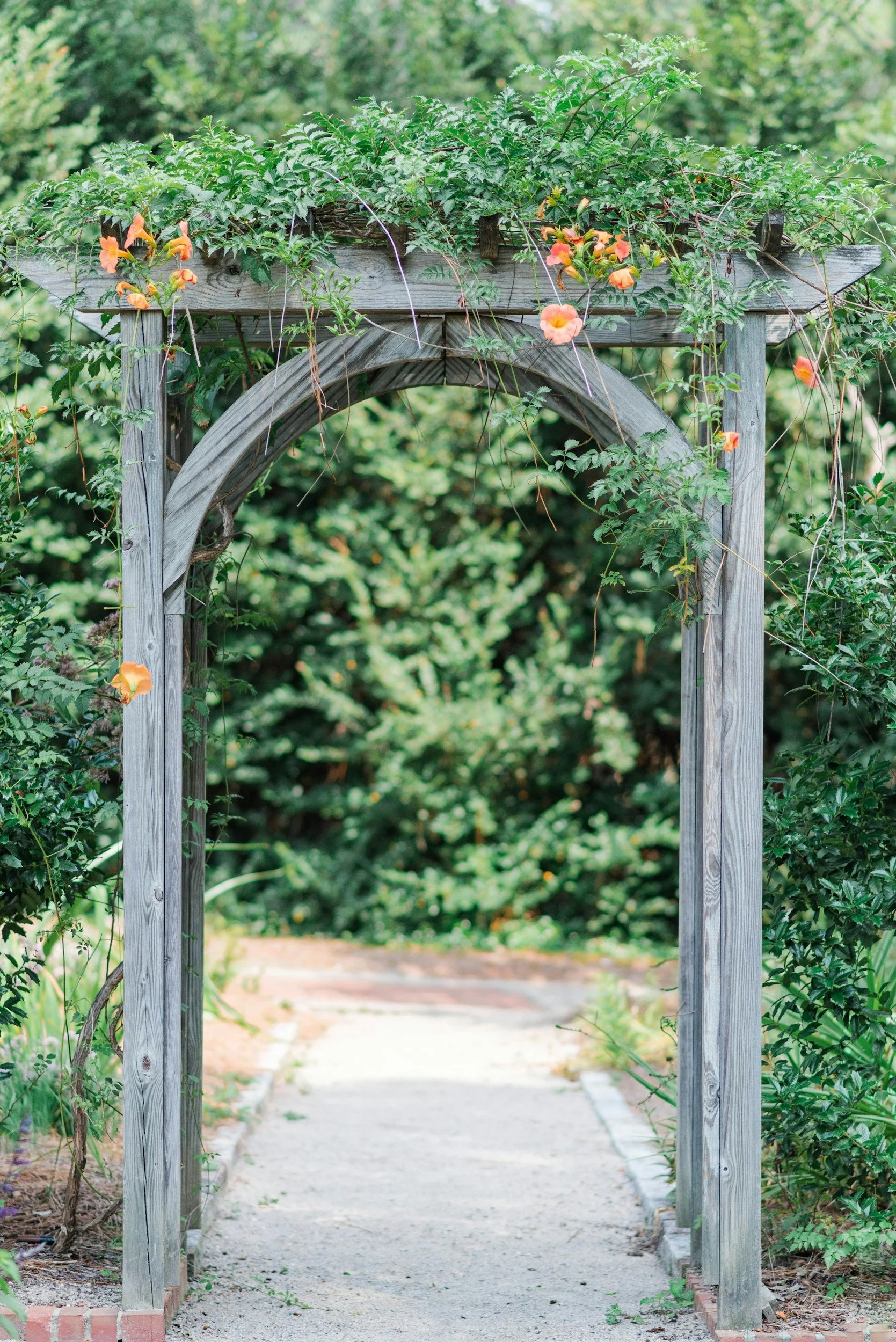
At 19 Birch Lane, we use a combination of evergreen shrubs (like boxwood), structural grasses, vintage fencing, pergolas, stone borders, and pathway curves to create natural divisions in the landscape.
🌿 1. Start with Structure
Every great garden begins with a strong framework. Before planting anything, take a step back and look at the overall shape and flow of your space. Are there areas that feel undefined? Do your eye and feet know where to go? Structure helps you answer these questions and sets the stage for all the planting to come.
At 19 Birch Lane, we use a combination of evergreen shrubs (like boxwood), structural grasses, vintage fencing, pergolas, stone borders, and pathway curves to create natural divisions in the landscape. These elements give the garden year-round interest—even in the quiet of winter—and provide formality or softness depending on the materials used.
Structure = clarity. It allows the wild beauty of perennials to shine without feeling chaotic.
🪴 Garden idea: Try framing a flowerbed with boxwoods, edging a path with feather reed grass, or placing a vintage urn as a central focal point.
🌸 2. Layer Your Heights
A beautiful garden works like a well-composed painting: it has a foreground, a middle, and a background. Layering plant heights creates visual depth and allows every plant to be seen and appreciated.
At 19 Birch Lane, we arrange planting beds to build up from low-growing groundcovers and soft perennials, through a lush middle tier of flowering shrubs, and then finish with upright grasses, trees, or climbing structures. This vertical progression leads the eye upward and gives the garden a sense of movement and fullness.
Even small spaces benefit from thoughtful layering. For example, pairing Proven Winners’ ‘Limelight’ Hydrangea in the back of a bed with Russian sage in the center and ‘Cat’s Meow’ Nepeta in front adds color, texture, and rhythm without overwhelming the space.
🪴 Pro Tip: Group plants by mature height to avoid shading out lower growers and to maintain bloom visibility throughout the season.
🌟 3. Choose Your Hero Plants
Every garden needs its centerpiece plants—the bold, showy, unforgettable stars that give your space identity and presence. These hero plants can be shrubs, trees, or perennials, and they are typically what guests will remember after their visit (or what stops you in your tracks every time you walk by).
At 19 Birch Lane, we intentionally select hero plants that reflect the personality of each garden room. In our wedding lawn beds, we use classic David Austin Roses for timeless romance and Proven Winners’ ‘Summerific® Holy Grail’ Hibiscus for striking tropical-style foliage and enormous late-summer blooms. In shadier corners, oversized hostas like ‘Shadowland® Empress Wu’ create dramatic texture and anchor their spaces.
These stars don’t just offer beauty—they set the tone for the rest of the design.
🪴 Design Tip: Limit yourself to a few hero plants per garden room to avoid visual clutter. Let these plants guide your supporting cast.
🔁 4. Repeat, Repeat, Repeat
If structure is the skeleton of a garden, repetition is the rhythm. Repeating the same plant, color, or shape throughout your garden adds flow, balance, and calm. It helps tie different areas together—even if the plant palette or style shifts slightly from one section to the next.
At 19 Birch Lane, we use repetition strategically:
‘Karl Foerster’ Feather Reed Grass appears at transitions between rooms, gently waving and adding continuity
Lavender and catmint are repeated along stone paths and bed edges for cohesion and seasonal scent
Echinacea and black-eyed Susans appear in sunny borders to unify color palettes across the garden
The key is to be intentional but not rigid. Even small echoes—a plant color or a recurring texture—can pull everything together beautifully.
🪴 Try this: Plant a favorite perennial in clusters of 3–5 and mirror that grouping in a few other spots to create balance without monotony.
☀️ 5. Right Plant, Right Place (Sun, Soil & Success)
One of the most common mistakes in garden design is choosing the wrong plant for the site. It doesn’t matter how beautiful or trendy a plant is—if it doesn’t match the conditions of your garden, it won’t thrive. At 19 Birch Lane, we practice the principle of "right plant, right place" across every bed and border.
We start with an honest evaluation of our site:
How many hours of sun does this area receive?
Is the soil clay, sandy, loamy, or well-drained?
Is there consistent moisture or is it dry between rains?
Based on the answers, we select plants suited to those specific conditions. For example:
In moist, sunny areas near our pond, we use ‘Summerific’ Hibiscus, astilbes, and Siberian iris
In full sun with well-drained soil, we plant salvias, grasses, and coneflowers
In shaded woodland edges, we lean on ferns, hostas, and Brunnera
🪴 Pro Tip: Proven Winners offers a wide selection of plants labeled by sun/shade tolerance, bloom time, and moisture needs—making site-specific planning easier than ever.

Limelight Hydrangeas
Adding a hedge of limelight hydrangeas will add an instant wow factor in garden.
🌾 6. Add Texture and Contrast
Texture is the unsung hero of garden design. It’s what gives the landscape interest even when flowers aren’t blooming. Bold vs. fine, glossy vs. matte, upright vs. trailing—these contrasts add a dynamic quality that keeps the eye engaged.
At 19 Birch Lane, we mix plant textures the way a chef mixes flavors—balancing delicate and bold to create a satisfying whole:
Bold: Hydrangeas, hostas, peonies
Fine: Amsonia, ornamental grasses, ferns
Upright: Salvia, feather reed grass
Mounding: Nepeta, coral bells, sedum
Texture is especially helpful in monochromatic gardens (such as all-white or all-green plantings), where variety comes from form rather than color.
🪴 Design Tip: Try mixing spiky foliage like iris or grass with rounded blooms like daisies for instant drama.
🪨 7. Finish with Hardscape
A garden isn’t complete without the finishing details. Hardscaping—your paths, patios, boulders, edging, containers, and other non-living elements—brings definition, accessibility, and aesthetic depth to your landscape.
At 19 Birch Lane, our hardscape includes:
Crushed stone walkways leading from room to room
Natural boulders tucked into borders for grounding and contrast
Vintage terracotta pots filled with Proven Winners’ seasonal annuals
Stepping stones through shaded woodland paths
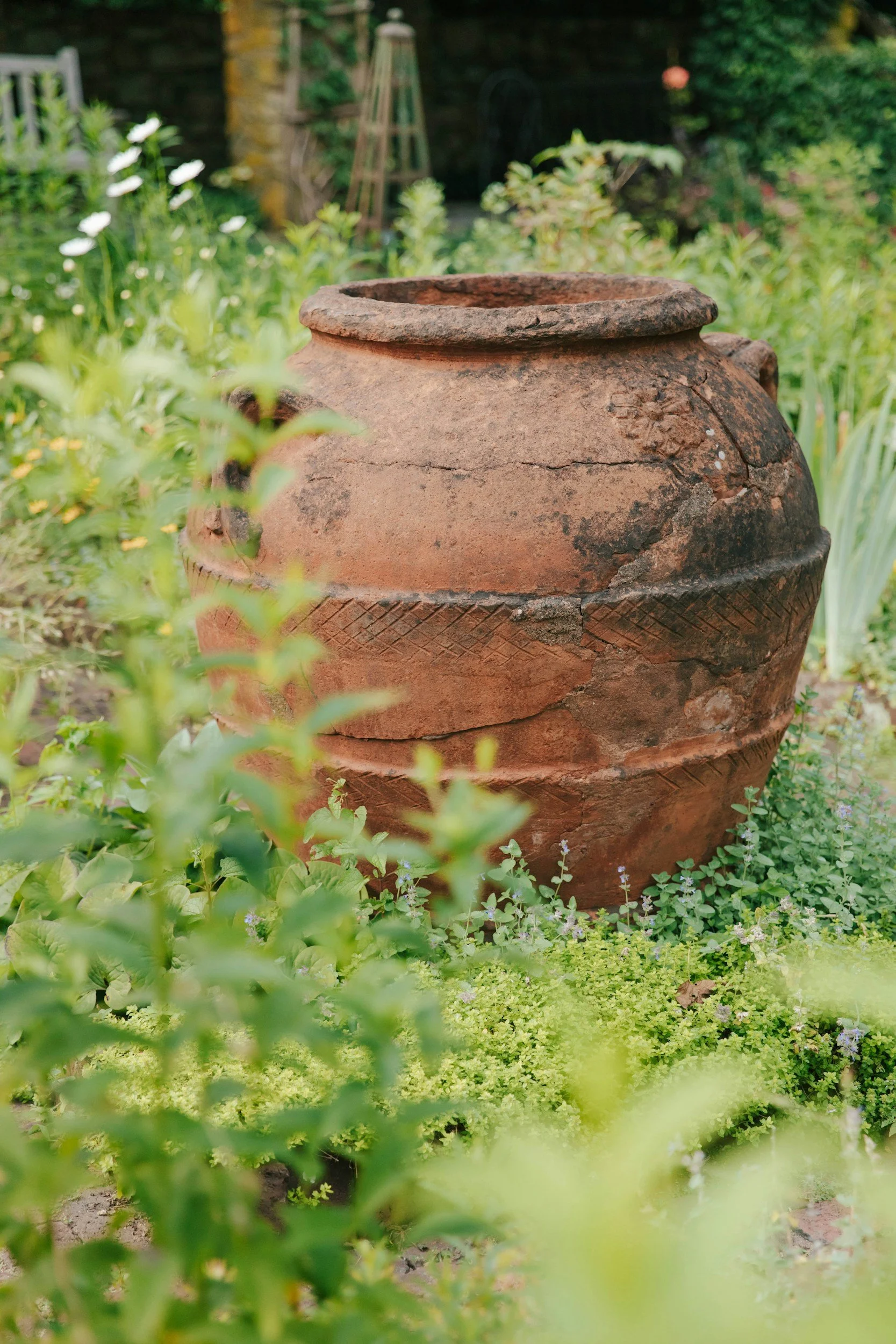
Terracotta pots add an old world look to any garden
Hardscape not only enhances beauty—it makes your garden more functional, easier to maintain, and enjoyable to walk through.
Hardscape not only enhances beauty—it makes your garden more functional, easier to maintain, and enjoyable to walk through.
🪴 Consider using natural materials (like stone or gravel) to help your hardscape blend with the surrounding garden for a more organic look.
✨ 8. Design for Feeling, Flow & Four Seasons
At the end of the day, the most successful gardens are the ones that make you feel something. At 19 Birch Lane, everything we design is created with emotion, flow, and seasonality in mind. Each space invites guests to pause, explore, reflect, and connect—with nature and with each other.
We achieve this by:
Creating sightlines that frame views of the pergola, pond, or greenhouse
Planting for succession of bloom so there’s always something alive and evolving
Using water, texture, sound, and scent to engage all the senses
Designing transitions between rooms that feel like movement, not interruption
This is what turns a garden into an experience—and what makes 19 Birch Lane a true destination for weddings, botanical tours, and lovers of timeless garden design.
🌸 Final Thoughts: Start Small, Dream Big
Whether you’re planting your very first garden or fine-tuning a long-loved landscape, these principles can guide your way. Start with structure. Choose plants with purpose. Layer thoughtfully. And always design for how you want the space to feel, not just how it looks.
The magic is in the details—and the joy is in watching it all grow.
Want to see these tips in action? Visit us in Mid Coast Maine to explore the gardens of 19 Birch Lane, or follow along online for seasonal design ideas, planting inspiration, and behind-the-scenes garden stories.
📍 Located in Mid Coast Maine | USDA Zone 6a
🌿 Boutique botanical wedding venue • Private garden tours • Seasonal blog & online boutique
📸 Follow @19birchlane | 🌐 19birchlane.com