
Paperbark Maple (Acer griseum)
Ornamental Tree with Exfoliating Bark & Brilliant Fall Color
🌿 Plant Overview
Common Name: Paperbark Maple
Botanical Name: Acer griseum
Plant Type: Deciduous Tree
Family: Sapindaceae
Hardiness Zones: 4–8
Native Range: Central and Eastern China
📊 Key Characteristics
Height: 20–30 feet
Spread: 15–25 feet
Bloom Time: April
Flower Color: Green (insignificant)
Foliage: Green turning orange to red in fall
Growth Habit: Upright, oval to rounded
☀️ Growing Conditions
Sun Exposure: Full sun to part shade
Water Needs: Medium (prefers consistent moisture)
Soil: Slightly acidic, well-drained
Maintenance Level: Low
Paperbark maple thrives in moist, well-drained soils and prefers protection from prolonged drought. It adapts well to a variety of garden conditions, including clay soils.
🌸 Garden Features
✔️ Stunning exfoliating bark (cinnamon to copper tones)
✔️ Excellent fall color
✔️ Strong winter interest
✔️ Compact size for smaller landscapes
✔️ Deer tolerant
✂️ Care & Maintenance
Minimal pruning required—remove dead or crossing branches as needed. Maintain consistent moisture, especially during establishment. Avoid dry conditions to keep foliage healthy.
🌼 Landscape Uses
Specimen tree, small shade tree, woodland gardens, patio or deck planting, ornamental focal point
🌿 19 Birch Lane Insight
Paperbark maple is one of the most striking trees for year-round beauty—its peeling bark alone makes it a centerpiece in the winter garden.
🌱 Noteworthy Characteristics
Acer griseum is best known for its exfoliating bark, which peels back in papery curls revealing warm cinnamon and copper tones beneath. This creates incredible winter interest. In fall, the foliage turns vibrant shades of orange and red. Its compact size and refined structure make it ideal for curated garden spaces.
⚠️ Problems
No serious insect or disease issues. Avoid drought stress for best performance.
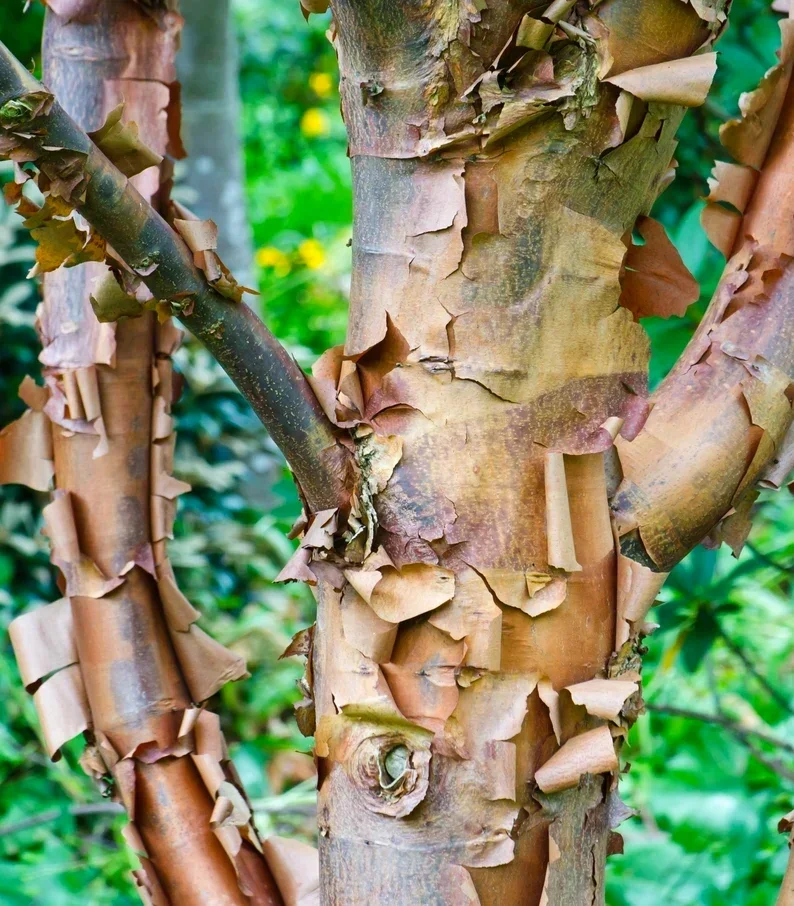
Paperbark Maple (Acer griseum)
Ornamental Tree with Exfoliating Bark & Brilliant Fall Color