
Black Lace® Elderberry (Sambucus nigra ‘Eva’ BLACK LACE®)
Dramatic Dark Foliage Shrub with Pink Blooms & Exceptional Four-Season Interest
🌿 Plant Overview
Common Name: Black Lace® Elderberry
Botanical Name: Sambucus nigra ‘Eva’ BLACK LACE®
Plant Type: Deciduous Shrub
Family: Viburnaceae
Hardiness Zones: 4–7
Native Range: Cultivar (parent species native to Europe)
📊 Key Characteristics
Height: 6–8 feet
Spread: 6–8 feet
Bloom Time: June to July
Flower Color: Soft pink
Foliage: Deep purple-black, finely dissected
Growth Habit: Upright, arching shrub
☀️ Growing Conditions
Sun Exposure: Full sun to partial shade
Water Needs: Medium (prefers evenly moist soil)
Soil: Humusy, moist but well-drained; slightly acidic to neutral
Maintenance Level: Medium
Black Lace® elderberry thrives in rich, moisture-retentive soils and develops its best foliage color in full sun.
🌸 Garden Features
✔️ Dramatic lace-like dark foliage
✔️ Soft pink flower clusters
✔️ Ornamental berries for wildlife
✔️ Excellent contrast plant in mixed borders
✔️ Pollinator-friendly blooms
✔️ Strong architectural presence
✂️ Care & Maintenance
Prune in late winter or early spring before new growth emerges. Remove older stems periodically to encourage vigorous fresh growth. Mulch annually to retain moisture and protect roots.
🌼 Landscape Uses
Specimen shrub, mixed borders, privacy screens, wildlife gardens, cottage gardens, woodland edges
🌿 19 Birch Lane Insight
Black Lace® elderberry brings an almost gothic elegance to the landscape—its finely cut dark foliage creating dramatic contrast among softer greens and flowering perennials.
🌱 Noteworthy Characteristics
This striking elderberry cultivar is prized for its deep purple-black dissected foliage, often compared to Japanese maple leaves. In early summer, clusters of fragrant pink flowers emerge against the dark foliage, followed by ornamental berries loved by birds. Its dramatic texture and color make it a standout focal point in both formal and naturalistic garden designs.
⚠️ Problems
Can spread through suckers if left unmanaged. Monitor for aphids, spider mites, powdery mildew, and canker. Ensure good airflow around plants to reduce fungal issues. All parts except properly prepared ripe berries may be toxic if ingested.
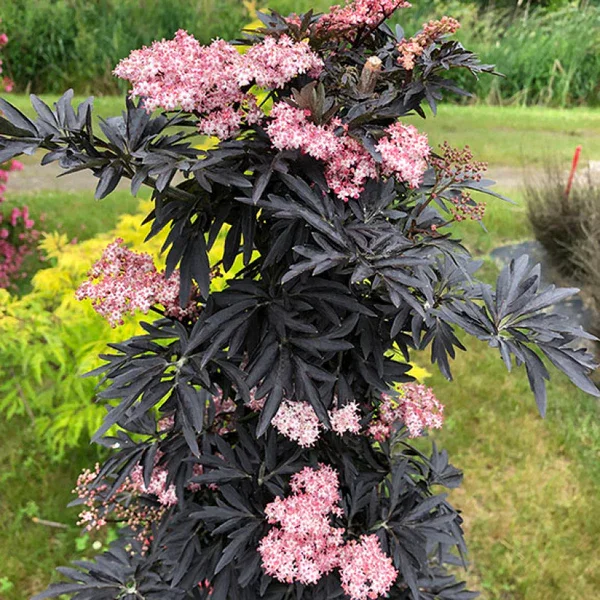
Black Lace® Elderberry (Sambucus nigra ‘Eva’ BLACK LACE®)
Dramatic Dark Foliage Shrub with Pink Blooms & Exceptional Four-Season Interest