
Blue Flax (Linum lewisii)
Native Western Wildflower with Delicate Sky-Blue Blooms and Exceptional Drought Tolerance
Plant Overview
Common Name: Blue Flax, Lewis Flax
Botanical Name: Linum lewisii
Plant Type: Herbaceous Perennial
Family: Linaceae (Flax Family)
Native Range: Western North America
USDA Hardiness Zones: 3–9
Blue Flax is one of North America's most graceful native wildflowers. Known for its delicate sky-blue flowers that open each morning, this long-lived perennial brings natural beauty, movement, and ecological value to gardens, meadows, and restoration landscapes. Despite the fleeting nature of each bloom, plants flower continuously from late spring through summer, creating a stunning display of blue across the landscape.
Quick Facts
Height: 18–24 inches
Spread: 12–24 inches
Bloom Time: May through August
Flower Color: Sky Blue to Pale Lavender Blue
Sun Exposure: Full Sun
Water Needs: Low
Maintenance: Low
Growth Habit: Upright, Vase-Shaped
Growth Rate: Moderate
Deer Resistance: Moderate
Drought Tolerance: Excellent
Growing Conditions
Light
Blue Flax performs best in full sun and requires at least six hours of direct sunlight daily for optimal flowering.
Soil
Prefers:
Sandy soils
Gravelly soils
Rocky soils
Well-drained soils
Avoid heavy, poorly drained locations.
Water
Once established, Blue Flax is highly drought tolerant and typically requires little supplemental watering.
Flower Characteristics
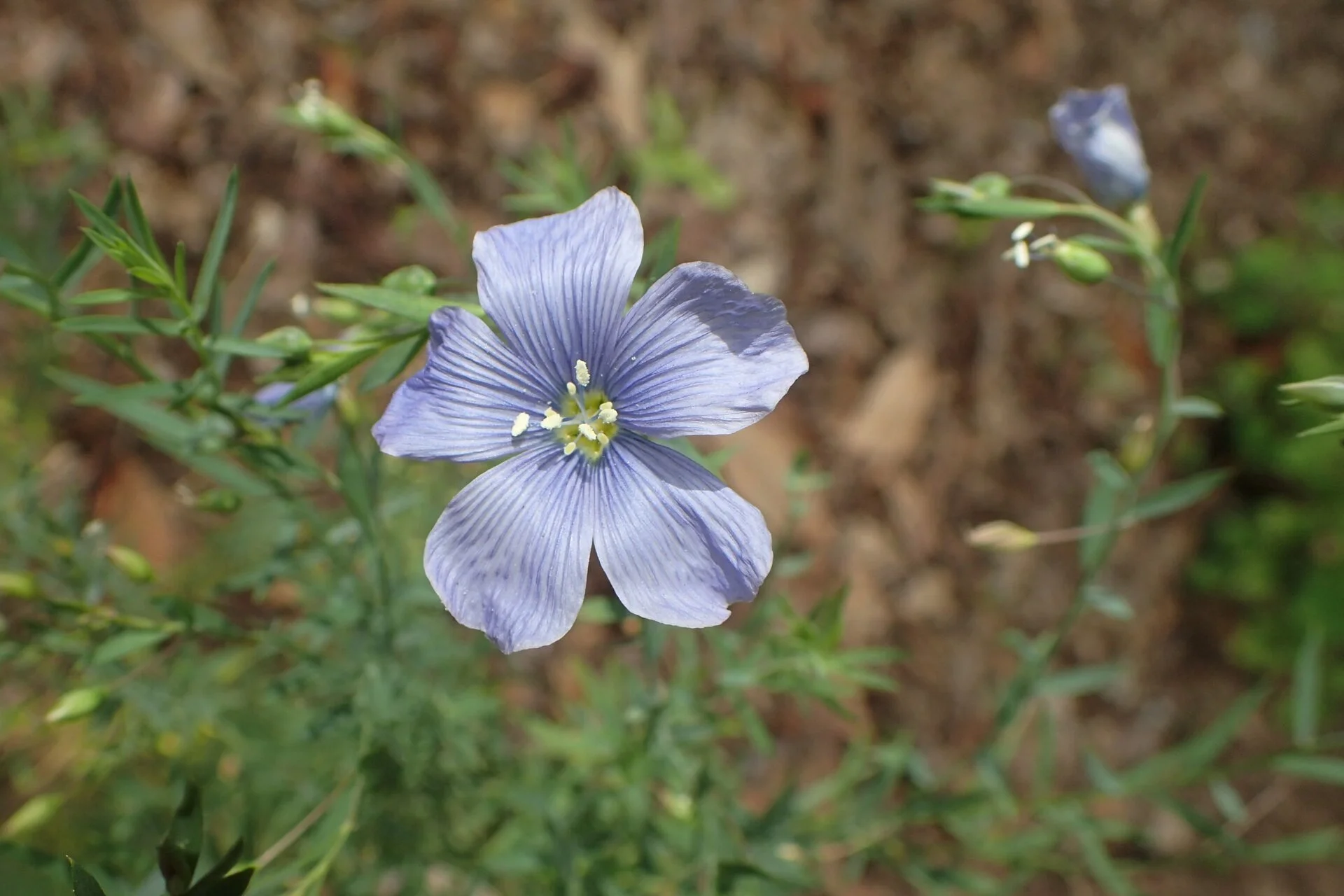
Blue Flax produces delicate five-petaled flowers approximately 1 to 1.5 inches across.
Flower Features
Sky-blue petals with darker blue veining
Silky, translucent appearance
Blooms open in the morning
Individual flowers last one day
Continuous bloom production throughout summer
The flowers sway beautifully in the breeze, adding movement and softness to naturalistic plantings.
Foliage Characteristics
The plant forms a graceful clump of slender stems covered with narrow, needle-like leaves.
Foliage Features
Blue-green coloration
Fine texture
Drought-adapted foliage
Attractive throughout the growing season
Ecological Benefits
Blue Flax is an important native plant that supports wildlife and pollinators.
Attracts
Native Bees
Bumble Bees
Butterflies
Beneficial Insects
Wildlife Value
Seeds provide food for songbirds
Supports native pollinator populations
Provides habitat within prairie and meadow ecosystems
Garden Uses
Blue Flax excels in a variety of landscape settings.
Recommended Uses
Native Plant Gardens
Wildflower Meadows
Pollinator Gardens
Prairie Gardens
Xeriscapes
Cottage Gardens
Rock Gardens
Habitat Restoration Projects
Naturalized Landscapes
Its airy texture pairs beautifully with coneflowers, penstemons, salvia, yarrow, and ornamental grasses.
Care & Maintenance
Blue Flax is remarkably easy to grow.
Maintenance Tips
Allow plants to self-seed naturally for larger drifts.
Remove spent stems in early spring.
Avoid rich soils and excessive fertilizer.
Water sparingly once established.
Plants often persist for many years and gradually expand through self-seeding.
Historical Significance
Blue Flax was named after Meriwether Lewis of the Lewis and Clark Expedition. Indigenous peoples throughout western North America historically utilized the plant's fibers for cordage and its seeds as a food source.
Problems
Blue Flax has few pest or disease concerns.
Potential issues include:
Root rot in poorly drained soils
Reduced flowering in excessive shade
Floppy growth in overly fertile soils
Proper drainage and full sun prevent most problems.
Why We Grow It at 19 Birch Lane
At 19 Birch Lane, Blue Flax represents everything we appreciate in a great garden plant—natural beauty, resilience, ecological value, and effortless elegance. Its delicate blue flowers create a meadow-like feel while supporting pollinators and thriving in challenging conditions.
This native perennial adds movement, texture, and seasonal interest to the garden while helping connect visitors to the beauty of North America's native landscapes.
Plant Finder Details
Botanical Name: Linum lewisii
Common Name: Blue Flax
Plant Type: Herbaceous Perennial
Family: Linaceae
Zones: 3–9
Height: 18–24 inches
Spread: 12–24 inches
Bloom Time: Late Spring through Summer
Flower Color: Blue
Sun Exposure: Full Sun
Water Requirements: Low
Maintenance: Low
Native Plant: Yes
Pollinator Friendly: Yes
Drought Tolerant: Yes
Deer Resistant: Moderate
Blue Flax (Linum lewisii)
Native Western Wildflower with Delicate Sky-Blue Blooms and Exceptional Drought Tolerance