
Coppertina® Ninebark (Physocarpus opulifolius 'Mindia')
Four Seasons of Color with Copper Foliage, Soft Pink Blooms, and Exfoliating Winter Bark
Plant Overview
Common Name: Coppertina® Ninebark
Botanical Name: Physocarpus opulifolius 'Mindia'
Plant Type: Deciduous Shrub
Family: Rosaceae
Native Range: Eastern North America
Hardiness Zones: 3–7
Coppertina® Ninebark is a striking native shrub prized for its unique copper-colored foliage, soft pink-white flower clusters, and attractive peeling bark. A cross between the golden-leaved ‘Dart’s Gold’ and the dark purple-leaved ‘Diabolo’, Coppertina® combines the best traits of both parents, creating season-long interest in the landscape.
Its colorful foliage, pollinator-friendly blooms, and exceptional cold hardiness make it a standout shrub for gardens throughout Maine and the Northeast.
Quick Facts
Height: 6–8 feet
Spread: 6–8 feet
Bloom Time: Early Summer
Flower Color: Pinkish-White
Foliage Color: Copper, Bronze, Red
Fall Interest: Bronze to Burgundy Foliage
Winter Interest: Exfoliating Bark
Sun Exposure: Full Sun
Water Needs: Average
Maintenance: Low
Growth Rate: Moderate to Fast
Native Plant: Yes
Pollinator Friendly: Yes
Growing Conditions
Light
For the richest foliage color and best flowering performance, plant Coppertina® Ninebark in:
Full Sun
While tolerant of light shade, foliage color is most vibrant when grown in six or more hours of direct sunlight daily.
Soil
Adaptable to a wide range of soils including:
Loam
Clay
Sandy Soil
Rocky Soil
Best performance occurs in:
Well-drained soil
Average garden conditions
Water
Average moisture needs
Drought tolerant once established
Benefits from supplemental watering during prolonged dry periods
Foliage Interest
Coppertina® Ninebark is grown as much for its foliage as its flowers.
Seasonal Color Changes
Spring
Emerging foliage glows copper-orange
Summer
Leaves deepen to rich bronze-red
Autumn
Foliage develops burgundy and reddish-bronze tones
The deeply lobed, serrated leaves provide exceptional texture and contrast throughout the growing season.
Flower Characteristics
In early summer, attractive clusters of flowers appear near the ends of the stems.
Flower Features
Soft pink-white blossoms
Five-petaled flowers
Rounded flower clusters
Bloom on old wood
Attractive to pollinators
Following bloom, ornamental red seed heads develop, extending seasonal interest.
Winter Interest
One of the defining features of Ninebark is its ornamental bark.
Winter Features
Exfoliating bark peels in thin layers
Reveals cinnamon-brown inner bark
Provides texture and visual interest after leaf drop
This characteristic gives the shrub year-round appeal even during Maine winters.
Pollinator & Wildlife Benefits
Coppertina® Ninebark provides valuable habitat and food sources.
Attracts
Bees
Butterflies
Native Pollinators
Wildlife Benefits
Dense branching offers shelter for birds
Seed heads provide seasonal interest and wildlife value
Garden Uses
This versatile native shrub fits beautifully into many landscape styles.
Recommended Uses
Foundation Plantings
Mixed Shrub Borders
Native Plant Gardens
Pollinator Gardens
Cottage Gardens
Property Screens
Informal Hedges
Mass Plantings
Specimen Plantings
Its colorful foliage creates an excellent backdrop for flowering perennials and ornamental grasses.
Companion Plants
At 19 Birch Lane, Coppertina® Ninebark pairs beautifully with:
Russian Sage
Coneflowers
Black-Eyed Susans
Daylilies
Hydrangeas
Catmint
Ornamental Grasses
Panicle Hydrangeas
Peonies
The warm copper foliage contrasts beautifully with blue, purple, white, and pink flowers.
Care & Maintenance
Coppertina® Ninebark is remarkably easy to grow.
Maintenance Tips
Minimal pruning required
Prune immediately after flowering if shaping is desired
Avoid heavy late-season pruning
Remove damaged or crossing branches as needed
The shrub develops its best natural form when allowed to grow with minimal intervention.
Why We Grow It at 19 Birch Lane
At 19 Birch Lane, Coppertina® Ninebark is valued for its outstanding foliage color, native heritage, and year-round ornamental appeal. From copper spring growth and soft summer flowers to striking bark in winter, few shrubs provide such continuous interest throughout the seasons.
Its toughness, adaptability, and pollinator value make it an excellent addition to both formal gardens and naturalistic landscapes.
Problems
Generally trouble-free.
Potential Issues
Occasional powdery mildew in humid conditions
Best planted with adequate spacing for air circulation
Proper siting and sunlight help prevent most issues.
Plant Finder Details
Botanical Name: Physocarpus opulifolius 'Mindia'
Common Name: Coppertina® Ninebark
Plant Type: Deciduous Shrub
Family: Rosaceae
Native Range: Eastern North America
Zones: 3–7
Height: 6–8 feet
Spread: 6–8 feet
Bloom Time: Early Summer
Flower Color: Pink-White
Foliage Color: Copper, Bronze, Red
Sun Exposure: Full Sun
Water Requirements: Average
Maintenance: Low
Growth Habit: Upright, Rounded
Blooms On: Old Wood
Wildlife Value: Pollinator Friendly
Winter Interest: Exfoliating Bark
Botanical Garden Notes
Coppertina® Ninebark demonstrates how native shrubs can provide both ecological value and exceptional ornamental beauty. Its colorful foliage, seasonal flowers, and attractive bark make it a valuable structural plant within the growing collections at 19 Birch Lane.
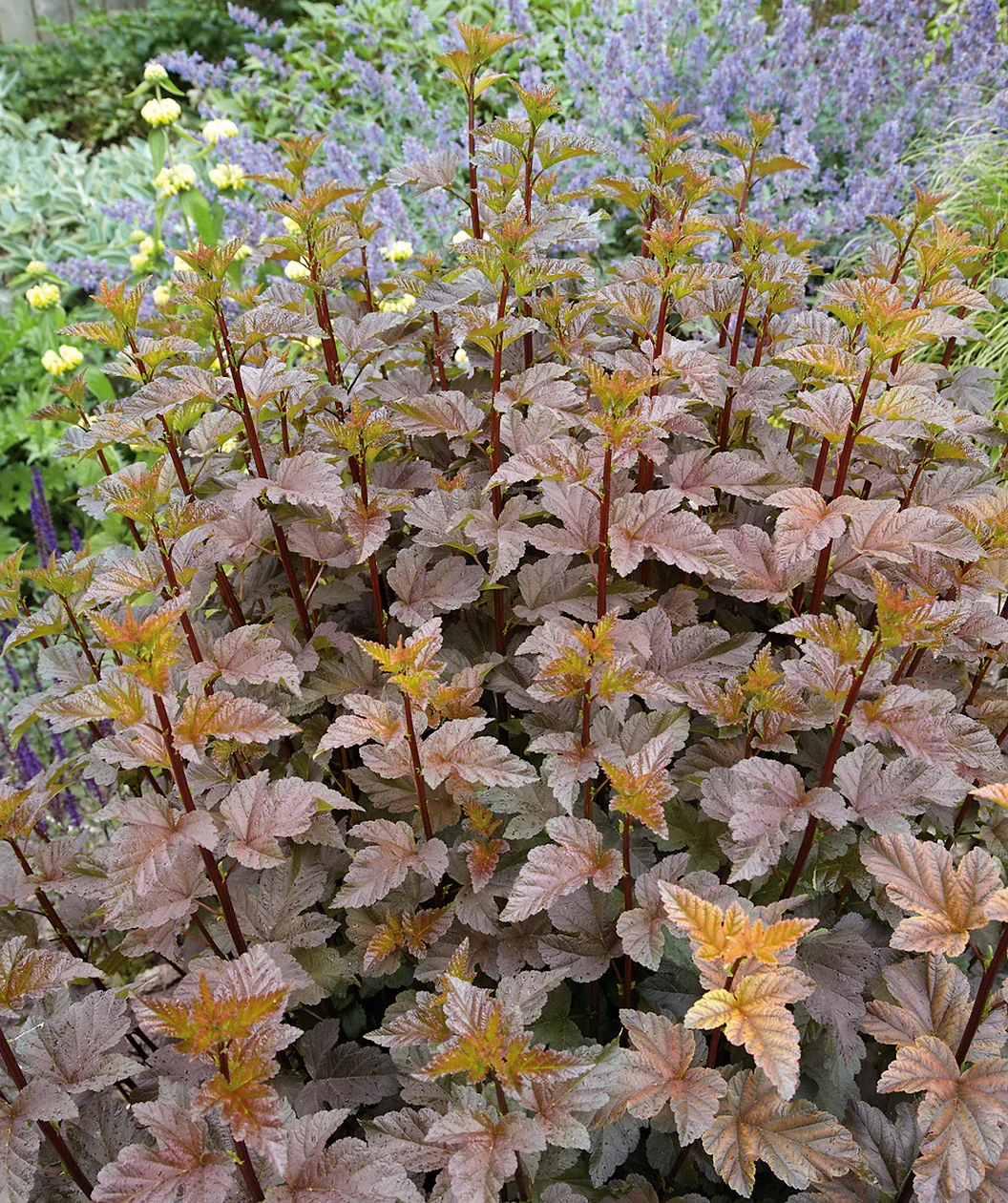
Coppertina® Ninebark (Physocarpus opulifolius 'Mindia')
Four Seasons of Color with Copper Foliage, Soft Pink Blooms, and Exfoliating Winter Bark