
Downy Clematis (Clematis macropetala)
Early-Blooming Clematis with Bell-Shaped Lavender Flowers & Decorative Seed Heads
🌿 Plant Overview
Common Name: Downy Clematis
Botanical Name: Clematis macropetala
Plant Type: Deciduous Climbing Vine
Family: Ranunculaceae
Hardiness Zones: 3–8
Native Range: Central Asia, Mongolia, Himalayas, Northern China
📊 Key Characteristics
Height: 6–10 feet
Spread: 3–6 feet
Bloom Time: Late spring to early summer
Flower Color: Lavender blue to pale blue
Foliage: Green, compound leaves
Growth Habit: Twining climbing vine
Growth Rate: Moderate
☀️ Growing Conditions
Sun Exposure: Full sun to partial shade
Water Needs: Medium
Soil Type: Fertile, organically rich, well-drained
Soil pH: Slightly acidic to neutral
Maintenance Level: Low
Like most clematis, Downy Clematis prefers its roots cool and shaded while allowing the upper growth to receive sunlight. Mulching around the base or planting low-growing companion plants helps maintain ideal root conditions.
🌸 Garden Features
✔️ Elegant bell-shaped flowers
✔️ Early blooming clematis
✔️ Decorative fluffy seed heads
✔️ Excellent pollinator plant
✔️ Cold hardy vine
✔️ Attractive woodland garden specimen
✔️ Four-season interest
✂️ Care & Maintenance
Provide a trellis, arbor, fence, or shrub for support. Water regularly during dry periods, especially while establishing. Apply compost annually to maintain soil fertility.
Pruning needs are minimal. Since flowers are produced on old wood, only remove dead or damaged stems after flowering.
🌼 Landscape Uses
Arbors, pergolas, trellises, cottage gardens, woodland gardens, pollinator gardens, fences, mixed shrub borders, container gardens
🌿 19 Birch Lane Insight
Downy Clematis is one of the earliest clematis to bloom and brings a soft romantic charm to the gardens at 19 Birch Lane. Its nodding lavender flowers and ornamental seed heads create beauty from spring well into winter.
🌱 Noteworthy Characteristics
Clematis macropetala is treasured for its graceful bell-shaped flowers that appear before many other clematis varieties begin flowering. The blooms feature delicate lavender-blue sepals that curve backward, creating a lantern-like appearance that dances in the breeze.
After flowering, the vine produces attractive silvery seed heads that persist through fall and winter, extending its ornamental value far beyond bloom season.
Native to mountainous regions of Central Asia, Downy Clematis is exceptionally cold hardy and adapts well to northern gardens. Its delicate appearance disguises a tough and reliable perennial vine that returns year after year with minimal care.
🦋 Pollinator & Wildlife Value
Attracts butterflies
Supports native bees
Provides nectar for pollinators
Beneficial to hummingbirds
Provides seasonal habitat structure for birds and beneficial insects
⚠️ Problems
Generally trouble-free when planted in well-drained soil. Occasionally susceptible to:
Clematis wilt
Powdery mildew
Spider mites
Leaf spot diseases
Good air circulation and proper watering help prevent most issues.
🌎 Ecological Importance
Downy Clematis serves as an important nectar source during late spring and early summer when many pollinators are actively foraging. Its dense growth habit also contributes habitat value in woodland-edge ecosystems and garden landscapes.
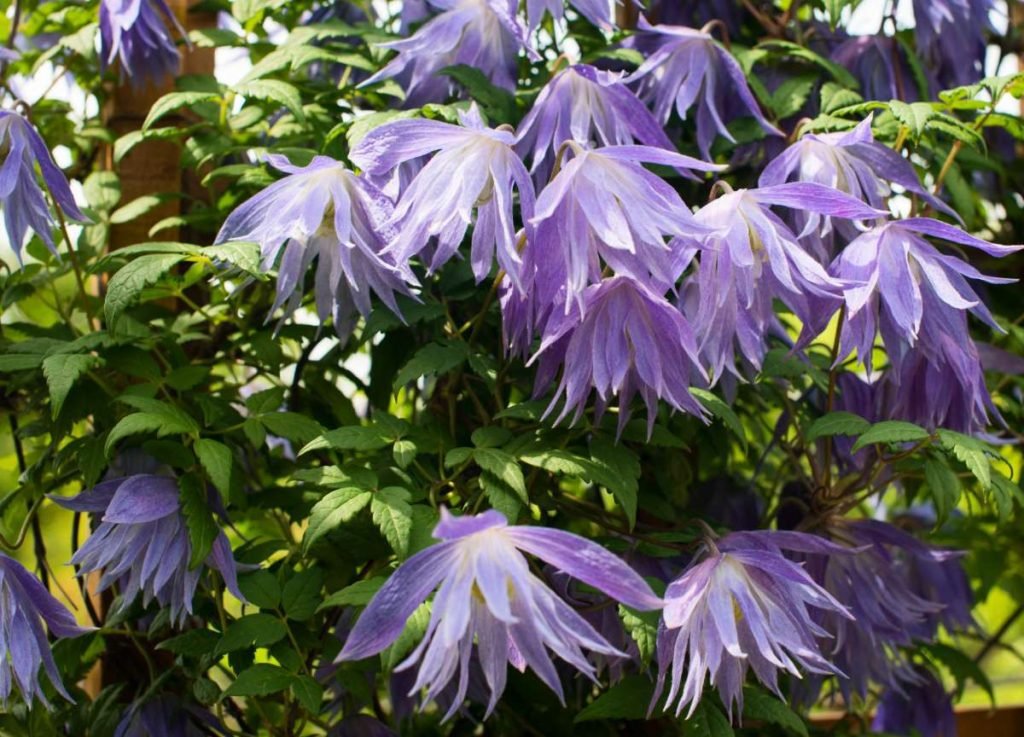
Downy Clematis (Clematis macropetala)
Early-Blooming Clematis with Bell-Shaped Lavender Flowers & Decorative Seed Heads