
Dwarf Arctic Blue Willow (Salix purpurea 'Nana')
An Elegant, Cold-Hardy Willow with Silvery Blue Foliage and Exceptional Landscape Versatility
Plant Overview
Common Name: Dwarf Arctic Blue Willow
Botanical Name: Salix purpurea 'Nana'
Plant Type: Deciduous Shrub
Family: Salicaceae
Native Species: Europe and Western Asia (cultivar of Purple Willow)
Hardiness Zones: 3–8
The Dwarf Arctic Blue Willow is a graceful, multi-stemmed deciduous shrub prized for its fine-textured blue-green foliage, slender arching branches, and exceptional adaptability. Its naturally rounded habit and soft silver-blue appearance make it a beautiful addition to both formal and naturalistic landscapes.
Highly tolerant of cold temperatures, wet soils, urban environments, and periodic drought, this dependable shrub performs well in a wide range of garden settings. Whether planted as a low hedge, mass planting, erosion-control shrub, or specimen, Dwarf Arctic Blue Willow provides season-long texture and movement in the landscape.
Quick Facts
Height: 4–5 feet
Spread: 5–6 feet
Plant Type: Deciduous Shrub
Family: Salicaceae
Hardiness Zones: 3–8
Growth Rate: Fast
Sun Exposure: Full Sun
Water Needs: Average to Wet
Maintenance: Low to Moderate
Growth Habit: Rounded, Multi-Stemmed
Fall Color: Yellow
Landscape Value: Outstanding Texture
Growing Conditions
Light
For the healthiest plants and best foliage color, grow in:
Full Sun
At least 6 hours of direct sunlight daily
Full sun promotes dense branching and the most attractive blue-green foliage.
Soil
This adaptable shrub thrives in:
Loam
Clay
Sandy soils
Moist soils
Well-drained soils
Wet locations
Unlike many shrubs, Dwarf Arctic Blue Willow performs exceptionally well in areas that periodically remain damp.
Water
This shrub appreciates regular moisture but is remarkably adaptable.
Average moisture
Moist soils
Wet sites
Flood-prone areas
Moderate drought tolerance once established
Excellent for rain gardens and low-lying landscape areas.
Foliage Characteristics
The foliage provides the primary ornamental value throughout the growing season.
Foliage Features
Soft blue-green leaves
Fine, narrow foliage
Elegant texture
Yellow fall color
Graceful movement in the breeze
The slender leaves create a refined appearance that complements both flowering shrubs and ornamental grasses.
Winter Interest
Even after leaf drop, the shrub remains attractive.
Winter Features
Fine branching structure
Slender purple-gray stems
Attractive rounded form
Excellent architectural interest
Its colorful stems provide subtle beauty throughout the winter landscape.
Wildlife Benefits
Although primarily grown for foliage, this willow provides ecological benefits.
Supports
Native pollinators
Early season insects
Songbirds
Beneficial wildlife habitat
Willows are valuable host plants for numerous native butterfly and moth species.
Garden Uses
Dwarf Arctic Blue Willow is one of the most versatile shrubs for northern landscapes.
Recommended Uses
Low Hedges
Foundation Plantings
Rain Gardens
Pond Edges
Stream Banks
Erosion Control
Mass Plantings
Wildlife Gardens
Modern Landscapes
Naturalistic Borders
Botanical Collections
Its fine texture pairs beautifully with broad-leaved shrubs and flowering perennials.
Companion Plants
At 19 Birch Lane, Dwarf Arctic Blue Willow combines beautifully with:
Red Twig Dogwood
Hydrangeas
Siberian Iris
Joe Pye Weed
Ligularia
Ornamental Grasses
Switchgrass
Coneflowers
Ninebark
Winterberry Holly
The cool blue foliage contrasts beautifully with golden, burgundy, and bright green foliage.
Care & Maintenance
This is an exceptionally adaptable and easy-to-grow shrub.
Maintenance Tips
Water regularly during establishment
Prune in late winter or early spring
Remove older stems every few years to rejuvenate growth
Tolerates hard pruning
Fertilize lightly in spring if desired
Regular rejuvenation pruning helps maintain a dense, attractive form.
Why We Grow It at 19 Birch Lane
At 19 Birch Lane, Dwarf Arctic Blue Willow is appreciated for its graceful texture, year-round interest, and incredible adaptability. Few shrubs perform as reliably in difficult sites while providing such refined beauty. Its soft blue foliage creates a calming contrast among colorful flowering perennials and shrubs, making it an outstanding structural plant within the botanical collections.
Problems
Generally very reliable.
Possible Issues
Willow scab
Leaf rust
Occasional aphids
Leaf beetles
Good air circulation and periodic pruning greatly reduce disease concerns.
Plant Finder Details
Botanical Name: Salix purpurea 'Nana'
Common Name: Dwarf Arctic Blue Willow
Plant Type: Deciduous Shrub
Family: Salicaceae
Zones: 3–8
Height: 4–5 feet
Spread: 5–6 feet
Growth Rate: Fast
Bloom Time: Early Spring (catkins, ornamental value is foliage)
Flower Color: Yellow Catkins (insignificant)
Foliage Color: Blue-Green
Fall Color: Yellow
Sun Exposure: Full Sun
Water Requirements: Average to Wet
Maintenance: Low to Moderate
Growth Habit: Rounded, Multi-Stemmed
Tolerates: Wet Soil, Clay Soil, Urban Conditions, Flooding, Cold Temperatures
Wildlife Value: High
Botanical Garden Notes
Dwarf Arctic Blue Willow demonstrates how texture can be just as important as flowers in creating beautiful landscapes. Its graceful blue foliage, elegant branching, and adaptability make it an invaluable structural shrub throughout the gardens at 19 Birch Lane. It performs beautifully along water features, in rain gardens, and as a soft contrast among colorful perennial plantings.
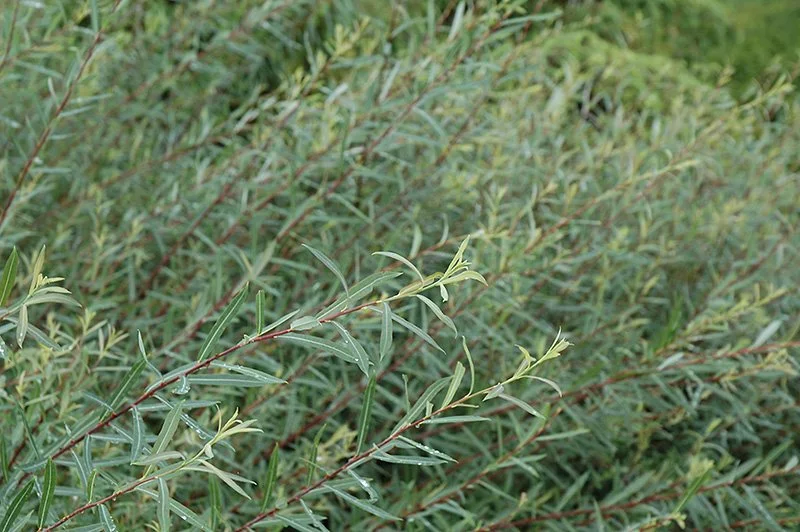
Dwarf Arctic Blue Willow (Salix purpurea 'Nana')
An Elegant, Cold-Hardy Willow with Silvery Blue Foliage and Exceptional Landscape Versatility
Frequently Asked Questions
Is Dwarf Arctic Blue Willow good for wet areas?
Yes. It thrives in moist soils and even tolerates periodically wet or flood-prone locations, making it an excellent choice for rain gardens and pond edges.
Does it need frequent pruning?
Not necessarily. Light pruning every few years helps maintain a dense, rounded shape, but the shrub naturally develops an attractive form.
Is Dwarf Arctic Blue Willow deer resistant?
It has moderate deer resistance. While young growth may occasionally be browsed, established shrubs typically recover quickly.
Can it be used as a hedge?
Absolutely. Its naturally dense branching and fast growth make it an excellent low hedge or screening shrub.
What makes this shrub unique?
Its beautiful blue-green foliage, graceful texture, cold hardiness, and ability to thrive in difficult growing conditions make it one of the most versatile shrubs for northern gardens.