
Pollinator Paradise: How 19 Birch Lane Became a Haven for Bees, Butterflies, and More
How Thoughtful Garden Design Transformed an Overgrown Field into a Living Botanical Ecosystem
In the Garden at 19 Birch Lane | Mid Coast Maine | Zone 6a Gardening
If you've visited 19 Birch Lane, one of the first things you'll notice isn't just the flowers.
It's the sound.
The gentle hum of honeybees drifting from lavender to catmint. Butterflies floating effortlessly above the daylilies. Bumblebees disappearing into the heart of a peony. Hummingbirds darting between salvias and hydrangeas before vanishing into the gardens beyond.
The gardens are alive.
But it wasn't always this way.
From an Overgrown Field to a Living Garden
When 19 Birch Lane was purchased in 2008, it was a modest home surrounded by woods, overgrown fields, and a weathered horse barn. The property had wonderful bones and tremendous potential, but very little that would attract pollinators.
There were no sweeping perennial borders.
No collections of flowering shrubs.
No winding pathways lined with blooms.
No ponds, babbling brooks, or garden rooms.
Simply open fields slowly being reclaimed by nature.
Like many rural Maine properties, wildlife was certainly present, but the diversity of flowering plants that sustain pollinators throughout the growing season simply wasn't there.
What began as a vision to create beautiful gardens gradually evolved into something much larger.
Without intending to, we began building an ecosystem.
Today, every garden we create is designed with beauty in mind—but also with purpose.
Every new plant has the potential to feed a bee.
Every flower has the opportunity to support a butterfly.
Every season offers another chapter in the story of a thriving landscape.
Why Pollinators Matter More Than Ever
Pollinators are among the hardest-working members of every garden.
Honeybees, native bees, butterflies, hummingbirds, moths, hoverflies, and countless beneficial insects are responsible for pollinating many of the flowers, fruits, vegetables, and trees that shape our landscapes and food supply.
Without them, gardens simply wouldn't function the same way.
Creating habitat for pollinators doesn't require turning your landscape into a wild meadow.
In fact, some of the most beautiful ornamental gardens can also become incredible sources of food and shelter for wildlife when designed thoughtfully.
At 19 Birch Lane, that's exactly what we're striving to accomplish.
Gardening for Continuous Bloom
One of the biggest mistakes gardeners make when creating a pollinator garden is focusing on only one season.
A landscape may be spectacular for two weeks in June...
...and then offer very little for the remainder of the growing season.
Our philosophy is different.
We design gardens that provide nectar, pollen, and habitat from the earliest days of spring until the arrival of autumn frost.
Every new collection we plant helps extend that calendar.
The result is a garden that's always changing—and always supporting life.
Spring: The First Feast
As winter loosens its grip on coastal Maine, pollinators emerge hungry after months of dormancy.
This is one of the most important times to provide food.
Among the first flowers to bloom in our gardens are:
Hellebores
Dwarf Irises
Bearded Irises
Brunnera
Pulmonaria
Columbine
Bleeding Hearts
These early flowers provide critical nectar sources when little else is available.
It's often on a cool April afternoon that we'll spot the season's first bumblebee making its rounds through the gardens.
Summer: The Gardens Come Alive
By June, the landscape begins its transformation.
This is when the gardens become filled with movement.
Our collections include plants that bloom in succession, ensuring pollinators always have something to forage.
Some of our favorite pollinator plants include:
🌿 Catmint (Nepeta 'Walker's Low)
Perhaps no perennial attracts more bees in our gardens than catmint.
Its lavender-blue flowers bloom for weeks and often rebloom after trimming.
Throughout summer, you'll find honeybees, bumblebees, and butterflies covering every flower spike.
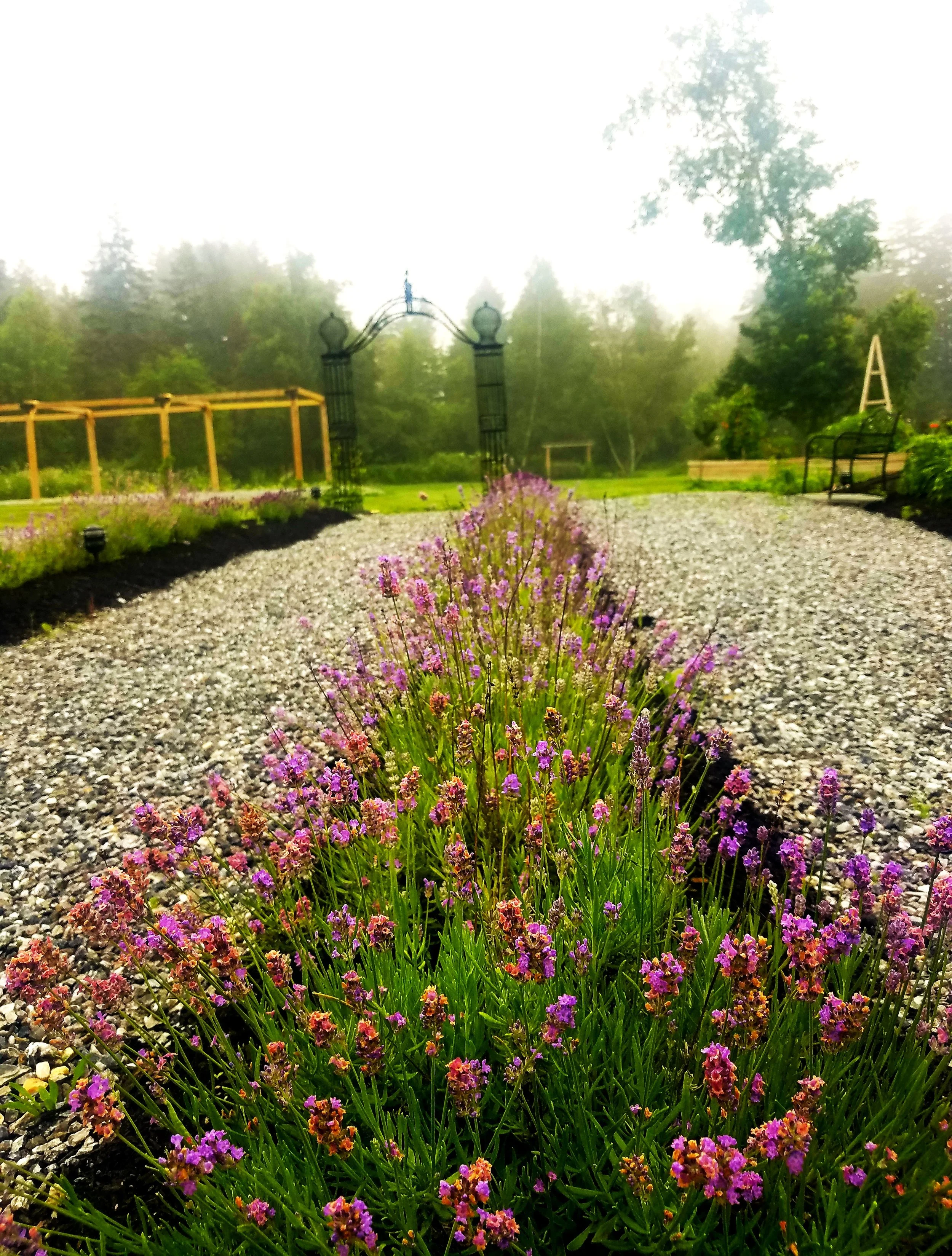
Lavender
. Our Munstead lavender is always a bee favorite
🌸 Lavender
The fragrance draws people.
The nectar draws bees.
Lavender has become one of our favorite plants for blending beauty with ecological value.
Watching hundreds of bees quietly working a lavender border is one of summer's simple pleasures.
🌺 Daylilies
Although each flower lasts only one day, every plant produces an incredible succession of blooms.
Their bright colors attract butterflies, bees, and hummingbirds throughout midsummer.
As our daylily collection continues to expand, so does the diversity of pollinators we observe.
🌼 Coneflowers
One of the true workhorses of the summer garden.
Coneflowers provide nectar for bees and butterflies while later supplying seeds for goldfinches and other birds.
Their value extends far beyond bloom season.
🌿 Salvia
Salvias become magnets for hummingbirds.
Their tubular flowers seem perfectly designed for hovering visitors.
The vibrant movement they bring to the gardens is impossible to overlook.
Hydrangeas: Beauty Beyond the Blooms
Hydrangeas are often planted for their spectacular flowers, but many gardeners don't realize they also contribute to a healthy garden ecosystem.
At 19 Birch Lane, our growing collection includes:
BloomStruck® Hydrangeas
Oakleaf Hydrangeas
Smooth Hydrangeas
The lacecap and fertile florets on many varieties provide pollen and nectar for a variety of beneficial insects, while the shrubs themselves offer shelter and nesting habitat throughout the season.
Their long bloom period also helps bridge the transition between early and late summer flowers.
Roses and Pollinators
Many people assume modern roses provide little ecological value.
In reality, many fragrant, open-centered roses remain incredibly attractive to pollinators.
Our expanding collection of David Austin English Roses has become one of the busiest places in the gardens during peak bloom.
Honeybees move from blossom to blossom while butterflies drift effortlessly among the fragrant flowers.
It's one more reminder that beauty and biodiversity can exist together.
Water Brings Life
One of the most rewarding projects we've completed was the addition of our babbling brook and pond.
Originally designed simply as a peaceful garden feature, it quickly became something much more.
Dragonflies patrol the water.
Tree frogs gather along the edges.
Birds stop to drink and bathe.
Butterflies land along damp stones to collect minerals.
The sound of moving water draws not only people—but wildlife.
Water transforms a garden.
Diversity Is the Secret
If there's one lesson we've learned while building the gardens at 19 Birch Lane, it's this:
The more diverse your plantings become, the more diverse the wildlife becomes.
Rather than relying on a handful of flowering plants, we've intentionally expanded our collections to include:
Irises
Daylilies
Hydrangeas
David Austin Roses
Hellebores
Catmint
Lavender
Delphiniums
Coreopsis
Salvias
Coneflowers
Japanese Anemones
Ornamental grasses
Flowering shrubs
Spring bulbs
Each contributes to a different season.
Each attracts different pollinators.
Each strengthens the ecosystem.
A Garden That Gives Back
One of the greatest joys of gardening isn't simply watching plants grow.
It's watching life return.
Every season we notice something new.
A butterfly species we haven't seen before.
More hummingbirds.
Native bees working flowers we'd never noticed them visiting.
The gardens have become more than beautiful landscapes.
They've become habitat.
And perhaps that's one of gardening's greatest gifts.
When we plant thoughtfully, we don't just create beauty for ourselves.
We create places where nature can thrive alongside us.
Looking Toward the Future
As 19 Birch Lane continues its journey toward becoming one of Maine's inspiring botanical destinations, we'll continue adding new plant collections—not simply because they're beautiful, but because every new planting has the potential to support life.
Every tree planted.
Every perennial added.
Every flowering shrub established.
Together they create something far greater than a garden.
They create a living ecosystem.
One bee.
One butterfly.
One bloom at a time.
🌿 Visit the Gardens
Whether you're looking for inspiration for your own landscape, planning a visit to Mid Coast Maine, or simply enjoy learning about plants, we invite you to follow along as the gardens continue to grow.
Every season tells a new story.
And we're just getting started.