
In the Garden at 19 Birch LaneA New Chapter Begins: Planting Over 120 Dwarf Irises Along Our Brook
There are moments in every garden's journey that feel like turning the page to a new chapter. This summer, one of those moments arrived at 19 Birch Lane as we completed one of our most exciting projects to date—planting more than 120 varieties of miniature and standard dwarf bearded irises in a brand-new garden nestled alongside our babbling brook.
While visitors often admire the blooms that capture the spotlight, what they don't always see is the vision behind them. Every new garden at 19 Birch Lane begins with a simple question:
How can we create an experience that inspires people to fall in love with gardening?
That philosophy continues to guide everything we do as we steadily transform 19 Birch Lane into a botanical destination in Mid Coast Maine—a place where guests can return throughout the seasons to discover new plant collections, learn from the landscape, and simply enjoy the beauty that nature has to offer.
This year's focus has been on exactly that: building living collections.
Why Plant Collections Matter
One of the defining characteristics of great botanical gardens around the world is not simply the number of plants they grow—it's the thoughtfully curated collections that tell a story.
Instead of scattering a few specimens throughout the landscape, botanical gardens often dedicate entire spaces to one genus or plant family, allowing visitors to compare colors, bloom forms, foliage, fragrances, and growing habits side by side.
That approach has become a major focus for us this year.
Throughout the summer we've been expanding collections of:
Tall Bearded Irises
Miniature Dwarf Bearded Irises
Standard Dwarf Bearded Irises
Daylilies
David Austin Roses
Hydrangeas
Ornamental Grasses
Each new collection brings us one step closer to our long-term vision of creating a garden that people can visit not just once—but many times throughout the year.
Why Dwarf Irises?
When most people picture irises, they imagine the tall, elegant flowers that bloom in late May and early June.
But there is another group of irises that deserves just as much attention.
Miniature Dwarf Bearded (MDB) and Standard Dwarf Bearded (SDB) irises are among the very first perennial flowers to bloom each spring, often appearing just as the last patches of snow disappear from the landscape.
Despite their smaller size, these plants produce flowers every bit as intricate and spectacular as their taller cousins.
Their blooms range from:
Crystal white
Brilliant yellow
Apricot
Lavender
Violet
Deep burgundy
Nearly black
Sky blue
Copper
Rich mahogany
Bicolors
Patterned and plicata forms
Many varieties feature striking beards, intricate veining, dramatic color combinations, and even light fragrance.
Because they bloom weeks before Tall Bearded Irises, they extend the iris season and provide a welcome burst of color when gardeners need it most.
Building the New Brook Garden
Every garden at 19 Birch Lane begins with careful planning.
This newest garden was designed to complement one of our favorite features—the babbling brook that gently winds through the property.
Rather than creating a formal rectangular bed, we designed sweeping curves that follow the natural movement of the stream. The result is a garden that feels as though it has always belonged there.
Creating the garden required several important steps.
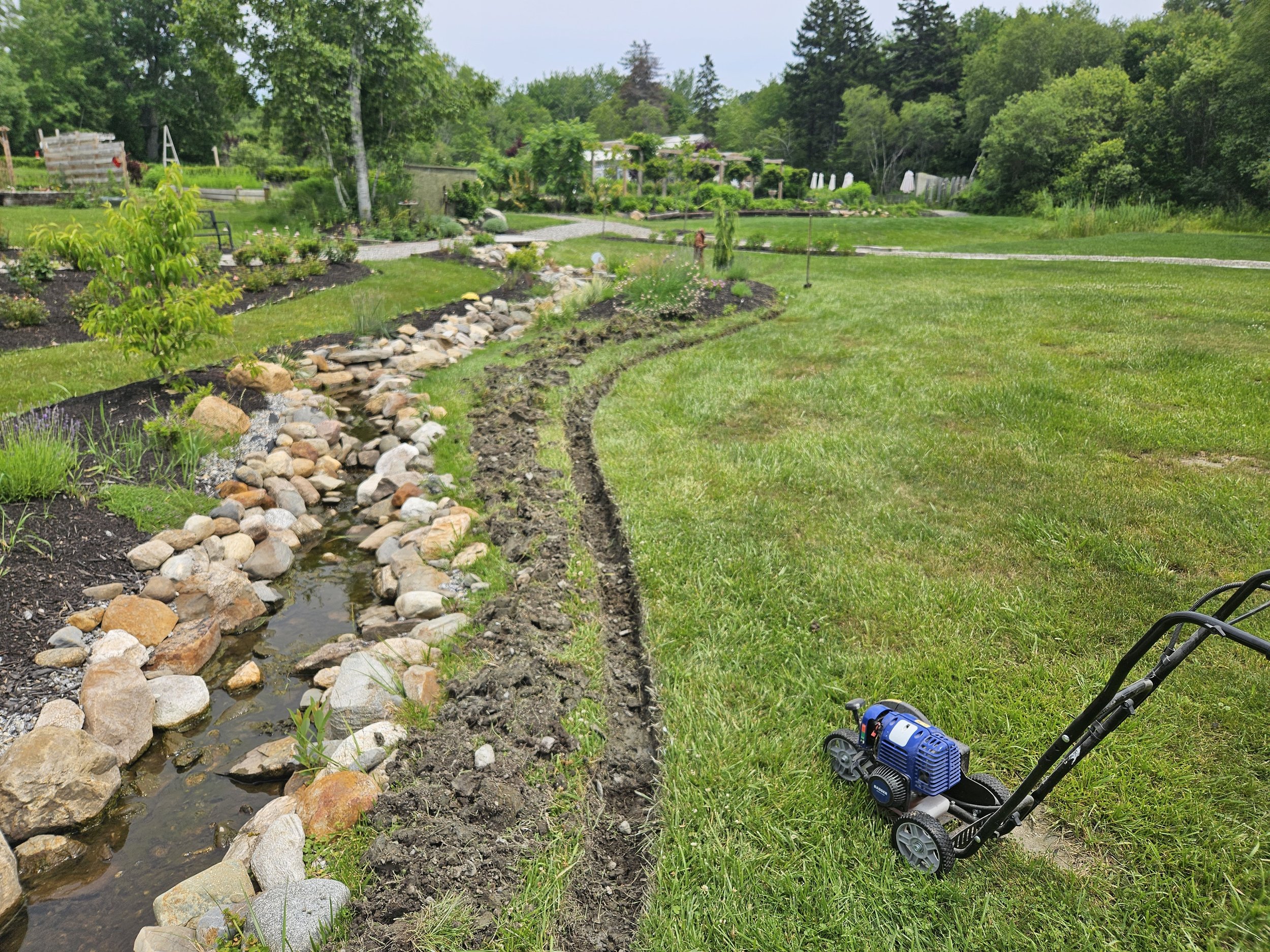
Removing sod to create garden edge
By a garden It helps to keep weeds and grass away from encroaching Into the bed.
Removing the Existing Sod
The first task was outlining the entire garden by hand before removing the existing grass.
We carefully cut away the sod to establish the flowing curves that now define the planting bed. Removing the grass not only gave us clean edges but also eliminated competition from turf, allowing the irises to establish more quickly.
Improving the Soil
Healthy gardens begin below the surface.
Once the sod was removed, we loosened and amended the existing soil to improve drainage and encourage healthy root development.
Like most bearded irises, dwarf irises dislike wet feet during the winter months. By improving the soil before planting, we're giving these plants the best possible start for years of dependable blooms.
Cardboard: A Simple, Sustainable Solution
One of our favorite techniques is also one of the simplest.
Before adding mulch, we laid recycled cardboard throughout the bed.
Cardboard acts as a natural weed barrier that suppresses unwanted grass while gradually breaking down and enriching the soil.
Unlike plastic landscape fabric, cardboard decomposes naturally, allowing earthworms and beneficial soil organisms to thrive underneath.
It's inexpensive, environmentally friendly, and remarkably effective.
Once covered with mulch, the cardboard disappears completely while quietly doing its job beneath the surface.
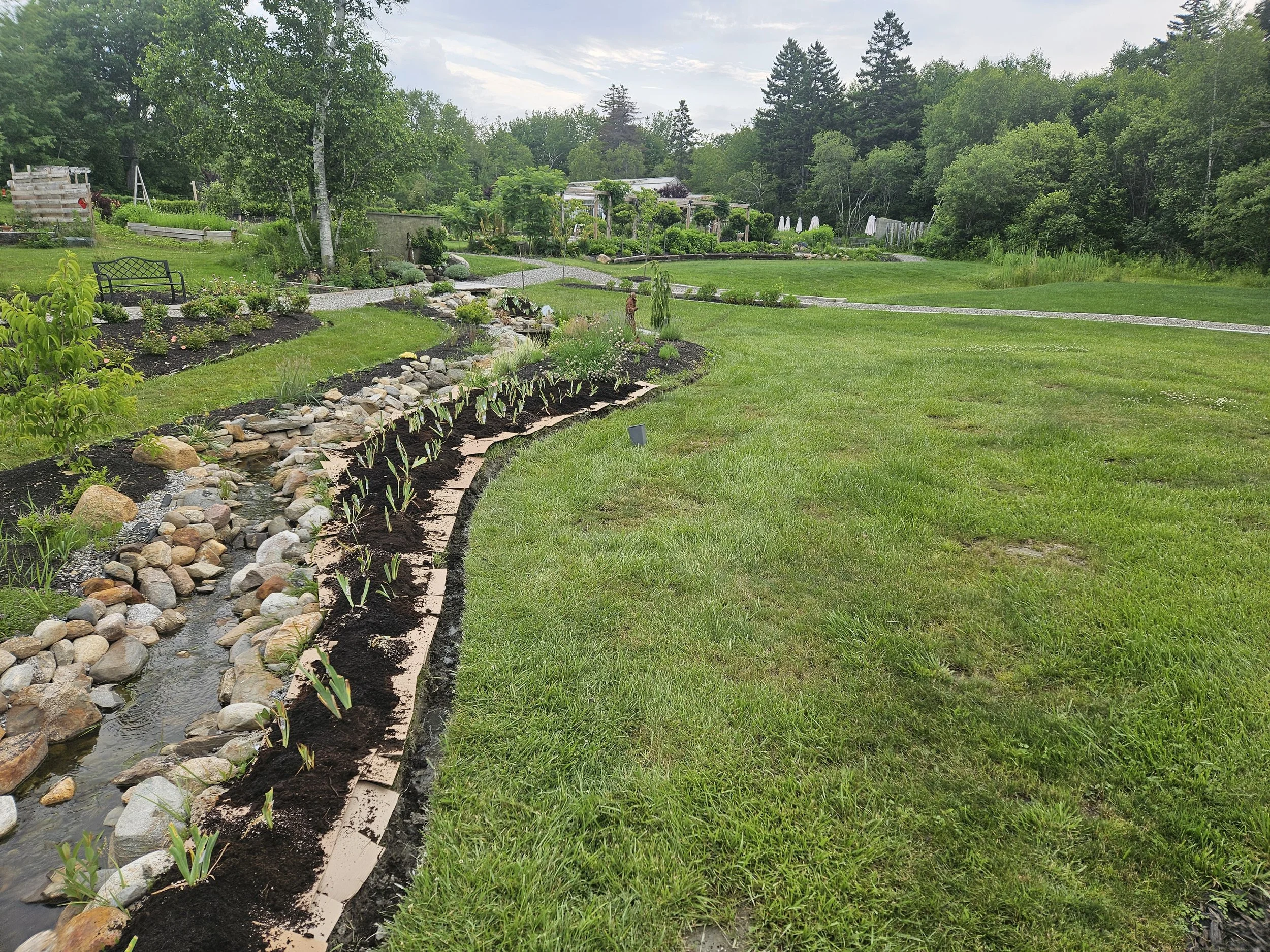
Cardboard
Using cardboard in a garden can help Create a natural weed barrier that will break over time.
Sourcing from One of Maine's Finest Iris Growers
Whenever possible, we love supporting Maine growers.
Every one of the new dwarf irises planted in this garden was purchased from Grenier Gardens in Minot, Maine, one of New England's premier iris growers and hybridizers.
Grenier Gardens has earned an outstanding reputation among iris enthusiasts for offering exceptional cultivars, healthy plants, and an incredible selection of both classic favorites and exciting modern introductions.
Working with a local grower not only supports Maine horticulture but also gives us confidence that these plants are well suited for our climate and growing conditions.
We're incredibly grateful for the quality plants they continue to provide.
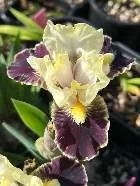
With so many different color variations of standard dwarf irises Why choose just one.
Designing for Every Season
One lesson we've learned through years of gardening is that great gardens don't rely on one spectacular month.
They are designed to evolve.
Our new iris garden has been carefully planned so that it changes throughout the year.
Early spring begins with the miniature dwarf irises.
Next come the Standard Dwarf Bearded Irises.
Soon after, our Tall Bearded Iris collection takes center stage.
As the irises fade, nearby perennials, ornamental grasses, and flowering shrubs begin their own performance, carrying the garden through summer and into autumn.
Even in winter, the curves of the beds, the flowing brook, and surrounding evergreens continue to provide structure and beauty.
Looking Toward the Future
Projects like this represent far more than simply planting flowers.
They represent our vision.
Over the past several years we've worked to transform 19 Birch Lane from a private property into something much larger—a place where gardens inspire, educate, and encourage people to reconnect with nature.
Every new collection we add becomes another reason to visit.
Every new pathway invites exploration.
Every season tells a different story.
The dwarf iris garden is only the beginning.
As we continue adding new collections throughout the property, we hope visitors will discover something different every time they walk through the gates.
Final Thoughts
Gardens are never truly finished.
They grow, evolve, and surprise us with every passing season.
As we planted each of the more than 120 miniature and standard dwarf bearded irises this summer, we couldn't help but imagine what this garden will become—not just next spring, but five, ten, and twenty years from now.
That's the beauty of gardening.
You plant today for tomorrow.
At 19 Birch Lane, every new collection is another step toward our dream of creating one of Maine's premier botanical garden destinations—a place where beautiful plants, thoughtful design, and a love of horticulture come together to inspire gardeners of every experience level.
We hope you'll follow along as these remarkable irises begin their journey and return next spring to experience the first chapter of this exciting new collection in bloom.