
White Forsythia (Abeliophyllum distichum)
Early Spring Blooming Shrub with Fragrant White Flowers
🌿 Plant Overview
Common Name: White Forsythia
Botanical Name: Abeliophyllum distichum
Plant Type: Deciduous Shrub
Family: Oleaceae
Hardiness Zones: 5–8
Native Range: Korea
📊 Key Characteristics
Height: 3–5 feet
Spread: 3–4 feet
Bloom Time: March to April (very early spring)
Flower Color: White, sometimes with a soft pink tinge
Foliage: Medium green
Growth Habit: Rounded, multi-stemmed with arching branches
☀️ Growing Conditions
Sun Exposure: Full sun to part shade (best flowering in full sun)
Water Needs: Medium
Soil: Well-drained, average soil
Maintenance Level: Low
White forsythia prefers well-drained soils and tolerates some drought once established but does not perform well in wet conditions.
🌸 Garden Features
✔️ Extremely early spring bloom
✔️ Fragrant flowers
✔️ Showy flowering on bare branches
✔️ Low maintenance
✔️ Deer resistant
✂️ Care & Maintenance
Prune immediately after flowering to maintain shape and encourage next year’s blooms, as flower buds form on current season growth. Periodic rejuvenation pruning every few years helps maintain a full, attractive form.
🌼 Landscape Uses
Shrub borders, hedges, foundation plantings, mass plantings, early spring interest gardens
🌿 19 Birch Lane Insight
White forsythia is one of the first signs of life in the garden—flowering just before or alongside traditional forsythia, offering a softer, more refined take on early spring color.
🌱 Noteworthy Characteristics
Abeliophyllum distichum is prized for its profuse early bloom, with clusters of delicate white flowers that open along bare stems before foliage emerges. The blooms often carry a subtle fragrance and may show a faint pink blush. While its foliage remains modest through the growing season, its early bloom makes it a valuable seasonal highlight.
⚠️ Problems
No serious insect or disease problems. Best performance depends on proper drainage and timely pruning.
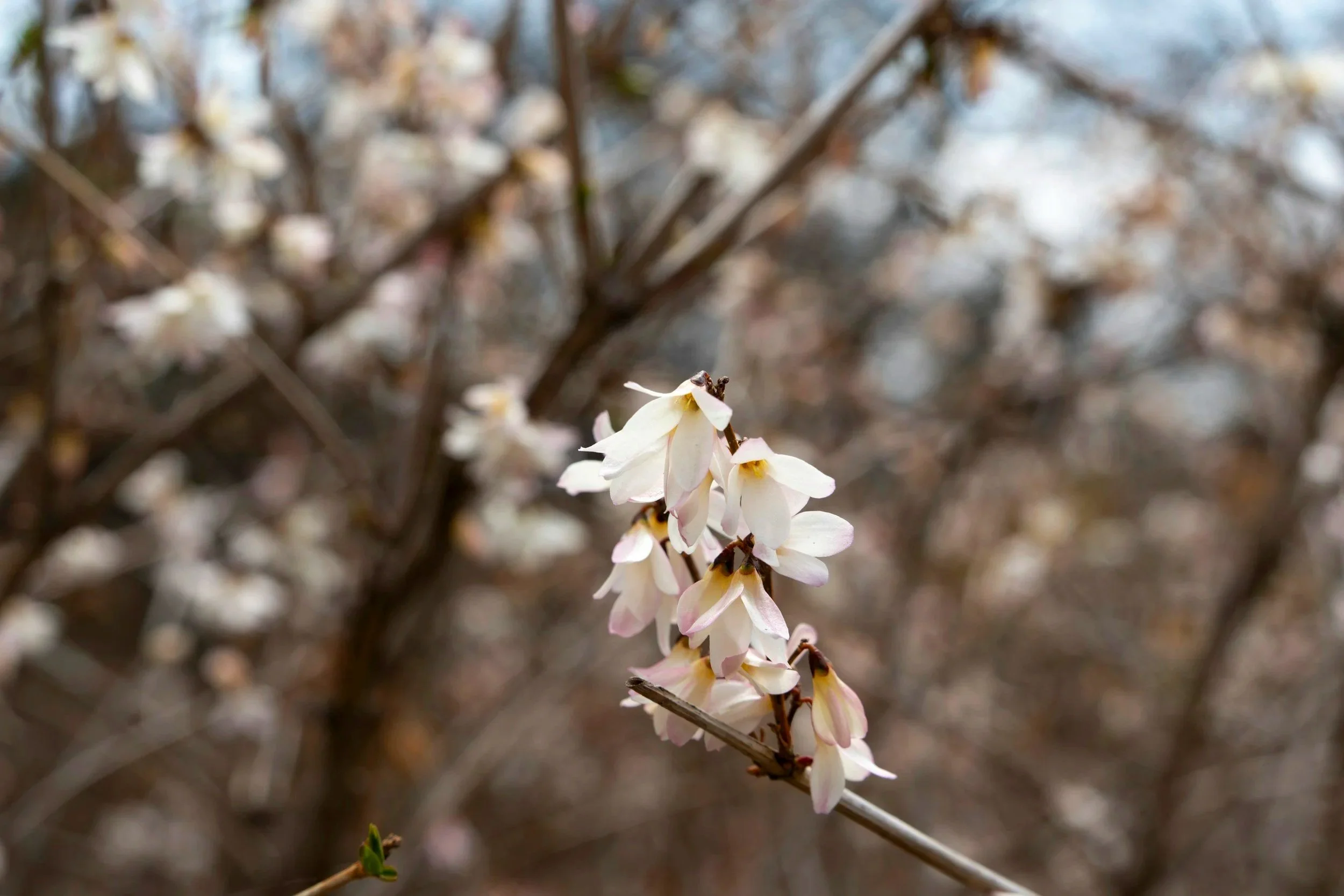
White Forsythia