
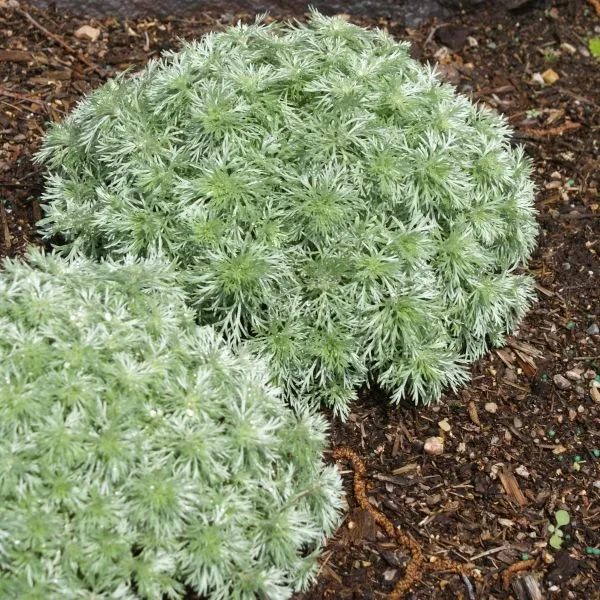
Silver Mound Artemisia (Artemisia schmidtiana ‘Silver Mound’)
Soft Silver Foliage Perennial for Borders, Edging & Drought-Tolerant Gardens
🌿 Plant Overview
Common Name: Silver Mound
Botanical Name: Artemisia schmidtiana ‘Silver Mound’
Plant Type: Herbaceous Perennial
Family: Asteraceae
Hardiness Zones: 3–9
Native Range: Japan
📊 Key Characteristics
Height: 10–12 inches
Spread: 10–12 inches
Bloom Time: Late spring (flowers insignificant)
Flower Color: Yellow-green
Foliage: Silvery-gray, finely textured
Growth Habit: Compact, mounding
☀️ Growing Conditions
Sun Exposure: Full sun
Water Needs: Low (highly drought tolerant once established)
Soil: Well-drained; sandy, loamy, or chalky soils preferred
Maintenance Level: Low
Silver Mound thrives in dry, sunny conditions and performs best in soils with excellent drainage. Avoid overly rich or wet soils.
🌸 Garden Features
✔️ Unique soft, silvery foliage
✔️ Excellent drought tolerance
✔️ Deer and rabbit resistant
✔️ Fragrant foliage
✔️ Heat tolerant
✔️ Ideal for mass planting
✂️ Care & Maintenance
Divide plants every 2–3 years in spring or fall to maintain vigor and shape. Trim lightly if plants begin to open up or lose their compact form. Avoid excessive moisture.
🌼 Landscape Uses
Borders, edging, ground cover, rock gardens, containers, cottage gardens, xeriscape plantings
🌿 19 Birch Lane Insight
‘Silver Mound’ acts as a perfect soft contrast in the garden—its silvery texture highlighting bold blooms and creating balance in planting designs.
🌱 Noteworthy Characteristics
This compact perennial is prized for its feathery, silky foliage that creates a luminous effect in the landscape. Unlike spreading varieties, it forms tidy mounds, making it ideal for structured plantings. Its neutral silver tone pairs beautifully with vibrant flowering perennials.
⚠️ Problems
May decline in high humidity or poorly drained soils. Ensure excellent drainage to prevent crown rot.
Silver Mound Artemisia (Artemisia schmidtiana ‘Silver Mound’)
Soft Silver Foliage Perennial for Borders, Edging & Drought-Tolerant Gardens