
Blue Mouse Ears Hosta (Hosta 'Blue Mouse Ears')
Award-Winning Miniature Hosta with Blue-Green Foliage, Lavender Flowers & Exceptional Shade Garden Appeal
Plant Overview
Common Name: Blue Mouse Ears Hosta
Botanical Name: Hosta 'Blue Mouse Ears'
Plant Type: Herbaceous Perennial
Family: Asparagaceae
Hardiness Zones: 3–9
Blue Mouse Ears Hosta is one of the most celebrated miniature hostas available today. Loved for its perfectly rounded, thick blue-green leaves that resemble tiny mouse ears, this compact perennial forms a dense, symmetrical mound that adds texture and color to woodland gardens, shaded borders, fairy gardens, and containers.
Named the 2008 American Hosta Growers Association Hosta of the Year and recipient of the Royal Horticultural Society Award of Garden Merit, Blue Mouse Ears is considered one of the finest miniature hostas for both collectors and home gardeners.
Quick Facts
Height: 6 inches
Flower Height: 8–12 inches
Spread: 12 inches
Bloom Time: Mid-Summer
Flower Color: Lavender to Violet
Foliage Color: Blue-Green
Sun Exposure: Part Shade to Full Shade
Water Needs: Average
Maintenance: Easy
Growth Habit: Compact, Rounded
Growth Rate: Moderate
Container Friendly: Excellent
Award Winner: 2008 Hosta of the Year
Growing Conditions
Light
Blue Mouse Ears performs best in:
Part Shade
Woodland Shade
Full Shade
Morning sun is tolerated in northern climates, but afternoon shade helps preserve the rich blue foliage.
Soil
This hosta thrives in:
Moist, well-drained soil
Humus-rich woodland soil
Compost-amended garden beds
Slightly acidic to neutral soil
Organic matter improves both soil moisture retention and overall plant health.
Water
For best performance:
Water deeply during establishment
Maintain consistent moisture
Avoid prolonged dry periods
Established plants become relatively resilient but appreciate regular watering during hot, dry weather.
Foliage Characteristics
The distinctive foliage is what makes Blue Mouse Ears one of the world's most recognizable miniature hostas.
Leaf Features
Thick, durable leaves
Blue-green to gray-green color
Rounded, heart-shaped form
Slight upward curl resembling mouse ears
Exceptional texture
Dense, symmetrical mound
The heavy substance of the leaves also offers improved resistance to slug damage compared to many traditional hosta varieties.
Flower Characteristics
Elegant flower scapes emerge above the foliage during midsummer.
Flower Features
Soft lavender to violet blooms
Bell-shaped flowers
Held on pale green stems
Graceful vertical accent
Attractive to hummingbirds and pollinators
The flowers provide beautiful seasonal contrast against the cool blue foliage.
Pollinator & Wildlife Benefits
Blue Mouse Ears supports beneficial wildlife throughout the growing season.
Attracts
Hummingbirds
Bees
Butterflies
Pollinating insects
Its summer flowers provide an excellent nectar source in shaded garden settings.
Garden Uses
Its compact size makes Blue Mouse Ears incredibly versatile.
Recommended Uses
Woodland Gardens
Shade Gardens
Fairy Gardens
Rock Gardens
Container Gardens
Trough Gardens
Border Edging
Underplanting Trees and Shrubs
Collector Gardens
Botanical Gardens
Its neat habit also makes it ideal for planting between stepping stones or along shaded pathways.
Companion Plants
At 19 Birch Lane, Blue Mouse Ears pairs beautifully with:
Japanese Painted Fern
Hellebores
Coral Bells (Heuchera)
Brunnera
Astilbe
Trillium
Pulmonaria
Tiarella
Miniature Hostas
Woodland Phlox
These combinations create layered texture and year-round beauty in shaded landscapes.
Care & Maintenance
Blue Mouse Ears is remarkably easy to maintain.
Maintenance Tips
Water consistently during dry periods
Remove damaged foliage in early spring
Cut back spent flower stalks after blooming
Divide mature clumps every 4–5 years if desired
Top dress annually with compost
Winter Care
In colder climates:
Allow foliage to die back naturally
Remove old leaves after frost
Apply a light mulch to protect roots from freeze-thaw cycles
Clean up foliage to reduce overwintering pests
Why We Grow It at 19 Birch Lane
At 19 Birch Lane, Blue Mouse Ears Hosta is one of our favorite miniature hostas for adding elegance and texture to shaded garden spaces. Its perfectly rounded blue foliage, exceptional durability, and compact growth habit make it an ideal choice for woodland gardens, container displays, and our expanding botanical collections.
Its award-winning performance and timeless beauty continue to make it one of the finest hostas available for gardeners of all experience levels.
Problems
Blue Mouse Ears is generally very reliable.
Potential Issues
Slugs and snails
Deer browsing
Rabbits
Foliar nematodes
Crown rot in poorly drained soils
Its thick leaves offer better slug resistance than many larger hosta varieties.
Plant Finder Details
Botanical Name: Hosta 'Blue Mouse Ears'
Common Name: Blue Mouse Ears Hosta
Plant Type: Herbaceous Perennial
Family: Asparagaceae
Zones: 3–9
Height: 6 inches
Flower Height: 8–12 inches
Spread: 12 inches
Bloom Time: Mid-Summer
Flower Color: Lavender
Foliage Color: Blue-Green
Sun Exposure: Part Shade to Full Shade
Water Requirements: Average
Maintenance: Easy
Growth Habit: Compact, Rounded
Attracts: Hummingbirds, Bees, Butterflies
Botanical Garden Notes
Blue Mouse Ears showcases the incredible diversity found within the Hosta genus. Its miniature size, award-winning foliage, and dependable garden performance make it one of the signature hostas in the collections at 19 Birch Lane and an excellent example of how even the smallest perennials can create lasting visual impact.
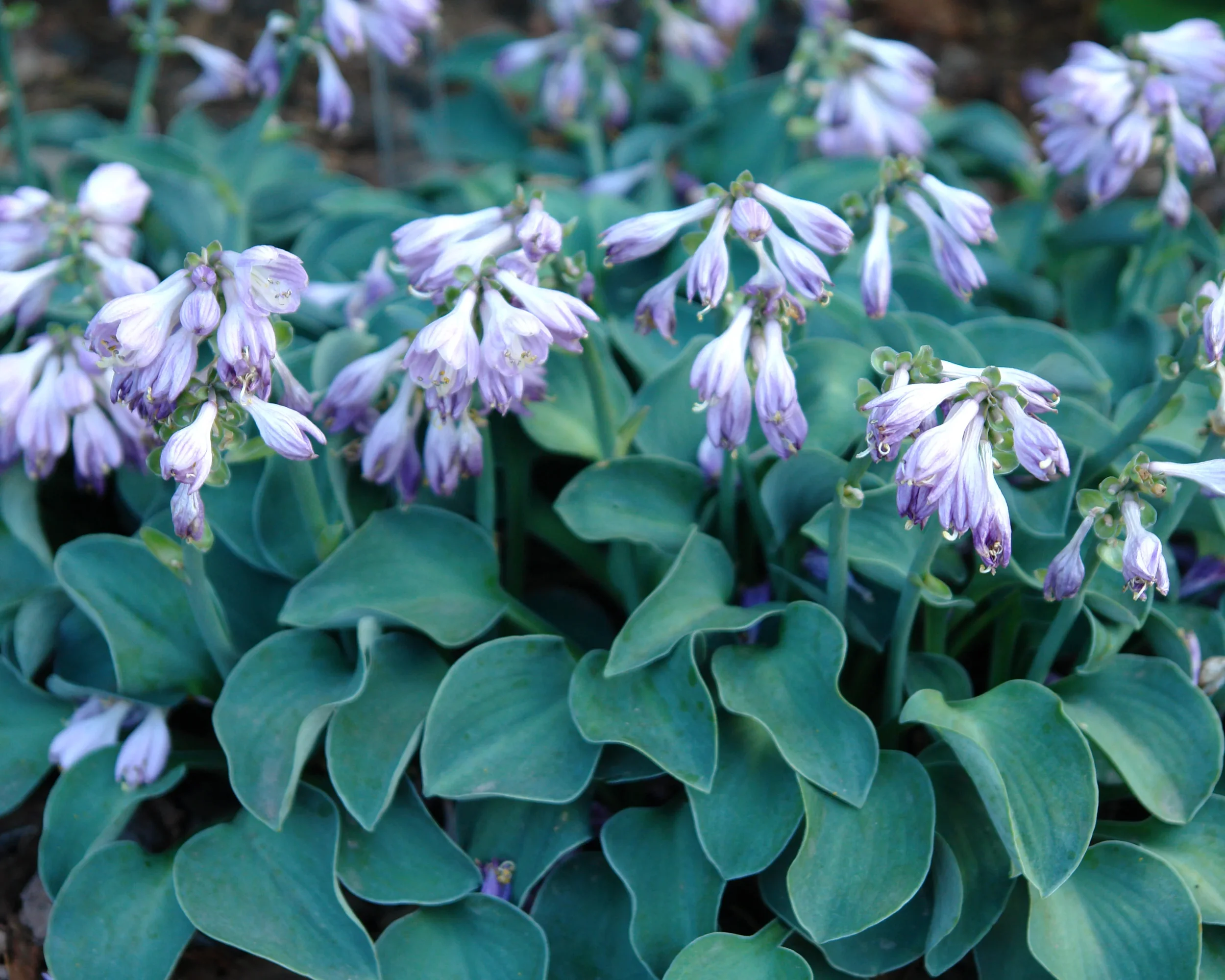
Blue Mouse Ears Hosta (Hosta 'Blue Mouse Ears')
Award-Winning Miniature Hosta with Blue-Green Foliage, Lavender Flowers & Exceptional Shade Garden Appeal