
Summer Eclipse False Sunflower (Heliopsis helianthoides 'Summer Eclipse')
Award-Winning Native Perennial with Burnt Orange Blooms, Burgundy Foliage & Season-Long Pollinator Appeal
Plant Overview
Common Name: Summer Eclipse False Sunflower
Botanical Name: Heliopsis helianthoides 'Summer Eclipse'
Plant Type: Herbaceous Perennial
Family: Asteraceae
Native Range: North America (species)
Hardiness Zones: 3–9
Summer Eclipse False Sunflower is an exceptional compact selection of our native false sunflower, producing an abundance of semi-double flowers in rich shades of burnt orange highlighted with golden-yellow petal tips surrounding deep bronze-orange centers. Complementing the flowers are burgundy stems and dark green foliage infused with rich burgundy tones, creating dramatic color contrast from early summer into fall.
Named Best of Species in the 2022 Penn State University Trials, Summer Eclipse combines outstanding garden performance, long bloom time, and exceptional pollinator value into one compact perennial.
Quick Facts
Height: 24–30 inches
Spread: 24–30 inches
Bloom Time: Early Summer through Early Fall
Flower Color: Burnt Orange with Yellow Tips
Center Color: Dark Bronze-Orange
Foliage Color: Deep Green with Burgundy Highlights
Stem Color: Burgundy
Sun Exposure: Full Sun
Water Needs: Average
Maintenance: Low
Growth Habit: Upright, Compact
Growth Rate: Moderate
Deer Resistant: Yes
Pollinator Friendly: Excellent
Growing Conditions
Light
Summer Eclipse performs best in:
Full Sun
At least 6 hours of direct sunlight daily
Full sun encourages the strongest stems, richest foliage color, and the most abundant flowering.
Soil
This adaptable perennial grows well in:
Average garden soil
Well-drained loam
Sandy soil
Clay soil with good drainage
Moderately fertile soils
It performs exceptionally well in prairie-style plantings and naturalized landscapes.
Water
Once established, Summer Eclipse is highly adaptable.
Average moisture during establishment
Moderate drought tolerance
Performs well in average to dry soils
Avoid overly wet conditions during winter.
Flower Characteristics
Summer Eclipse is prized for its unique flower coloration.
Flower Features
Semi-double blooms
Burnt orange petals
Bright yellow petal tips
Dark orange central cone
Long bloom season
Excellent cut flowers
Deadheading encourages additional blooms throughout the growing season.
Foliage Characteristics
Even before flowering, this plant adds bold color to the landscape.
Foliage Features
Deep green leaves
Burgundy-infused foliage
Rich burgundy stems
Attractive upright habit
Excellent contrast with surrounding perennials
The dark foliage enhances the warm flower colors throughout summer.
Pollinator & Wildlife Benefits
As a North American native species, Summer Eclipse is highly valuable to wildlife.
Attracts
Native Bees
Bumblebees
Butterflies
Beneficial Pollinators
Its long bloom period provides an important nectar source from summer into early fall.
Garden Uses
Summer Eclipse is an outstanding structural perennial for sunny gardens.
Recommended Uses
Pollinator Gardens
Prairie Gardens
Cottage Gardens
Native Plant Gardens
Perennial Borders
Cutting Gardens
Mass Plantings
Foundation Borders
Containers
Botanical Collections
Plant in groups of three or more for the greatest visual impact.
Companion Plants
At 19 Birch Lane, Summer Eclipse pairs beautifully with:
Coneflowers (Echinacea)
Russian Sage (Salvia yangii)
Black-Eyed Susans (Rudbeckia)
Joe Pye Weed
Switchgrass (Panicum)
Little Bluestem
Sedum 'Autumn Joy'
Bee Balm (Monarda)
Garden Phlox
Ornamental Grasses
Its warm orange flowers contrast beautifully with blue and purple flowering perennials.
Care & Maintenance
Summer Eclipse is a dependable, low-maintenance perennial.
Maintenance Tips
Plant in full sun
Deadhead to encourage repeat flowering
Divide every 3–5 years
Cut stems back in late winter or early spring
Apply compost annually
This variety requires very little care once established.
Why We Grow It at 19 Birch Lane
At 19 Birch Lane, Summer Eclipse False Sunflower is valued for its outstanding color combination, long flowering season, and exceptional wildlife value. Its unique orange and yellow blooms paired with burgundy foliage make it one of the most eye-catching native-inspired perennials in our sunny garden collections.
Its outstanding performance, durability, and pollinator appeal make it an ideal choice for gardeners seeking both beauty and ecological value.
Problems
Generally very reliable.
Potential Issues
Occasional powdery mildew in crowded plantings
Root rot in poorly drained soils
Flopping if grown in excessive shade
Providing full sun and proper spacing minimizes potential problems.
Plant Finder Details
Botanical Name: Heliopsis helianthoides 'Summer Eclipse'
Common Name: Summer Eclipse False Sunflower
Plant Type: Herbaceous Perennial
Family: Asteraceae
Native Range: North America (species)
Zones: 3–9
Height: 24–30 inches
Spread: 24–30 inches
Bloom Time: Early Summer to Early Fall
Flower Color: Burnt Orange with Yellow Tips
Center Color: Bronze-Orange
Foliage Color: Green with Burgundy Highlights
Stem Color: Burgundy
Sun Exposure: Full Sun
Water Requirements: Average
Maintenance: Low
Growth Habit: Upright, Compact
Deer Resistant: Yes
Pollinator Friendly: Yes
Botanical Garden Notes
Summer Eclipse demonstrates the beauty and versatility of native North American perennials in ornamental landscapes. Its dramatic flower color, rich foliage, and long bloom period make it a standout feature in the sunny collections at 19 Birch Lane while providing valuable nectar resources for bees and butterflies throughout the growing season.
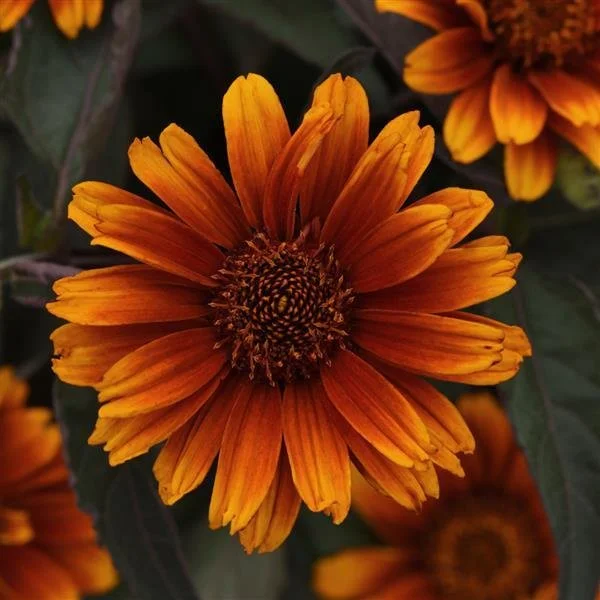
Summer Eclipse False Sunflower (Heliopsis helianthoides 'Summer Eclipse')
Award-Winning Native Perennial with Burnt Orange Blooms, Burgundy Foliage & Season-Long Pollinator Appeal