
Fall 2026 Garden Update | From Wedding Season to Garden Building in Midcoast Maine
In the Garden at 19 Birch Lane
By Aric Odone | Head Gardener, 19 Birch Lane | South Thomaston, Maine
When Wedding Season Ends, Garden Season Begins
Here at 19 Birch Lane, the changing seasons bring a different kind of excitement.
With our 2026 wedding season officially behind us, we're shifting our attention back to something that has become an increasingly important part of what we're creating here in South Thomaston, Maine: developing the gardens.
While summer is filled with weddings, maintaining our existing landscapes, and keeping everything looking its best, spring and fall are when we can really roll up our sleeves and tackle the larger garden projects.
And this fall, we're taking on one of our most exciting projects yet.
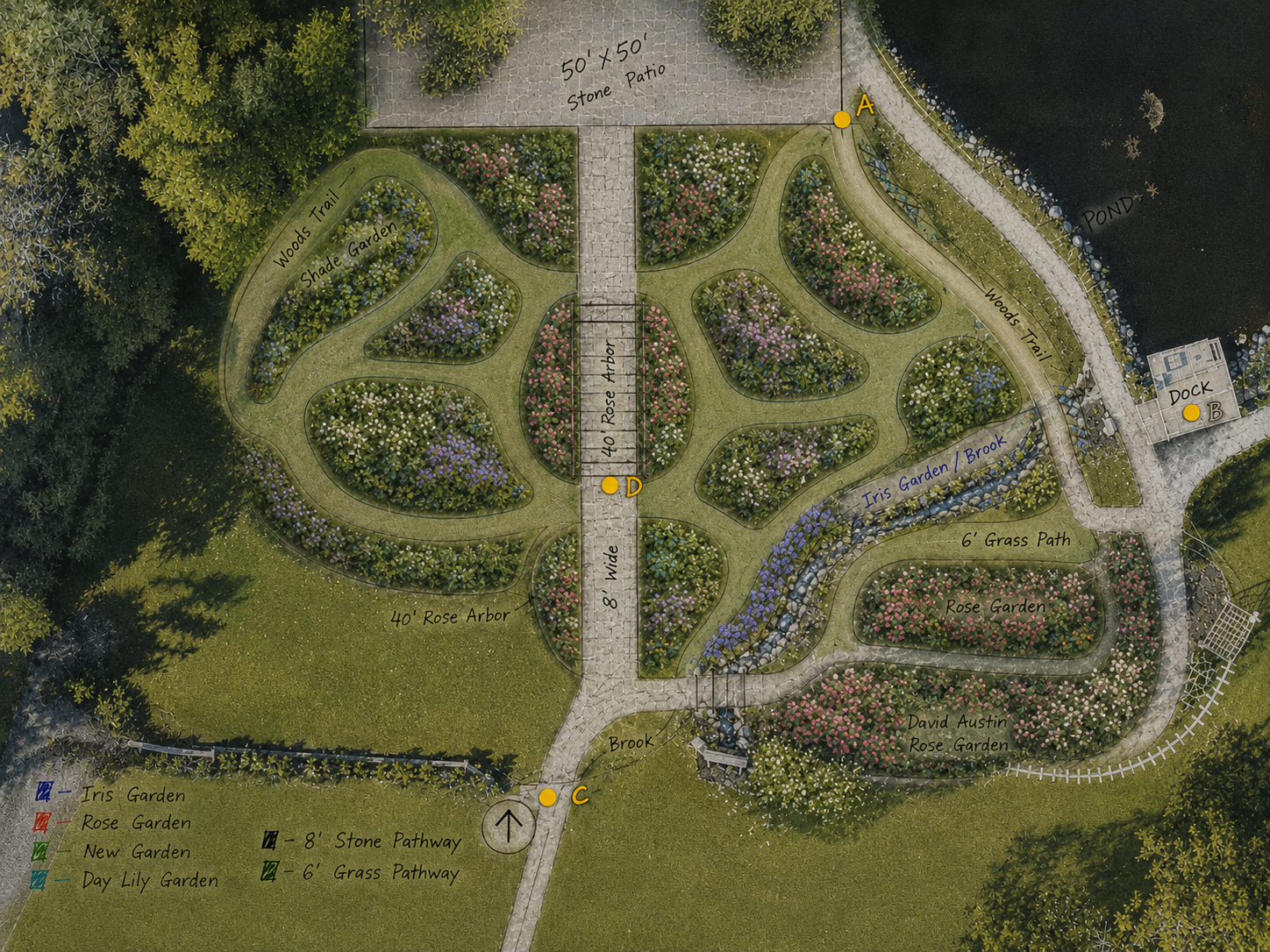
We're beginning the next major phase of our Main Showcase Garden, an ambitious garden expansion that we plan to complete by spring 2028.
This project will introduce three new garden areas, beginning with a substantial mixed planting border alongside one of our existing pathways near the pond.
It's another important step in our ongoing transformation of 19 Birch Lane from a private property and boutique wedding venue into a unique botanical garden destination in Midcoast Maine.
And as with so many of our projects, it all begins with a piece of ground, a vision, and plenty of work ahead.
Why Fall Is One of Our Busiest Times in the Garden
People often think of spring as the beginning of gardening season.
And while spring certainly brings plenty of excitement, I've come to appreciate just how valuable fall can be when it comes to creating new gardens.
At 19 Birch Lane, our wedding season typically runs from late spring through fall. During those months, much of our attention is devoted to maintaining the property and ensuring the gardens are looking their best.
Major construction projects aren't always practical when we're hosting events.
That leaves us with two important windows for significant garden development: spring and fall.
Fall is especially valuable because cooler temperatures make outdoor work more comfortable, and many hardy trees, shrubs, and perennials can establish roots while the soil is still relatively warm.
Of course, timing is important here in Maine.
With November upon us, we're mindful of approaching freezing temperatures. Some of our work can continue as weather permits, while certain plantings may need to wait until spring.
But garden development involves much more than putting plants into the ground.
There's planning, measuring, removing existing vegetation, preparing soil, establishing borders, and making sure the overall design works with the surrounding landscape.
And that's exactly where much of our energy is focused right now.
Introducing Our Main Showcase Garden
One of our long-term goals at 19 Birch Lane is to create a series of interconnected gardens that visitors can explore and enjoy.
Rather than developing individual flower beds that feel disconnected from one another, we're working toward a landscape where each garden contributes to a larger experience.
Our Main Showcase Garden is an important part of that vision.
The idea is to create a beautiful, layered landscape featuring carefully selected ornamental shrubs, flowering perennials, and grasses.
We want this area to provide interest throughout the growing season, with changing flower colors, contrasting foliage, and plant combinations that become more impressive as they mature.
The project will involve three new garden areas, each contributing to the overall design.
Our first priority is a long planting bed located beside an existing pathway near the pond.
And that's where we're beginning.
The First Addition: A 10-Foot-by-60-Foot Mixed Garden Border
Our first new garden will measure approximately 10 feet wide by 60 feet long, giving us 600 square feet of planting space.
Located alongside the pathway bordering our pond, this garden will become an important visual feature as people move through the property.
When designing a garden in a location like this, I think about more than what the plants will look like individually.
I think about how the entire planting will appear from the pathway, how it will complement the pond, and how the colors and textures will change throughout the seasons.
A long garden border presents an opportunity to create a beautiful sense of movement.
Rather than planting everything in straight rows or using a random assortment of plants, I prefer creating groups and repeating certain varieties throughout the planting.
This helps tie the garden together and gives the landscape a more natural, intentional appearance.
Combining Shrubs, Grasses, and Perennials
For this particular garden, we're planning a mixture of carefully selected ornamental shrubs, grasses, and flowering perennials.
Each type of plant will serve a different purpose.
Ornamental shrubs will provide structure and help anchor the planting. Depending on the varieties selected, they can also contribute flowers, foliage color, and seasonal interest.
Ornamental grasses will introduce texture, movement, and contrast. I've become increasingly interested in incorporating grasses throughout our gardens because of the way they soften planting combinations and provide interest even after the main flowering season has passed.
Flowering perennials will bring much of the seasonal color, helping the garden transition from spring through summer and into fall.
Our goal is to create a planting that doesn't depend on one particular flower or one brief period of bloom.
Instead, we want the garden to offer something different as the seasons progress.
Designing for the Long Term
One of the most important lessons I've learned while developing gardens at 19 Birch Lane is to plan for how plants will look several years from now.
It's easy to create a garden that looks full immediately after planting.
But shrubs and perennials grow.
What begins as a small plant in a nursery container can eventually occupy several feet of garden space.
For this new border, we're considering mature plant sizes, spacing, and the relationship between the different plant groups.
I would much rather give plants the space they need to develop properly than create a garden that becomes overcrowded within a few seasons.
It's also important to think about maintenance.
As our gardens continue expanding, we're increasingly focused on selecting plants that provide exceptional ornamental value without requiring constant attention.
That doesn't mean creating gardens that require no maintenance.
Every garden needs care.
But thoughtful plant selection and good design can make a tremendous difference over time.
Preparing the Ground: Where Every Garden Really Begins
If you've followed our In the Garden blog, you know that we spend a considerable amount of time talking about soil preparation.
There's a reason for that.
Over the years, we've transformed many areas of 19 Birch Lane from ordinary lawn or open ground into established planting beds.
And one thing I've learned is that the work you do before planting can have a lasting impact on the success of a garden.
When developing a new planting area, I like to begin by evaluating the existing conditions.
How well does the soil drain?
Is it compacted?
Does it need additional organic matter?
Are there existing weeds or grasses that need to be removed?
These questions help determine how we prepare the ground.
For previous projects, we've removed sod, improved soil conditions, and incorporated cardboard as a biodegradable weed-suppression layer in appropriate areas.
For our new showcase planting, the same basic principles will guide our preparation.
We'll focus on creating a suitable growing environment before installing the plants.
A beautiful garden starts with healthy soil, not just beautiful flowers.
It's not always the most exciting part of a garden project, but it's one of the most important.
Creating a Garden That Changes With the Seasons
One of our biggest priorities when designing new gardens is creating interest throughout the growing season.
Here in coastal Maine, we have a relatively short period between the last spring frost and the arrival of colder autumn weather.
That makes thoughtful plant selection especially important.
I don't want a garden that looks spectacular for three weeks and then has very little to offer for the remainder of the season.
Instead, I prefer combining plants that provide different forms of interest at different times.
Spring might bring fresh foliage and early flowers.
Summer introduces more substantial flowering displays and fuller plant growth.
By late summer and fall, ornamental grasses, late-blooming perennials, and changing foliage colors can take center stage.
Even during winter, certain shrubs and grasses can provide structure and texture.
This approach is becoming increasingly important as we expand our botanical collections at 19 Birch Lane.
We want visitors to discover something different each time they explore the gardens.
And we want the landscape to feel beautiful even when a particular group of plants isn't flowering.
Two More Gardens Are Part of the Plan
Although our immediate focus is the new 10-by-60-foot border beside the pond, this is only the beginning of the Main Showcase Garden expansion.
Two additional garden areas are also planned in other locations within the showcase garden.
Together, these three new planting areas will help create a more complete and cohesive landscape.
Each garden will be designed to complement the surrounding spaces while contributing its own combination of plants, textures, and seasonal interest.
As we continue working through the project, we'll be sharing more information about the individual garden designs, the plants we select, and the process of bringing everything together.
One of the things I enjoy most about developing gardens is watching the overall landscape evolve.
Sometimes a new planting changes the way you see an existing garden.
A pathway suddenly feels more inviting.
A view across the lawn becomes more interesting.
Or an area that previously seemed unfinished begins to feel connected to the rest of the property.
That's what we're hoping to accomplish with this next phase.
Looking Ahead to Spring 2028
Our goal is to have the Main Showcase Garden expansion completed by spring 2028.
That gives us time to approach the project thoughtfully rather than rushing to fill every available space.
Over the coming seasons, we'll continue preparing planting areas, selecting plants, and developing the three new gardens.
Some portions may begin taking shape relatively quickly.
Others will require additional planning and preparation.
And even after the installation work is complete, the gardens will continue evolving as the plants mature.
That's something I think is important for gardeners to remember.
Finishing the construction of a garden doesn't mean the garden itself is finished.
In many ways, that's when the most rewarding part begins.
The plants establish their roots, begin filling the spaces around them, and gradually transform the original design into something that feels natural and established.
By spring 2028, we hope visitors will be able to experience these new garden spaces as part of the larger landscape we're creating.
But like all gardens, they'll continue becoming more beautiful with time.
From a Boutique Wedding Venue to a Botanical Garden Destination
When we first began developing 19 Birch Lane as a boutique wedding venue, creating beautiful surroundings was always an important part of the vision.
Over time, however, our passion for gardening has taken the property in an exciting new direction.
Today, we're developing much more than a setting for weddings.
We're working toward creating a botanical garden destination where people can explore different planting styles, discover interesting plants, and learn more about gardening.
Our growing collections of roses, irises, daylilies, dahlias, hydrangeas, and other ornamental plants are all part of that journey.
We've also been developing new garden spaces, water features, pathways, and our Asian-inspired garden.
Each project adds another layer to the landscape.
And the Main Showcase Garden represents another significant step forward.
While we will continue hosting a limited number of weddings each year, our long-term vision is to make the gardens themselves a destination.
A place where visitors can slow down, enjoy the surroundings, discover plants they may never have grown before, and perhaps leave with a few ideas for their own gardens.
That's what makes these projects so exciting to me.
We're not simply adding more flowers.
We're creating an experience that will continue growing and changing for years to come.
What This Project Has Reminded Me About Gardening
As we begin another major garden project, I'm reminded of something I've learned repeatedly over the years.
You don't have to complete an entire landscape at once.
In fact, I think some of the most successful gardens are developed gradually.
You begin with a plan.
You create one planting area.
You observe how it develops.
Then you build upon what you've already accomplished.
That's essentially how we've approached much of the transformation at 19 Birch Lane.
What was once open lawn and pasture has gradually become a collection of gardens, pathways, water features, and planted landscapes.
And we're still just getting started.
For anyone thinking about creating a new garden at home, my advice is simple.
Don't be discouraged by the amount of work involved or the fact that your garden won't look established immediately.
Start with a manageable space.
Prepare the ground properly.
Choose plants suited to your conditions.
And give everything time to grow.
Some of the most beautiful gardens begin with nothing more than an ordinary patch of grass and an idea.
Follow Along as Our Main Showcase Garden Takes Shape
With wedding season behind us, our focus for the remainder of fall is on making as much progress as possible before winter arrives.
We'll continue sharing updates as the Main Showcase Garden develops, including the plants we choose, the preparation involved, and the decisions that go into creating each new planting area.
By spring 2028, we hope these three new gardens will become another memorable feature of the 19 Birch Lane landscape.
Until then, there's plenty of work to be done.
And if there's one thing I've learned from all our years of gardening, it's that the process of creating a garden can be just as rewarding as enjoying the finished result.
Here's to another exciting chapter in the gardens at 19 Birch Lane.
— Aric Odone
Head Gardener | 19 Birch Lane
South Thomaston, Maine
Continue Exploring 19 Birch Lane
Our Main Showcase Garden is just one part of the ongoing transformation of 19 Birch Lane into a botanical garden destination in Midcoast Maine.
Explore Our Plant Finder
Discover the flowering perennials, ornamental shrubs, grasses, and other plants we're growing throughout the gardens.
Discover Our Plant Collections
Explore our growing collections of roses, irises, dahlias, daylilies, hydrangeas, and other ornamental plants.
Explore the Garden Map
See how our individual gardens, pathways, and water features connect across the property.
Follow Our Botanical Garden Journey
Learn more about our plans to create a public botanical garden destination in South Thomaston, Maine.
More From In the Garden
Explore our gardening articles covering garden design, soil preparation, plant selection, and the projects we're developing here at 19 Birch Lane.
Visit www.19birchlane.com to follow our progress.