
The Complete Guide to Starting a Flower Garden in Maine: From Bare Ground to Beautiful Borders
In the Garden at 19 Birch Lane
By Aric Odone | Head Gardener, 19 Birch Lane | South Thomaston, Maine
Whether you're starting with an empty patch of lawn or transforming an entire landscape, creating a beautiful flower garden begins with good planning, healthy soil, and choosing the right plants. Here's what I've learned while developing the gardens at 19 Birch Lane in Midcoast Maine.
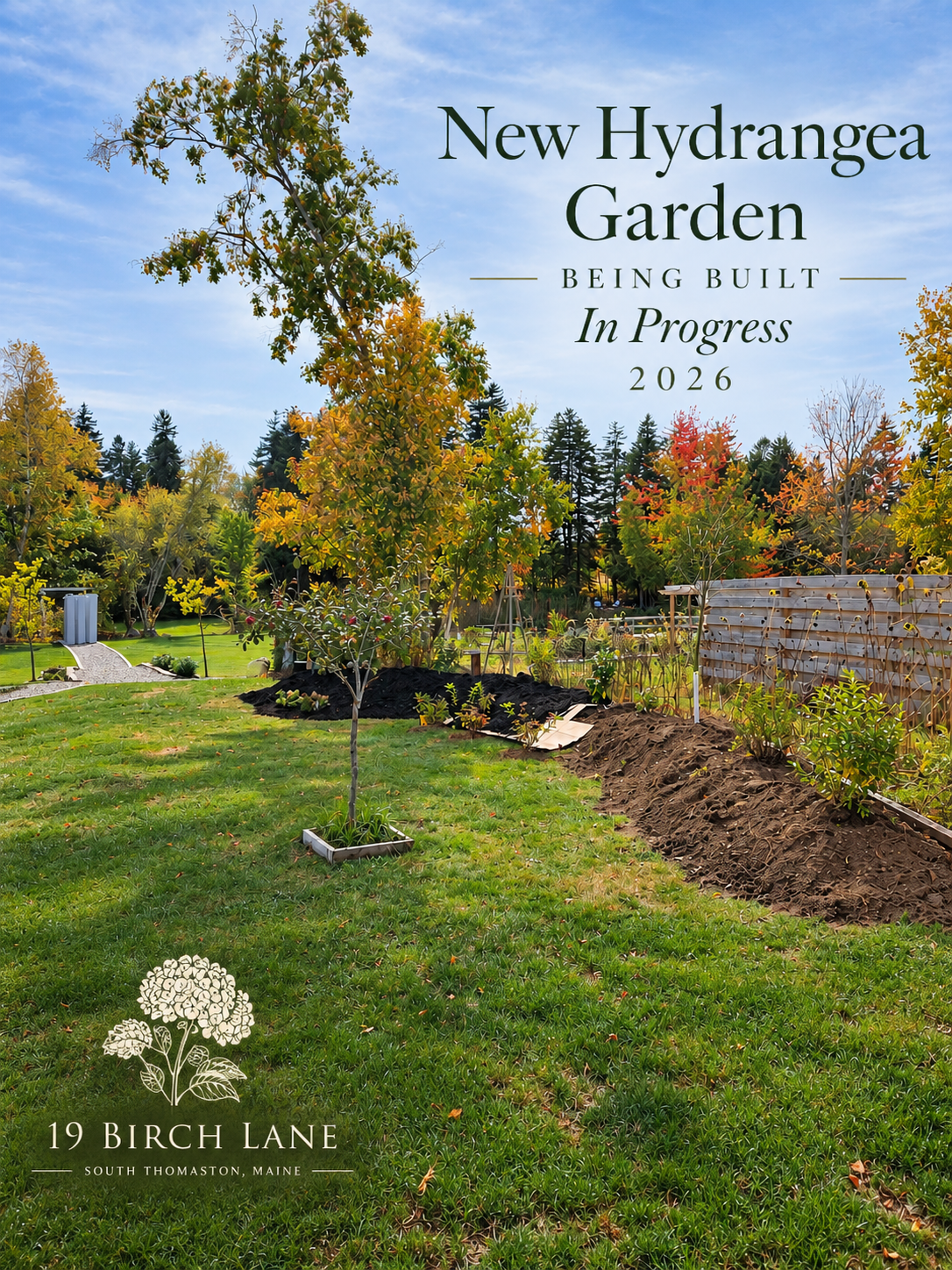
Every Beautiful Garden Has to Start Somewhere
When people visit 19 Birch Lane and walk through our gardens, they see established flower beds, winding pathways, flowering shrubs, roses, irises, hydrangeas, and an ever-growing collection of perennials.
What they don't always see is what those gardens looked like before we started.
Much of what you see today was once ordinary lawn, open pasture, or areas of the property that had never been developed into gardens.
There were no carefully planned perennial borders, no large collections of flowering plants, and certainly nothing resembling the botanical garden destination we're working toward today.
Just grass, soil, and an idea of what the property could eventually become.
Over the years, I've learned that creating a beautiful garden isn't necessarily about having the largest budget, buying the most expensive plants, or even knowing everything about gardening before you begin.
It's about understanding your growing conditions, having a plan, and being willing to put in the work.
And perhaps most importantly, it's about having patience.
Here at 19 Birch Lane, we're transforming approximately five acres in South Thomaston, Maine, into an evolving botanical garden destination. Along the way, we've created rose gardens, iris gardens, perennial borders, hydrangea plantings, and new garden spaces that continue to develop with each growing season.
Some of these projects have involved removing hundreds of square feet of sod. Others have required substantial soil improvements, grading, new pathways, and carefully selecting plants that will thrive in our coastal Maine climate.
We've made adjustments along the way, and every new garden has taught us something.
Whether you're planning a small flower bed beside your front porch or dreaming of a large perennial garden, the same basic principles apply.
In this guide, I want to walk you through how I approach creating a new flower garden, from the first shovel in the ground to the point where the plants begin growing together into a beautiful, established border.
Because every great garden starts with something very simple.
A piece of ground and the willingness to imagine what it could become.
1. Start With a Plan Before You Start Digging
One of the most common mistakes I see gardeners make is purchasing plants before they've really thought about where those plants are going to live.
I understand the temptation.
You visit a garden center in May, everything is blooming, and suddenly you're loading the back of your vehicle with plants you hadn't planned on buying.
I've certainly been inspired by plants that weren't originally part of a garden design.
But when we're creating a new garden at 19 Birch Lane, I try to begin with the space itself.
Before removing any grass or preparing the soil, I ask myself a few questions.
What is the purpose of this garden?
Will it be something people view from a distance, or will they walk through it?
Do I want a formal garden with defined edges, or something more natural and informal?
Will it feature a particular plant collection, or will it combine shrubs, perennials, grasses, and seasonal flowers?
And how will it connect visually with the surrounding landscape?
These questions help determine the shape, size, and overall character of the garden.
Think About How the Garden Will Look From Different Directions
At 19 Birch Lane, we spend a considerable amount of time thinking about views.
A garden may look beautiful when you're standing directly in front of it, but how does it look when you're approaching from a pathway?
What will visitors see from across the lawn?
Will the garden create a natural transition between two different areas of the property?
Even in a small residential landscape, these questions are worth considering.
My advice is to walk around the proposed garden area before doing anything else.
Look at it from your house, driveway, patio, or wherever you'll most often enjoy it.
Sometimes moving a garden border just a few feet can make a significant difference in the overall design.
Start Small, but Plan for the Future
You don't need to create a massive garden in your first year.
In fact, I often recommend starting with a manageable area and expanding as you gain experience.
A flower bed measuring approximately 6 feet by 12 feet can accommodate a beautiful combination of shrubs, perennials, and seasonal flowers.
The important thing is to create something you can maintain successfully.
A smaller, well-designed garden will almost always look better than a much larger garden that's become overwhelmed by weeds and overcrowded plants.
2. Understand Your Growing Conditions in Maine
Gardening in Maine can be incredibly rewarding, but our climate presents some unique challenges.
At 19 Birch Lane, we're located in coastal Maine, in USDA Hardiness Zone 6a.
Our winters can be cold, spring weather unpredictable, and summer growing conditions can vary considerably from one year to the next.
One of the first things I tell gardeners is that your USDA hardiness zone is only part of the equation.
It tells you about the average annual extreme minimum winter temperature, but it doesn't tell you everything about your growing conditions.
Sun exposure, drainage, wind, soil conditions, and even the location of a garden relative to buildings can make a tremendous difference.
How Much Sun Does Your Garden Receive?
Before selecting plants, observe the area throughout the day.
Most flowering perennials fall into three general categories.
Full sun: Generally six or more hours of direct sunlight daily.
Partial sun or partial shade: Often around three to six hours of direct sunlight, depending on the plant.
Full shade: Usually less than three hours of direct sun, although the amount of filtered light also matters.
If you're planning a garden filled with roses, coneflowers, salvia, and many ornamental grasses, you'll generally want a location with plenty of sunlight.
If you're working beneath trees or along the north side of a building, consider plants such as hostas, ferns, hellebores, and other shade-tolerant perennials.
At 19 Birch Lane, we've developed gardens in both sunny and shaded areas, and I've learned that trying to force a plant into the wrong conditions usually creates unnecessary maintenance.
It's much easier to choose plants that naturally prefer the environment you're offering.
Don't Overlook Wind and Drainage
Coastal Maine gardens can experience drying winds, particularly during winter and early spring.
A sheltered garden near a building or hedge may behave quite differently from an exposed planting area.
Drainage is equally important.
After a heavy rain, observe where water collects.
If an area remains saturated for extended periods, it may not be suitable for plants that require well-drained soil.
You may need to improve drainage, adjust the planting area, or select species that tolerate wetter conditions.
The goal is to understand the site before asking plants to grow there.
3. Removing Grass: Turning an Ordinary Lawn Into a Flower Garden
This is where the physical work begins.
At 19 Birch Lane, many of our gardens started as established lawn.
Creating a new border often meant cutting and removing sod to expose the soil beneath.
We've used this approach while developing several garden areas, including the iris gardens near our brook water feature.
Method One: Removing Sod
For larger garden projects, I often prefer removing the existing sod.
This provides immediate access to the soil and allows us to begin preparing the planting area.
Depending on the size of the project, sod can be removed with a flat shovel, sod cutter, or other appropriate equipment.
Once the sod is removed, I inspect the underlying soil.
Is it compacted?
Does it contain excessive rocks?
Is there evidence of poor drainage?
Does it need additional organic matter?
This is also a good opportunity to remove perennial weeds and their roots before they become established in the new garden.
One thing I've learned is that the work you do before planting can save you years of frustration afterward.
Method Two: Sheet Mulching With Cardboard
Another method we've incorporated into garden development at 19 Birch Lane is using plain cardboard as a biodegradable weed-suppression layer.
This technique, often called sheet mulching, can be particularly useful when converting lawn into a new planting area without immediately removing all the sod.
The process is relatively straightforward.
First, mow the grass as short as practical.
Remove persistent perennial weeds, especially those with aggressive underground roots.
Lay down plain, uncoated cardboard, overlapping the edges so grass cannot easily grow between the pieces.
Remove plastic tape, labels, and staples before installation.
Wet the cardboard thoroughly.
Then cover it with an appropriate layer of organic mulch or composted material.
Over time, the cardboard softens and decomposes while helping suppress the existing grass.
There are a few important considerations.
Cardboard works best when given time to suppress vegetation before planting. It is not a guaranteed solution for aggressive perennial weeds.
Avoid piling thick layers of soil or mulch over existing tree roots, and don't place cardboard directly against tree trunks or shrub stems.
For planting established perennials and shrubs, I generally prefer preparing individual planting areas properly rather than forcing roots through intact cardboard.
At 19 Birch Lane, we've used cardboard as part of our broader approach to reducing weeds and developing new planting areas.
It's one more tool available to gardeners, particularly when creating beds gradually.
4. Building Healthy Soil: The Foundation of a Successful Flower Garden
If I could offer one piece of advice to someone starting a flower garden, it would be this:
Spend as much time thinking about the soil as you do choosing the flowers.
Beautiful gardens begin underground.
Healthy soil supports root development, helps regulate moisture, provides nutrients, and creates an environment where plants can establish themselves successfully.
When we're developing a new garden at 19 Birch Lane, soil preparation is always an important part of the process.
Start With a Soil Test
Before adding fertilizer, lime, or other amendments, I recommend having your soil tested.
The University of Maine Cooperative Extension provides soil-testing resources that are particularly useful for Maine gardeners.
A soil test can help determine:
Soil pH
Nutrient availability
Organic matter levels, when included in the test
Appropriate fertilizer and amendment recommendations
Many common flowering perennials prefer slightly acidic to near-neutral soil, but individual plants have different requirements.
Rhododendrons and azaleas, for example, generally prefer more acidic conditions than many other garden plants.
Adding lime without testing the soil first can create problems rather than solve them.
Improve Soil Structure With Organic Matter
One of the most valuable materials for improving many garden soils is finished compost.
Organic matter can improve moisture retention in sandy soils and help support better soil structure in heavier soils.
Here in Maine, gardeners may encounter sandy coastal soils, rocky ground, compacted areas, or heavier soils with poor drainage.
The solution depends on the conditions.
For a new garden, I generally recommend loosening compacted soil carefully and incorporating appropriate amounts of finished compost into the planting area where needed.
Avoid repeatedly working soil when it's wet enough to smear or form dense clumps.
And remember that adding organic matter isn't the same as adding fertilizer.
Compost helps support soil health, but nutrient additions should still be based on what the soil actually needs.
Should You Use Raised Beds?
Raised beds can be useful where native soil is especially difficult to work with.
They may also improve accessibility and help define garden spaces.
However, raised beds require thoughtful construction and soil selection.
They can dry out faster than surrounding ground, and poorly designed raised beds can create drainage or maintenance problems.
For most of our ornamental garden borders at 19 Birch Lane, I prefer planting directly into appropriately prepared ground.
That allows plants to develop naturally within the surrounding landscape.
5. Designing a Flower Border That Looks Beautiful All Season
This is one of my favorite parts of creating a garden.
Once the space is prepared, we can begin thinking about how the plants will work together.
At 19 Birch Lane, we're increasingly focused on creating gardens that feel cohesive rather than simply filling empty spaces with attractive plants.
A successful border needs structure, balance, repetition, and seasonal interest.
Begin With the Largest Plants
When designing a new flower garden, I generally start by identifying the largest plants.
These might include:
Flowering shrubs
Small ornamental trees
Large perennial grasses
Tall flowering perennials
Climbing roses or other plants requiring supports
These larger elements help establish the structure of the garden.
For example, hydrangeas can provide substantial summer flowers and a strong visual backdrop.
Shrub roses can create a more romantic appearance.
Ornamental grasses can contribute movement and texture.
Once these larger plants are positioned, I begin filling in the spaces with medium-height and lower-growing perennials.
Think in Layers
For a border viewed primarily from one side, I generally arrange plants in three layers.
Back of the border: Taller shrubs, grasses, and perennials.
Middle of the border: Medium-height flowering plants that provide much of the seasonal color.
Front of the border: Lower-growing perennials, edging plants, and groundcovers.
For an island garden viewed from every direction, taller plants usually work better toward the center, with shorter plants around the edges.
These aren't rigid rules.
Sometimes placing a taller plant toward the front creates an interesting effect.
But understanding the basic structure helps create a garden that feels balanced.
Plant in Groups Rather Than Scattering Individual Plants
One design principle I use frequently at 19 Birch Lane is repetition.
Instead of planting one of every perennial throughout a border, consider grouping three, five, or seven plants of the same variety.
The exact number depends on their mature size and the scale of the garden.
Grouping plants creates a stronger visual impact and helps the garden feel more intentional.
It also allows colors and textures to repeat naturally through the landscape.
In larger gardens, repeating the same plant in several locations can visually connect otherwise separate areas.
Leave Room for Plants to Mature
This is particularly important.
When you first plant a garden, the spaces between plants may seem excessive.
It's tempting to fill every opening.
But remember that a perennial purchased in a one-gallon container may eventually spread several feet.
A hydrangea that looks small today may become a substantial shrub.
Always consider mature height and width when planning spacing.
You can use annual flowers to provide temporary color while slower-growing plants establish.
That gives the garden a fuller appearance without creating permanent overcrowding.
6. Choosing the Best Flowers for a Maine Garden
One of the great advantages of gardening in Maine is the variety of beautiful plants we can grow.
The key is selecting plants suited to your location, hardiness zone, and growing conditions.
At 19 Birch Lane, our collections include roses, irises, daylilies, hydrangeas, dahlias, ornamental grasses, and many other flowering plants.
I like combining dependable perennials with seasonal flowers and structural shrubs.
This creates a garden that offers something interesting throughout the growing season.
Spring-Flowering Plants
Spring is when the garden begins coming back to life after a long Maine winter.
Some of my favorite plants to consider for spring interest include:
Hellebores: Among the earliest flowering perennials, particularly valuable in partially shaded gardens.
Peonies: Long-lived perennials that produce spectacular late-spring and early-summer flowers.
Irises: Available in an extraordinary range of colors, sizes, and flowering periods.
Alliums: Spring-flowering bulbs that add distinctive architectural shapes.
Creeping phlox: A low-growing perennial that can create colorful spring displays in sunny, well-drained locations.
Our iris collections at 19 Birch Lane have become an important part of our spring and early-summer gardens.
With more than 120 varieties of dwarf and standard irises, we've been able to explore a remarkable range of flower colors and forms.
Summer-Flowering Plants
Summer is when many Maine gardens reach their greatest abundance.
Plants worth considering include:
Daylilies: Dependable, adaptable perennials available in many colors and flowering periods.
Coneflowers: Excellent additions to sunny borders, with many selections attracting pollinating insects.
Catmint: A useful perennial for softening garden edges and combining with roses.
Salvia: Valuable for vertical flower spikes and long-lasting color.
Bee balm: A colorful perennial that can attract bees, butterflies, and hummingbirds.
Hydrangeas: Flowering shrubs that provide substantial structure and summer interest.
Dahlias: Outstanding late-summer flowers, although their tubers generally require winter protection or indoor storage in Maine.
At 19 Birch Lane, we've developed a substantial dahlia collection because of the extraordinary range of flower shapes, colors, and sizes available.
Dahlias are especially valuable for extending color into late summer and autumn.
Fall-Flowering Plants
One mistake gardeners sometimes make is designing a garden that looks spectacular in June but has very little happening by September.
I prefer planning for the entire growing season.
Some of the plants I consider particularly valuable for late-season interest include:
Japanese anemones: Elegant flowers that can provide late-summer and autumn color.
Asters: Important late-season flowers, including many species valuable to pollinators.
Sedums: Especially upright stonecrops, which provide attractive foliage and late-season flower clusters.
Ornamental grasses: Valuable for texture, movement, and autumn structure.
Late-flowering hydrangeas: Many panicle hydrangeas develop beautiful aging flower colors as autumn approaches.
By combining plants with different flowering periods, it's possible to create a garden that changes continuously rather than reaching one brief peak.
7. Annuals, Perennials, and Shrubs: Why I Use All Three
When people think about flower gardens, they often focus almost entirely on perennials.
Perennials are wonderful because many return year after year.
But I believe some of the most interesting gardens combine several different types of plants.
Perennials Provide the Foundation
Perennials establish the recurring character of a garden.
Over time, they mature, expand, and create the familiar seasonal patterns we look forward to each year.
Peonies, irises, daylilies, coneflowers, and hostas are good examples.
Annuals Provide Flexibility
Annual flowers allow us to experiment with colors, textures, and planting combinations without making permanent changes.
At 19 Birch Lane, we start numerous varieties of flowers from seed each year.
Zinnias, snapdragons, petunias, and other annuals help provide additional seasonal color throughout the gardens.
Annuals are particularly useful in newly planted borders where perennials haven't reached their mature size.
Shrubs Create Structure
Flowering shrubs help give a garden a sense of permanence.
Hydrangeas, roses, and other ornamental shrubs provide scale and help establish the overall design.
When combined thoughtfully, shrubs, perennials, and annuals can create a landscape that feels abundant without becoming visually chaotic.
My preference is to let shrubs provide the structure, perennials create the recurring seasonal display, and annuals fill in the gaps.
8. Mulching a New Flower Garden
Once the plants are in the ground, I consider mulching an important final step.
Mulch helps reduce weed growth, conserve soil moisture, moderate soil temperatures, and improve the overall appearance of a newly planted border.
For most ornamental beds, a layer of approximately two to three inches of suitable organic mulch is a useful starting point.
However, avoid piling mulch directly against plant crowns, shrub stems, or tree trunks.
Excessive mulch can trap moisture against stems and contribute to plant health problems.
What Type of Mulch Is Best?
Different garden areas may benefit from different materials.
Shredded bark is commonly used in ornamental landscapes.
Leaf mold and shredded leaves can be particularly useful in woodland-style gardens.
Compost can also serve as a light surface dressing, although it generally suppresses weeds less effectively than coarse organic mulch.
At 19 Birch Lane, our approach depends on the garden's design and growing conditions.
Some areas incorporate natural organic materials, while others use stone or gravel pathways to create more defined garden spaces.
The important thing is choosing materials that support the plants and complement the landscape.
9. Watering New Flower Gardens: The First Year Matters
One of the most important periods in a garden's development is the first growing season.
Newly planted perennials and shrubs haven't yet developed extensive root systems.
That makes them more vulnerable to drought and temperature extremes.
I recommend watering deeply enough to moisten the root zone, then allowing the soil to drain appropriately.
The frequency depends on rainfall, temperature, soil type, and the plants involved.
Sandy soils may require more frequent watering than moisture-retentive loams.
During hot, dry weather, recently planted gardens may need close attention.
Don't Assume Rain Has Watered Everything
A brief summer shower may wet the surface without providing enough moisture to reach the roots.
I prefer checking the soil a few inches below the surface rather than relying entirely on how the garden looks.
Plants can also wilt temporarily during hot afternoons even when soil moisture is adequate.
Check before watering automatically.
Overwatering can be just as damaging as underwatering, particularly in poorly drained soil.
As plants establish, many become more resilient and require less frequent supplemental watering.
10. Keeping Weeds Under Control
Every gardener eventually learns that weeds are part of the process.
At 19 Birch Lane, maintaining large garden areas means paying close attention to weed management.
The easiest time to control weeds is when they're small.
Once perennial weeds become established among desirable plants, removal becomes much more difficult.
My preferred approach combines good preparation, appropriate mulching, regular observation, and removing weeds before they set seed.
A Few Habits That Make a Difference
Inspect new planting areas regularly.
Remove weeds while their root systems are still small.
Avoid leaving large areas of disturbed, bare soil exposed for extended periods.
Use mulch appropriately.
And be particularly careful with aggressive perennial weeds that can regenerate from underground roots or rhizomes.
One of the lessons I've learned is that garden maintenance becomes much easier when you stay ahead of problems rather than waiting until they become overwhelming.
A few minutes of regular weeding can save hours of work later.
11. Creating Garden Pathways and Defining Borders
As we've expanded the gardens at 19 Birch Lane, pathways have become an increasingly important part of our overall design.
A pathway does more than provide access.
It influences how people experience the garden.
It creates movement, establishes views, and connects individual planting areas.
Even in a smaller residential garden, a simple pathway can make the landscape feel more intentional.
Choosing Pathway Materials
Common options include:
Natural stone
Crushed stone
Gravel
Wood chips
Stepping stones
Grass pathways
Each material creates a different appearance and requires different maintenance.
For woodland gardens, wood chips can create a natural look.
For more formal garden areas, stone or gravel may be appropriate.
Grass pathways can provide a soft transition between planting beds, but they require mowing and edging.
When planning pathways, think about drainage, accessibility, maintenance equipment, and how visitors will move through the space.
At 19 Birch Lane, we've used different pathway materials to help establish the character of individual garden areas.
12. Common Mistakes to Avoid When Starting a Flower Garden
After developing numerous planting areas, there are several mistakes I believe gardeners should try to avoid.
Planting Before Understanding the Site
Always evaluate sunlight, drainage, soil, and exposure before purchasing plants.
Making the Garden Too Small for the Plants
A narrow bed may not provide enough room for mature shrubs and large perennials.
Plan for the eventual size of the planting.
Planting Everything Too Close Together
Crowded plants compete for moisture, nutrients, and light.
Poor air circulation can also encourage certain diseases.
Choosing Plants Based Only on Their Flowers
Flowers may last only a few weeks.
Foliage, structure, mature size, and seasonal changes are equally important.
Forgetting About Fall
Plan for plants that bloom or provide attractive foliage late in the season.
Neglecting Soil Preparation
Healthy soil makes establishing a new garden considerably easier.
Expecting Immediate Results
This may be the most important lesson of all.
Gardens take time.
Some perennials establish quickly, while others need several growing seasons before reaching their full potential.
A newly planted border may look sparse during its first year.
By the third year, the same garden can look entirely different.
Patience is part of gardening.
13. How Much Does It Cost to Start a Flower Garden in Maine?
This is a question worth addressing because gardening doesn't need to be prohibitively expensive.
The cost depends on the size of the garden, the plants selected, soil conditions, and how much work you do yourself.
For a modest garden bed, expenses may include:
Soil testing
Compost or soil amendments
Mulch
Perennials and shrubs
Edging materials
Tools or equipment rental
Irrigation supplies
A small garden created primarily with divisions, seeds, and reasonably priced perennials can be relatively affordable.
A large professionally installed landscape with mature shrubs, stone pathways, irrigation, and extensive soil work can cost substantially more.
My recommendation is to invest first in soil preparation and dependable plants.
You can always add specialty varieties and additional garden features as the space develops.
One of the most satisfying aspects of perennial gardening is that established plants can often be divided to create new plantings.
At 19 Birch Lane, propagation and division are useful parts of how we continue expanding our gardens.
14. A Simple First-Year Flower Garden Plan for Maine
For someone starting their first flower garden, here's a practical seasonal approach.
Early Spring: Planning and Preparation
Observe sunlight and drainage.
Test the soil.
Determine the size and shape of the garden.
Remove sod or begin sheet mulching.
Prepare the planting area.
Choose plants suited to your conditions.
Late Spring: Planting
Plant cold-hardy perennials and shrubs when soil conditions are suitable.
Wait until the danger of frost has passed before planting frost-sensitive annuals.
In Maine, the last spring frost date varies significantly by location.
Coastal gardens may experience different conditions from inland areas.
Use local frost information rather than assuming one planting date works throughout the state.
Summer: Establishment
Monitor soil moisture.
Control weeds regularly.
Remove spent flowers where appropriate.
Observe how the plants respond to their location.
Take photographs and notes.
These observations will help you make better decisions the following year.
Early Fall: Evaluation and Improvement
Evaluate which plants performed well.
Consider adding hardy perennials while the soil remains warm enough for establishment.
Divide suitable established perennials when appropriate.
Make notes about areas that need improvement.
Late Fall: Preparing for Winter
Continue watering newly planted shrubs and perennials during dry weather until the ground freezes.
Remove diseased plant material.
Leave appropriate healthy stems and seed heads where they can provide winter interest or habitat.
Protect vulnerable plants as needed.
And begin thinking about what you'd like to accomplish next year.
15. What Building the Gardens at 19 Birch Lane Has Taught Me
When we began transforming 19 Birch Lane, I don't think I fully appreciated how much the gardens themselves would influence the direction of the property.
What started as a desire to create beautiful surroundings has gradually evolved into something much larger.
Today, we're developing plant collections, expanding garden spaces, creating educational resources, and working toward opening the property as a botanical garden destination for the public to enjoy.
Each new garden has contributed something to that vision.
Our rose gardens have taught us about plant selection, pruning, and designing with fragrance and flower form.
Our iris collections have demonstrated how much diversity can exist within a single group of plants.
Our hydrangea plantings have reinforced the importance of understanding mature size, pruning requirements, and seasonal structure.
And our woodland and Asian-inspired garden projects have encouraged us to think more carefully about texture, shade, water, and the experience of moving through a landscape.
But one lesson continues to stand out.
A beautiful garden isn't created in a single season. It's developed through years of observation, thoughtful decisions, and the willingness to keep learning.
When I look at areas of the property that were once simply grass, I'm reminded of how much potential exists in an ordinary piece of ground.
And that's what I hope readers take away from this guide.
You don't need five acres.
You don't need a greenhouse.
You don't need hundreds of plant varieties.
You just need a place to begin.
Frequently Asked Questions About Starting a Flower Garden in Maine
What is the best time to start a flower garden in Maine?
Spring is generally an excellent time to begin preparing and planting a new flower garden. Early fall can also be suitable for many hardy perennials and shrubs, provided they have enough time to establish before winter. Frost-sensitive annuals should be planted after the local danger of frost has passed.
How do I turn grass into a flower garden?
You can remove sod manually or mechanically, or use sheet mulching with plain cardboard and organic mulch to suppress existing grass over time. The best method depends on the size of the garden, the weeds present, and how quickly you want to plant.
Do I need to remove all the grass before planting flowers?
You should remove or effectively suppress existing turf and perennial weeds before establishing a new flower bed. Planting directly into an active lawn generally creates unnecessary competition for water and nutrients.
What are the easiest flowers to grow in Maine?
Many daylilies, peonies, coneflowers, catmint, and hardy perennial salvias can be dependable choices when matched with suitable growing conditions. Zinnias and other annuals can also provide abundant summer color after the danger of frost has passed.
How deep should a flower garden bed be?
There is no single required depth for every flower bed. Most perennials benefit from a substantial volume of well-drained, uncompacted soil for root development. Avoid creating an abrupt layer of imported soil over compacted ground without addressing drainage and rooting conditions.
How do I create a low-maintenance flower garden?
Choose plants suited to the site, allow adequate spacing, prepare the soil properly, mulch appropriately, and avoid overcrowding. Grouping plants with similar moisture and light requirements also makes maintenance easier.
How long does it take for a perennial garden to fill in?
Many perennial borders begin looking substantially fuller during their second and third growing seasons. However, growth rates vary by species, plant size, soil conditions, and maintenance.
What flowers bloom all summer in Maine?
Few individual perennials bloom continuously throughout the entire summer. A better approach is to combine plants with overlapping flowering periods. Annuals such as zinnias, along with repeat-flowering perennials and long-blooming shrubs, can help extend the display.
Should I use landscape fabric under a flower garden?
I generally avoid permanent landscape fabric in mixed perennial beds. As plants grow and spread, fabric can interfere with division, planting, and soil management. Organic mulch and regular weed control are often more practical for gardens that will evolve over time.
How can I make a small flower garden look professionally designed?
Start with a simple layout, repeat a limited number of plant varieties, use contrasting foliage textures, plan for mature plant sizes, and include flowers for different seasons. A well-defined edge can also make a significant difference.
Final Thoughts From the Garden
If there's one thing I've learned from creating the gardens at 19 Birch Lane, it's that the most rewarding landscapes are rarely the ones that happen overnight.
They develop gradually.
A new flower bed begins with bare soil.
A few carefully selected plants go into the ground.
The first season is spent watering, weeding, and watching.
The following spring, those plants return a little larger.
By the third or fourth year, what was once an empty space begins to feel like a garden that has always belonged there.
That's the part of gardening I enjoy most.
Watching something you've imagined gradually become a reality.
As we continue transforming 19 Birch Lane into a botanical garden destination in Midcoast Maine, we're constantly reminded that every new planting contributes to a larger story.
And whether you're creating a small border beside your home or developing an entire landscape, the process begins in exactly the same way.
Start with the soil. Choose the right plants. Give them room to grow. And enjoy watching your garden become something more beautiful with every passing season.
— Aric Odone
Head Gardener, 19 Birch Lane
South Thomaston, Maine
Continue Exploring the Gardens at 19 Birch Lane
Creating a flower garden is just the beginning. At 19 Birch Lane, we're sharing the plants, techniques, and experiences behind our evolving botanical gardens in Midcoast Maine.
Explore the 19 Birch Lane Plant Finder
Discover plant profiles, growing requirements, bloom times, and garden uses for many of the plants featured throughout our gardens.
Discover Our Plant Collections
Explore our growing collections of roses, irises, dahlias, daylilies, hydrangeas, and other ornamental plants.
Learn More About Gardening in Maine
Explore our In the Garden articles covering soil preparation, perennial care, garden design, pruning, and seasonal gardening.
Explore the Garden Map
Discover how our individual gardens, pathways, water features, and plant collections connect across the property.
Follow Our Botanical Garden Journey
Learn more about our ongoing transformation of five acres in South Thomaston into a destination for horticulture, education, and public enjoyment.