
Hydrangeas for Maine Gardens: The Complete Guide to Choosing, Growing, Pruning & Designing with Hydrangeas
From spectacular summer flowers to reliable garden structure, discover how to grow beautiful hydrangeas in Maine and New England.
By Aric Odone | Head Gardener, 19 Birch Lane | South Thomaston, Maine
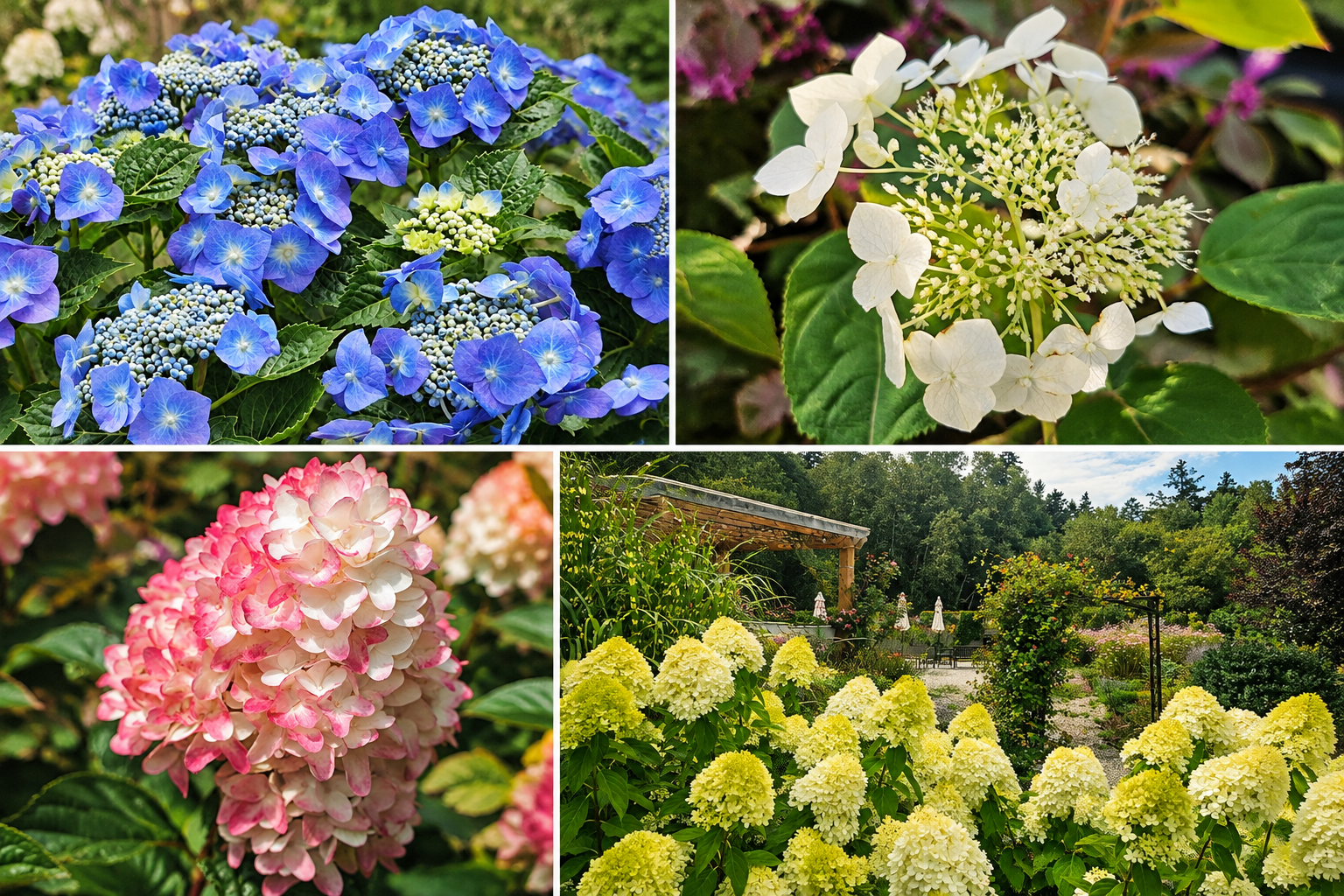
There are certain plants that become the foundation of a garden. They provide structure, establish a sense of place, and return year after year with a beauty that feels both familiar and extraordinary.
For me, hydrangeas are among those plants.
Here at 19 Birch Lane, where we're transforming five acres in Midcoast Maine into an evolving botanical garden destination, hydrangeas have become an important part of how we design and develop our landscape.
From our large plantings of BloomStruck® hydrangeas to the Limelight hydrangeas that provide structure and seasonal interest throughout the gardens, these remarkable flowering shrubs have earned their place in our landscape.
But as beautiful as hydrangeas can be, they are also among the most misunderstood plants in the garden.
I frequently hear the same questions:
Why isn't my hydrangea blooming?
Should I cut it back in the fall?
Why did my blue flowers turn pink?
Which hydrangea grows best in Maine?
And perhaps the most important question of all: How do I choose the right hydrangea for the right location?
The answers begin with understanding that not all hydrangeas are the same.
In this guide, I want to share the principles I use when thinking about hydrangeas—from plant selection and pruning to soil preparation, winter protection, and garden design.
Whether you're planting your first hydrangea or developing a large perennial garden, understanding these differences will help you grow healthier plants and create a more beautiful landscape.
Why Hydrangeas Are So Valuable in Maine Gardens
Gardening along the coast of Maine presents a unique combination of opportunities and challenges.
Our winters can be cold, spring temperatures unpredictable, and summer conditions variable. We experience periods of rain, occasional drought, ocean-influenced weather, and significant differences between sheltered garden spaces and exposed areas.
For that reason, plant selection is especially important.
Hydrangeas offer several qualities that make them particularly valuable in our Zone 6a landscape.
They provide substantial flowers, attractive foliage, and a long season of interest. Many varieties also develop beautiful aging flower colors that remain attractive into autumn.
Some hydrangeas tolerate considerable cold, while others require more thoughtful placement and winter protection.
The key is knowing which type you're growing.
My first rule of hydrangea gardening is simple: identify the species before deciding how to care for it.
That one decision can prevent many of the problems gardeners experience.
Understanding the Five Major Types of Hydrangeas
Although gardeners often refer to all hydrangeas as one group, there are several distinct types with different growing habits, flower forms, and pruning requirements.
For Maine gardeners, I believe these five groups are especially important to understand.
1. Bigleaf Hydrangeas — Hydrangea macrophylla
Best known for: Large blue, pink, or purple flowers and classic cottage-garden beauty.</text>
Bigleaf hydrangeas are probably the type most people imagine when they hear the word hydrangea.
Their rounded mophead flowers can be spectacular, and many cultivars produce colors that change depending on soil chemistry.
Bigleaf hydrangeas include both mophead and lacecap forms.
At 19 Birch Lane, our collection of BloomStruck® hydrangeas represents this group.
BloomStruck belongs to the Endless Summer® family of reblooming hydrangeas and is especially interesting because it can flower on both old and new wood.
This characteristic provides an advantage in colder climates, where winter temperatures sometimes damage the flower buds of traditional bigleaf hydrangeas.
However, even reblooming varieties benefit from protected planting locations.
Growing conditions: Morning sun and afternoon shade are generally excellent. Consistent moisture, well-drained soil, and protection from harsh winter winds are particularly valuable.
Pruning: Avoid heavy routine pruning. Wait until spring growth reveals which stems are alive, then remove dead or damaged material carefully.
2. Smooth Hydrangeas — Hydrangea arborescens
<text>Best known for: Dependable flowering, cold tolerance, and large rounded flower heads.</text>
Smooth hydrangeas are among the most reliable choices for colder gardens.
The classic 'Annabelle' is perhaps the best-known example, producing large white flower heads during summer.
Newer selections have expanded the range of flower colors, plant sizes, and stem strengths available to gardeners.
One of the greatest advantages of smooth hydrangeas is that they flower on new wood.
That means their flower buds develop on growth produced during the current growing season.
Even when winter damages older stems, healthy plants can often produce a substantial flowering display from new growth.
Growing conditions: Partial sun to partial shade, with consistent soil moisture. In cooler climates, many perform well with several hours of sunlight.
Pruning: Prune in late winter or early spring if shaping or rejuvenation is needed. Avoid assuming every cultivar must be cut to the ground annually; leaving a framework of older stems can provide useful support.
3. Panicle Hydrangeas — Hydrangea paniculata
<text>Best known for: Exceptional cold hardiness, cone-shaped flowers, and dependable late-summer color.</text>
If someone asked me to recommend one hydrangea group for a beginner gardening in Maine, panicle hydrangeas would be near the top of my list.
They are adaptable, generally cold hardy, and bloom on new wood.
Their flowers begin in shades of white, cream, or green, depending on the cultivar, and many gradually develop pink, rose, or reddish tones as the season progresses.
At 19 Birch Lane, Limelight hydrangeas have become an important structural feature in our landscape.
I appreciate the way their large flower panicles provide visual weight in summer and continue contributing to the garden as their colors age into autumn.
Other selections worth exploring include Little Lime®, Quick Fire®, Bobo®, and Pinky Winky®.
Growing conditions: Panicle hydrangeas generally appreciate more sunlight than bigleaf hydrangeas. In Maine, full sun to partial sun can work well when adequate moisture is available.
Pruning: Prune in late winter or early spring before new growth begins. Remove weak or crossing branches and maintain a strong framework.
4. Mountain Hydrangeas — Hydrangea serrata
<text>Best known for: Delicate flowers, refined foliage, and excellent potential in woodland-style gardens.</text>
Mountain hydrangeas deserve considerably more attention from gardeners.
They often have a finer texture and more restrained appearance than traditional bigleaf hydrangeas.
Many produce lacecap flowers, although other flower forms are available.
Their comparatively compact growth habits can make them useful in smaller gardens, shaded borders, and naturalistic landscapes.
Some mountain hydrangeas demonstrate good cold tolerance, but individual cultivar hardiness and flower-bud survival still matter.
Certain reblooming cultivars offer additional flowering potential on new growth.
Growing conditions: Partial shade, well-drained soil, and consistent moisture.
Pruning: Most flower primarily on old wood, although some cultivars rebloom. Avoid unnecessary cutting and check the particular cultivar before pruning.
5. Climbing Hydrangeas — Hydrangea anomala subsp. petiolaris
<text>Best known for: Climbing growth, white lacecap-like flowers, and beautiful coverage of walls or sturdy structures.</text>
Climbing hydrangeas offer something entirely different.
Rather than growing as rounded shrubs, they develop into substantial woody climbers that attach themselves to suitable surfaces through aerial rootlets.
Their white flowers appear in early summer, and mature plants can create extraordinary displays.
I particularly appreciate the architectural possibilities of climbing hydrangeas.
They can soften large masonry surfaces, add interest to shaded walls, or create a living backdrop in a garden.
However, patience is required. Young climbing hydrangeas may take several years to establish before producing vigorous growth and substantial flowering.
Growing conditions: Partial shade to sun with adequate moisture, and a strong permanent support.
Pruning: Usually minimal. If necessary, prune after flowering and avoid removing excessive older flowering growth.
A Quick Hydrangea Comparison Guide
Hydrangea TypeFlowers OnBest LightPruningBigleafOld wood; some rebloomMorning sun, afternoon shadeMinimal, assess in springSmoothNew woodPart sun to part shadeLate winter or early springPanicleNew woodFull sun to part sunLate winter or early springMountainMostly old wood; some rebloomPart shadeMinimal, assess in springClimbingOld woodPart shade to sunAfter flowering, if needed
These are general guidelines. Always confirm the requirements of the specific cultivar you're growing.
Old Wood vs. New Wood: The Most Important Hydrangea Lesson
If there is one concept every hydrangea gardener should understand, it is the difference between old-wood and new-wood flowering.
This single distinction explains why some hydrangeas bloom reliably every year while others produce beautiful foliage but few flowers.
What Does Blooming on Old Wood Mean?
Old wood refers to stems produced during a previous growing season.
Hydrangeas that bloom on old wood generally form their flower buds during summer or autumn, then carry those buds through winter.
The following year, those buds develop into flowers.
Traditional bigleaf hydrangeas, most mountain hydrangeas, oakleaf hydrangeas, and climbing hydrangeas fall into this category.
If the flower buds are damaged by winter temperatures or removed by improper pruning, the plant may produce healthy foliage but few flowers.
This is especially important in Maine.
What Does Blooming on New Wood Mean?
New wood is the growth produced during the current growing season.
Panicle and smooth hydrangeas develop their flower buds on these new stems.
Because the flower buds do not need to survive the winter on exposed branches, these plants are often more dependable bloomers in colder climates.
What About Reblooming Hydrangeas?
Some newer bigleaf and mountain hydrangeas can flower on both old and new wood.
This is one reason reblooming selections such as BloomStruck® have become popular.
If winter damages the older flower buds, new growth may still produce flowers later in the season.
However, reblooming doesn't mean winter protection and proper pruning are unimportant.
My advice: Never prune a hydrangea simply because the calendar says it's time. First, identify the plant and understand how it flowers.
Lacecap vs. Mophead Hydrangeas: Understanding Flower Forms
Hydrangeas are often described as mophead or lacecap, but these terms refer to the arrangement of flowers rather than entirely separate species.
Mophead Hydrangeas
Mopheads produce large, rounded flower clusters that create a dense, dramatic appearance.
Many of the showy structures we think of as hydrangea petals are actually enlarged sepals associated with sterile or less-fertile flowers.
Mopheads are especially effective when the goal is to create strong visual impact.
At 19 Birch Lane, mass plantings of bigleaf hydrangeas help create this kind of display.
Lacecap Hydrangeas
Lacecaps have flatter flower clusters with a central group of small fertile flowers surrounded by larger showy flowers.
The result is more open and delicate.
I find lacecaps particularly appealing in naturalistic and woodland-inspired landscapes.
Their form creates an entirely different visual effect from the large rounded mopheads.
Lacecaps can also provide more accessible floral resources for pollinating insects, although the value varies among cultivars.
Which Is Better?
Neither.
They serve different design purposes.
Use mopheads when you want bold masses of color.
Use lacecaps when you want a lighter, more natural appearance.
And don't overlook panicle and oakleaf hydrangeas, whose elongated flower clusters provide yet another shape for garden compositions.
Hydrangea Flower Color and Soil Chemistry: Why Blue Turns Pink
Few garden plants generate as much curiosity about flower color as hydrangeas.
Many gardeners are surprised to discover that the same hydrangea cultivar can produce blue flowers in one garden and pink flowers in another.
The explanation involves soil chemistry.
Certain bigleaf and mountain hydrangeas can change color depending on soil acidity and the availability of aluminum.
Blue Hydrangeas
Blue coloration generally develops when the soil is sufficiently acidic and aluminum is available for the plant to absorb.
Pink Hydrangeas
Pink coloration generally occurs when soil conditions limit aluminum availability.
Purple Hydrangeas
Intermediate conditions can produce purple, lavender, or mixed coloration.
But here's an important distinction.
Not every hydrangea changes color with soil pH.
White hydrangeas generally remain white regardless of soil acidity, although their flowers may naturally age to green, pink, or other tones.
Likewise, panicle and smooth hydrangeas do not turn blue simply because their soil becomes more acidic.
Should You Try to Change Your Hydrangea Color?
My recommendation is to begin with a soil test.
Changing soil chemistry without understanding existing conditions can create unnecessary problems.
If you're growing a color-responsive hydrangea and want to influence its flower color, follow soil-test recommendations and the product label for any amendments.
Avoid applying excessive aluminum sulfate or lime simply to force a particular color.
Healthy soil and healthy plants should always come first.
Planting Hydrangeas in Maine: Getting the Foundation Right
At 19 Birch Lane, I believe successful planting begins long before the plant goes into the ground.
We spend considerable time thinking about soil, drainage, exposure, and how a plant will fit into the mature landscape.
Hydrangeas are no exception.
When Is the Best Time to Plant Hydrangeas in Maine?
Spring and early fall are generally excellent planting periods.
Spring gives new plants an entire growing season to establish roots before winter.
Early fall can also be successful, particularly when the soil remains warm and adequate moisture is available.
Avoid planting too late in autumn, when roots may have insufficient time to establish.
Choosing the Right Location
Consider four things before planting:
Sunlight: Panicle hydrangeas generally tolerate more sun, while bigleaf and mountain types often benefit from afternoon shade.
Soil moisture: Hydrangeas need consistent moisture, particularly during establishment.
Drainage: They dislike waterlogged soil.
Winter exposure: Sheltered locations are particularly valuable for old-wood flowering varieties.
How to Plant a Hydrangea
Dig a hole approximately two to three times wider than the root ball, but no deeper.
Remove the plant carefully from its container and inspect the roots.
If roots are circling tightly, gently loosen or correct them.
Set the plant so the top of the root ball is level with or slightly above the surrounding soil.
Backfill primarily with the existing soil, improving the broader planting area with organic matter where needed rather than creating a small pocket of dramatically different soil.
Water thoroughly.
Apply two to three inches of organic mulch, keeping it several inches away from the stems.
Continue watering regularly during establishment.
Watering Hydrangeas: Finding the Right Balance
Hydrangeas are often associated with moisture, and their name reflects that connection.
However, there is a difference between consistently moist soil and saturated soil.
Hydrangeas need oxygen around their roots just as much as they need water.
During periods of summer heat, broad leaves can lose moisture quickly, and plants may wilt during the afternoon.
Occasional afternoon wilting doesn't always mean the plant needs more water immediately.
Check the soil before irrigating.
If the soil is moist and the plant recovers as temperatures cool, additional watering may not be necessary.
If the soil is dry several inches below the surface, a deep watering may be appropriate.
I generally favor deep, less-frequent watering over constant shallow watering, adjusting for rainfall, soil conditions, and the age of the plant.
Mulching helps conserve moisture and moderate soil temperatures.
Fertilizing Hydrangeas: Why More Isn't Always Better
One of the most common gardening mistakes is assuming that more fertilizer will produce more flowers.
That isn't necessarily true.
Excess nitrogen can encourage vigorous leafy growth without improving flowering.
At 19 Birch Lane, we prefer an approach that begins with healthy soil.
Compost, appropriate organic amendments, and thoughtful mulching can help maintain soil structure and fertility.
If a soil test indicates additional nutrients are needed, apply a suitable fertilizer according to the test results and product directions.
Early spring is generally an appropriate time to evaluate fertilization.
Avoid heavy applications late in the growing season, which may encourage tender new growth before winter.
Remember that poor flowering may have nothing to do with fertility.
Winter bud damage, excessive shade, incorrect pruning, or unsuitable plant selection are often more important factors.
Pruning Hydrangeas: When to Cut and When to Leave Them Alone
Hydrangea pruning is probably the subject that causes the most confusion.
And much of that confusion comes from treating all hydrangeas the same way.
Pruning Bigleaf Hydrangeas
Avoid aggressive fall pruning.
In spring, wait until growth begins and you can distinguish living stems from winter-damaged wood.
Remove dead stems and make limited corrective cuts as needed.
For reblooming varieties, preserve as much healthy wood as practical to support earlier flowering.
Pruning Smooth Hydrangeas
Smooth hydrangeas bloom on new wood.
They can be pruned in late winter or early spring.
Some gardeners cut them back substantially to encourage vigorous growth and large flowers.
However, I would caution against assuming that cutting every plant to the ground is always the best choice.
Depending on the cultivar, retaining a stronger framework can help support flower stems.
Pruning Panicle Hydrangeas
Panicle hydrangeas also bloom on new wood.
Prune in late winter or early spring.
Focus on removing dead, damaged, weak, or crossing branches.
Maintain an open, balanced structure.
For larger cultivars, thoughtful structural pruning can help create a more attractive plant with stronger stems.
Pruning Mountain Hydrangeas
Treat most mountain hydrangeas similarly to traditional bigleaf hydrangeas.
Avoid unnecessary pruning and protect healthy older stems.
Some reblooming selections provide greater flexibility, but light pruning is still generally preferable.
Pruning Climbing Hydrangeas
Climbing hydrangeas rarely require substantial pruning once established.
Remove dead or unwanted growth and prune after flowering if necessary.
Remember that mature plants can become large and heavy, so choose the planting location carefully from the beginning.
Hydrangea Winter Protection in Maine
Winter protection is particularly important for gardeners growing traditional bigleaf hydrangeas.
The challenge isn't always keeping the shrub alive.
Often, the plant survives perfectly well, but the flower buds do not.
That is why a hydrangea may return with healthy green leaves every spring but never produce a substantial flowering display.
Protecting Bigleaf Hydrangeas
Where winter bud survival is a recurring problem, consider:
Planting in a sheltered location away from drying winter winds.
Maintaining a layer of organic mulch over the root zone.
Watering adequately during dry autumn weather before the ground freezes.
Protecting stems with a breathable burlap windbreak or suitable winter enclosure.
Avoiding unnecessary pruning in fall.
A burlap enclosure can help reduce wind exposure, but it cannot guarantee protection from severe cold.
Are Panicle Hydrangeas Easier to Grow in Maine?
In many situations, yes.
Their combination of cold hardiness and new-wood flowering makes them among the most dependable hydrangeas for northern landscapes.
That doesn't mean bigleaf hydrangeas aren't worth growing.
It simply means we should understand the additional challenges involved.
At 19 Birch Lane, I see value in growing different hydrangea types for different reasons.
Designing With Hydrangeas: Lessons From 19 Birch Lane
This is the part of hydrangea gardening I find most rewarding.
A hydrangea can be beautiful on its own.
But the real magic happens when it becomes part of a thoughtfully designed landscape.
As we develop 19 Birch Lane into a botanical garden destination, we think about plant combinations, seasonal progression, repetition, and the experience of moving through the gardens.
Hydrangeas contribute to all of these.
1. Use Hydrangeas to Create Structure
Large panicle hydrangeas can anchor a garden border.
Their substantial form provides visual weight even before flowers appear.
A row of Limelight hydrangeas can create rhythm and continuity, especially when repeated along a pathway or garden boundary.
2. Plant in Groups for Greater Impact
One hydrangea can be beautiful.
Five or seven planted together can create a completely different effect.
Our large BloomStruck hydrangea planting is an example of using repetition to create a memorable garden feature.
Mass planting allows individual flowers to become part of a larger composition.
3. Combine Hydrangeas With Perennials
Hydrangeas work particularly well when surrounded by plants that offer contrasting foliage, flower forms, and bloom times.
Some of my favorite design combinations to consider include:
Panicle hydrangeas with ornamental grasses.
Bigleaf hydrangeas with hostas and ferns.
White hydrangeas with purple catmint and salvia.
Hydrangeas with Japanese anemones for late-season interest.
Mountain hydrangeas with hellebores and woodland perennials.
Hydrangeas with coneflowers and other summer-blooming plants where sunlight and moisture needs align.
The goal isn't to fill every available space.
It's to create a composition where individual plants enhance one another.
4. Think About the Entire Growing Season
One of the principles guiding our garden design at 19 Birch Lane is that a garden shouldn't be designed for a single photograph.
It should be designed for the entire growing season.
Hydrangeas are particularly valuable because their flowers often change as they mature.
White may become blush pink.
Lime green may soften into cream.
Bright summer flowers may develop deeper autumn tones.
Even after flowering, dried flower heads can contribute texture and structure.
5. Create Views and Garden Rooms
Hydrangeas can help define a garden space.
They can frame an entrance, soften the edge of a patio, create a backdrop for a seating area, or provide separation between garden rooms.
At 19 Birch Lane, we're increasingly designing the landscape as a sequence of experiences.
Hydrangeas help us accomplish that by adding scale, repetition, and seasonal color.
The Often-Overlooked Oakleaf Hydrangea
Although the five groups discussed earlier are central to many Maine gardens, I would be overlooking an important plant if I didn't mention oakleaf hydrangeas.
Hydrangea quercifolia offers something different from the other groups.
Its large, deeply lobed leaves create bold texture, while the elongated flower clusters provide summer interest.
Many cultivars also develop beautiful red, burgundy, or purple autumn foliage.
Oakleaf hydrangeas bloom on old wood, so flower buds may be vulnerable to winter damage in colder or exposed locations.
For Zone 6 gardens, careful cultivar selection and sheltered placement are important.
Where conditions are suitable, oakleaf hydrangeas can provide outstanding multi-season interest.
Why Isn't My Hydrangea Blooming?
When a hydrangea produces healthy foliage but few flowers, I start by asking several questions.
What type of hydrangea is it?
If it's a traditional bigleaf hydrangea, winter damage may have destroyed the flower buds.
Was it pruned at the wrong time?
Cutting old-wood hydrangeas in autumn or early spring can remove developing flowers.
Is it receiving enough sunlight?
Excessive shade may reduce flowering.
Has it received too much nitrogen fertilizer?
Excessive leafy growth can sometimes come at the expense of flowers.
Is the plant newly established?
Recently planted hydrangeas may need time to develop before flowering heavily.
Has the plant experienced drought or other stress?
Extended moisture stress can reduce plant vigor and flowering.
The solution depends on identifying the cause rather than automatically applying more fertilizer or pruning harder.
Common Hydrangea Problems in Maine Gardens
Brown or Scorched Leaves
Possible causes include excessive sun, drought stress, drying winds, or transplant shock.
Check soil moisture and exposure before making changes.
Yellow Leaves
Yellowing may result from nutrient deficiencies, poor drainage, root problems, or unsuitable soil pH.
A soil test and inspection of the root zone can help identify the cause.
Wilting During Hot Weather
Large hydrangea leaves may wilt temporarily during heat.
Check soil moisture rather than watering automatically.
Leaf Spots
Fungal and bacterial leaf spots can develop under humid conditions.
Good spacing, air circulation, sanitation, and watering near the soil rather than over the foliage can help reduce problems.
Few Flowers After Winter
For old-wood hydrangeas, winter bud damage is a leading possibility.
Consider a more sheltered location, winter protection, or a reblooming cultivar.
Frequently Asked Questions About Growing Hydrangeas in Maine
What hydrangeas grow best in Maine?
Panicle hydrangeas and smooth hydrangeas are generally among the most reliable choices because many cultivars are cold hardy and bloom on new wood. Bigleaf, mountain, oakleaf, and climbing hydrangeas can also succeed when the cultivar and location are appropriate.
When should I prune hydrangeas in Maine?
Prune panicle and smooth hydrangeas in late winter or early spring. For traditional bigleaf and mountain hydrangeas, avoid heavy pruning and wait until spring to remove dead wood. Climbing and oakleaf hydrangeas are generally pruned after flowering if needed.
Should I cut hydrangeas back in the fall?
Usually, I recommend avoiding fall pruning, especially for hydrangeas that flower on old wood. Their stems may already contain the following year's flower buds.
How do I protect hydrangeas during Maine winters?
Choose sheltered planting locations, maintain organic mulch, water during dry autumn conditions, and consider a breathable winter windbreak for vulnerable bigleaf hydrangeas. Protection is especially important for overwintering flower buds.
Why are my hydrangeas green but not blooming?
Common causes include winter bud damage, incorrect pruning, excessive shade, plant immaturity, and environmental stress. Identifying the hydrangea type is the first step.
Can I turn a pink hydrangea blue?
Some bigleaf and mountain hydrangeas can change color when soil conditions allow greater aluminum availability. A soil test is recommended before making amendments. White, panicle, and smooth hydrangeas generally cannot be turned blue through soil changes.
Do hydrangeas need full sun?
Not all hydrangeas have the same light requirements. Panicle hydrangeas generally tolerate more sunlight, while bigleaf and mountain hydrangeas often perform best with morning sun and afternoon shade.
Are hydrangeas good for pollinators?
Some hydrangeas provide useful pollen or nectar, particularly cultivars with accessible fertile flowers. Lacecap types and certain open panicle flowers may be more beneficial than highly sterile mophead varieties. Pollinator value varies by cultivar.
Can hydrangeas grow in containers in Maine?
Yes. Compact varieties can grow successfully in large containers with appropriate drainage and consistent watering. However, roots in containers are more exposed to winter cold, so overwintering protection is especially important.
What is the difference between Limelight and BloomStruck hydrangeas?
Limelight is a panicle hydrangea that blooms on new wood and produces large, cone-shaped flowers. BloomStruck is a reblooming bigleaf hydrangea with rounded flowers that can develop pink, blue, or purple coloration depending on soil chemistry.
Final Thoughts From the Head Gardener
The longer I work in the gardens at 19 Birch Lane, the more I appreciate plants that contribute something meaningful to the landscape beyond a brief period of flowering.
Hydrangeas do exactly that.
They bring structure, scale, texture, seasonal color, and extraordinary versatility.
But successful hydrangea gardening isn't about choosing the plant with the largest flower or the most dramatic photograph on a nursery tag.
It's about understanding the plant.
Knowing how it grows.
Knowing when it flowers.
Knowing whether it blooms on old wood or new wood.
And knowing how to position it within a larger garden composition.
As we continue transforming 19 Birch Lane into a botanical garden destination in Midcoast Maine, hydrangeas will remain an important part of our landscape.
They represent much of what I love about gardening: patience, observation, experimentation, and the reward of watching plants mature into something more beautiful with every passing season.
A successful garden isn't created by collecting beautiful plants. It's created by understanding how those plants work together.
And hydrangeas offer endless opportunities to do just that.
— Aric Odone, Head Gardener, 19 Birch Lane
Continue Exploring the Gardens at 19 Birch Lane
Hydrangeas are just one part of the growing botanical collections at 19 Birch Lane. Explore more of the plants, gardens, and educational resources we're developing along the coast of Maine.
Explore the 19 Birch Lane Plant Finder
Discover individual plant profiles, growing information, bloom seasons, and garden uses for plants featured throughout our gardens.
Discover Our Plant Collections
Explore our growing collections of roses, irises, dahlias, daylilies, hydrangeas, and other ornamental plants.
Explore Our Botanical Garden Gallery
See how hydrangeas, perennials, flowering shrubs, and garden features come together across the changing seasons.
Read More From In the Garden
Discover practical articles about Zone 6 gardening, plant care, soil improvement, garden design, and seasonal horticulture.
Explore Our Future Botanical Garden
Learn about our ongoing transformation of five acres in South Thomaston, Maine, into a botanical garden destination focused on plants, education, and public enjoyment.