
Epimedium: The Underrated Shade-Loving Perennial Every Gardener Should Know
An expert guide to growing barrenwort in Zone 6, designing woodland gardens, and finding beauty beyond flowers.
By Aric Odone | Head Gardener, 19 Birch Lane | South Thomaston, Maine
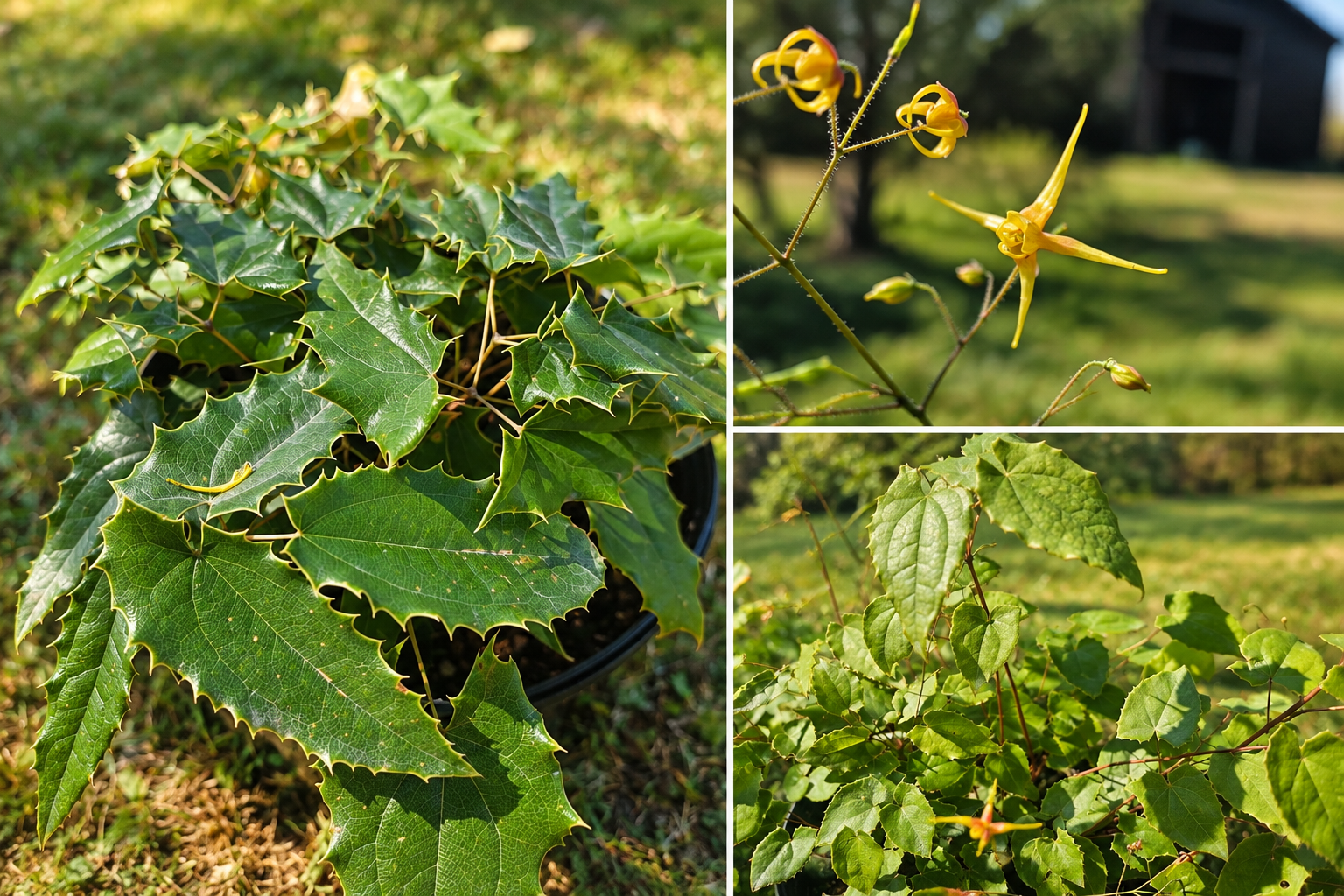
Epimedium
Every gardener eventually encounters a space that seems determined to resist everything we try to grow.
Perhaps it's beneath an established maple tree, where the roots compete for every drop of moisture. Maybe it's along the edge of a woodland, where sunlight filters through the branches for only a few hours each day. Or perhaps it's that forgotten corner of the garden where hostas struggle, grass refuses to grow, and the soil seems permanently dry.
At 19 Birch Lane, where we're transforming five acres along the coast of Maine into an evolving botanical garden destination, we're constantly thinking about how to turn challenging spaces into beautiful garden experiences.
And one plant I believe deserves far more attention is Epimedium, commonly known as barrenwort, bishop's hat, or fairy wings.
Epimedium doesn't announce itself with enormous flowers or towering stems. Its beauty is more subtle. Delicate spring blossoms hover above heart-shaped leaves, often followed by attractive foliage that provides texture and color throughout the growing season.
But what makes this perennial particularly interesting is its ability to solve one of gardening's most frustrating challenges: creating a beautiful, low-growing planting in shade, including dry shade beneath established trees.
For gardeners interested in woodland landscapes, Japanese-inspired gardens, shade-loving perennials, or simply finding dependable plants for difficult areas, Epimedium deserves a closer look.
What Is Epimedium?
Epimedium is a genus of perennial plants belonging to the Berberidaceae, or barberry family.
Many species originate in Asia, particularly China, while others occur in parts of Europe and the Mediterranean region.
Depending on the species and cultivar, Epimedium may be deciduous, semi-evergreen, or evergreen.
Most form low, gradually expanding clumps or colonies through underground rhizomes.
The flowers are one of the plant's most distinctive characteristics.
Small, intricate blossoms appear on slender stems in spring, often resembling tiny orchids, miniature stars, or delicate fairy wings.
Flower colors may include:
White
Pale yellow
Golden yellow
Pink
Rose
Lavender
Purple
Red
Multicolored combinations
But as a gardener, I would argue that Epimedium's greatest strength isn't necessarily its flowers.
It's the foliage.
The leaves are often heart-shaped, sometimes elongated, and may emerge in shades of bronze, copper, red, or burgundy before maturing into green.
That combination of attractive foliage and delicate spring flowering makes Epimedium a particularly valuable perennial for shaded gardens.
Why Epimedium Deserves a Place in More Gardens
When gardeners think about shade plants, hostas are often the first perennials that come to mind.
And for good reason.
Hostas provide extraordinary foliage diversity, perform beautifully in many shaded settings, and offer tremendous opportunities for garden design.
But a successful shade garden shouldn't depend on hostas alone.
At 19 Birch Lane, one of the principles guiding our woodland garden development is creating contrast through foliage shape, size, texture, and growth habit.
Epimedium fills an important design role.
Its relatively low, fine-textured foliage contrasts beautifully with the large, bold leaves of hostas.
Its delicate flowers add spring interest before many woodland perennials have fully emerged.
And certain established varieties tolerate dry shade better than many other commonly grown shade plants.
In my view, Epimedium belongs in the conversation alongside hostas, ferns, hellebores, Brunnera, and other valuable woodland perennials.
Growing Epimedium in Zone 6: What Gardeners Need to Know
Here in coastal Maine, our gardens at 19 Birch Lane are situated in USDA Hardiness Zone 6a.
Our growing conditions include cold winters, fluctuating spring temperatures, periods of summer humidity, and a mixture of woodland shade and sunny garden areas.
Epimedium can be well suited to this environment, provided the right species or cultivar is selected.
Light Requirements
Most Epimediums perform best in partial shade or dappled woodland light.
Morning sunlight followed by afternoon shade is often an excellent combination.
Some varieties tolerate deeper shade, although flowering may be reduced when light levels become extremely low.
Strong afternoon sun, especially when combined with dry soil, can scorch the foliage.
For most gardeners, a location beneath high-branched deciduous trees or along the edge of a woodland is an excellent starting point.
Soil Requirements
Epimedium generally performs best in soil that is:
Well drained
Rich in organic matter
Moist but not waterlogged during establishment
Moderately fertile
Slightly acidic to near neutral, depending on the variety
Woodland soil enriched with decomposing leaves is an excellent model.
One of my favorite ways to improve a woodland planting area is to work with natural organic materials rather than attempting to completely replace the existing soil.
Leaf mold, finished compost, and decomposed organic matter can improve soil structure and moisture retention.
Water Requirements
One of Epimedium's most attractive characteristics is the ability of certain varieties to tolerate dry shade once established.
However, drought tolerance does not mean a newly planted Epimedium can be neglected.
New plants require consistent moisture while their root systems develop.
Even established plants benefit from supplemental watering during extended drought.
And not every Epimedium species is equally tolerant of dry conditions.
This is why selecting the right variety is so important.
The Secret to Gardening Beneath Trees
One of the most challenging environments in any landscape is the soil beneath mature trees.
The problem isn't always shade alone.
It's competition.
Tree roots absorb enormous quantities of moisture and nutrients from the surrounding soil.
Rainfall may be intercepted by the canopy before it ever reaches the ground.
And the soil can become compacted or depleted of organic matter over time.
This combination creates what gardeners call dry shade.
Epimedium is one of the plants worth considering for these situations.
But proper preparation matters.
When planting beneath established trees, I recommend avoiding major excavation that could damage important tree roots.
Instead, work carefully between existing roots, incorporate modest amounts of organic matter where appropriate, and maintain a layer of leaf mulch to protect the soil.
Give new plants time to establish before expecting them to withstand dry conditions.
The objective isn't to defeat the tree roots. It's to select plants capable of living alongside them.
Designing With Epimedium: Think Beyond the Individual Plant
This is where Epimedium becomes especially interesting to me.
As we develop the gardens at 19 Birch Lane, we're increasingly focused on how plants work together rather than simply how attractive they look individually.
A beautiful woodland garden needs different layers.
Trees create the canopy.
Shrubs provide structure.
Large-leaved perennials create bold shapes.
Ferns contribute movement.
Groundcovers connect the individual elements.
Epimedium is particularly useful in that final layer.
Rather than scattering single plants randomly throughout a garden, consider planting several together to create a continuous carpet of foliage.
Over time, the plants can gradually form a cohesive groundcover.
This creates a much more natural appearance, particularly along paths, beneath shrubs, or around larger woodland perennials.
Pairing Epimedium With Hostas
Hostas and Epimedium make excellent design companions.
The large leaves of hostas contrast with Epimedium's smaller, more delicate foliage.
Try combining blue-green hostas with bronze-tinted Epimedium foliage or bright chartreuse hostas with dark green Epimedium varieties.
The effect can be striking even without flowers.
Pairing Epimedium With Ferns
Ferns bring a completely different texture to the woodland garden.
Their finely divided fronds soften the broader leaves of Epimedium.
This combination works particularly well around stones, pathways, and naturalistic garden edges.
Pairing Epimedium With Hellebores
Hellebores are among the earliest flowering perennials in our Zone 6 gardens.
Combining them with Epimedium can create a succession of early-season interest.
As hellebore flowers begin to fade, Epimedium's delicate spring flowers and fresh foliage help continue the display.
Pairing Epimedium With Spring Bulbs
Early bulbs can provide color before Epimedium reaches its full seasonal size.
Small daffodils, snowdrops, and other woodland-appropriate bulbs can emerge through established plantings.
Later, Epimedium foliage helps soften the appearance of fading bulb leaves.
It's a simple example of succession planting—one of the most important principles behind our garden design at 19 Birch Lane.
Epimedium and Our New Asian-Inspired Garden
One of the most exciting recent projects at 19 Birch Lane has been the development of our Asian-inspired woodland garden.
Located in a wooded corner of the property, this new garden incorporates winding paths, a teahouse, stonework, a pond, waterfalls, and layered shade-loving plantings.
The garden has given us an opportunity to think differently about landscape design.
Rather than relying on bold masses of flowers, we're concentrating on foliage, texture, sound, and atmosphere.
Hostas and ferns already play important roles in establishing that woodland character.
Epimedium is exactly the type of plant I consider especially well suited to this design approach.
Its restrained appearance, low growth habit, and delicate spring flowers would complement the surrounding woodland.
It could be used along the edges of pathways, beneath taller plantings, or around carefully positioned stones.
In a garden designed to encourage quiet reflection, sometimes the most valuable plants are those that don't demand attention.
They simply make the entire space feel more complete.
Five Epimedium Varieties Worth Exploring
There is considerably more diversity within the genus than many gardeners realize.
Here are five selections worth researching for woodland and shade gardens.
1. Epimedium × rubrum — Red Barrenwort
A classic selection featuring reddish spring flowers with contrasting yellow centers.
Its foliage often emerges with attractive reddish or bronze tones.
This is a particularly appealing choice for gardeners who appreciate seasonal foliage changes.
2. Epimedium × versicolor 'Sulphureum'
Known for its soft yellow flowers, this selection is frequently recommended for shaded groundcover plantings.
It is among the Epimediums worth considering for relatively dry woodland conditions once established.
3. Epimedium grandiflorum
This species is associated with elegant spring flowers and attractive foliage.
Numerous cultivars offer different flower colors and plant characteristics.
Its relatively delicate appearance makes it especially useful in refined woodland compositions.
4. Epimedium × perralchicum 'Frohnleiten'
A vigorous groundcover selection with bright yellow flowers and attractive foliage.
It can be particularly useful where a gardener wants to establish a larger, cohesive planting beneath trees or shrubs.
5. Epimedium 'Pink Champagne'
An ornamental hybrid known for its distinctive pink-toned flowers and colorful emerging foliage.
This is a selection to consider when the goal is to highlight Epimedium as a specimen rather than simply use it as groundcover.
A note for Maine gardeners: Always verify the hardiness and moisture requirements of the exact Epimedium species or cultivar before purchasing. The genus is diverse, and not every selection performs identically in Zone 6.
When and How to Plant Epimedium
In Zone 6, spring and early fall are generally good planting periods.
Spring planting allows roots to develop throughout the growing season.
Early fall planting can also be successful when plants have enough time to establish before the ground freezes.
My Recommended Planting Approach
Select a location with partial or dappled shade.
Remove weeds and competing ground vegetation.
Loosen the planting area carefully, especially beneath trees.
Incorporate finished compost or leaf mold where appropriate.
Plant at approximately the same depth as the nursery container.
Water thoroughly after planting.
Apply a light organic mulch, keeping it away from the crown.
Maintain consistent moisture during establishment.
Avoid burying the crown too deeply or allowing the planting area to remain saturated.
Patience is important.
Many Epimediums spread gradually, and a newly planted group may take several growing seasons to develop the appearance of an established groundcover.
Should You Cut Back Epimedium in Spring?
This is one of the most frequently asked questions about Epimedium care.
The answer depends partly on whether the plant is deciduous, semi-evergreen, or evergreen.
For varieties that retain old foliage through winter, removing weathered leaves in late winter or very early spring can reveal the emerging flowers.
Timing is important.
Epimedium flower stems can emerge surprisingly early, and careless pruning may remove the very blossoms you've been waiting to see.
My advice is to inspect plants carefully before cutting.
Remove old foliage before new flower stems emerge whenever possible.
For deciduous varieties, there may be little cleanup necessary beyond removing damaged or dead material.
How to Divide and Propagate Epimedium
Once an established clump has reached a substantial size, division can provide additional plants.
Early fall is often a suitable time, although some varieties can also be divided after flowering.
Carefully lift part of the clump and separate sections containing healthy roots, rhizomes, and growing points.
Replant promptly into prepared soil and water thoroughly.
One of the most rewarding aspects of perennial gardening is watching a plant collection gradually expand through division.
At 19 Birch Lane, this approach has helped us continue developing new gardens while making better use of established plants.
Epimedium may not multiply as rapidly as some familiar perennials, but with patience, a small planting can eventually become a meaningful part of a larger woodland landscape.
Is Epimedium Deer Resistant?
Epimedium is generally considered relatively resistant to deer and rabbits.
That makes it particularly attractive for woodland gardens where browsing wildlife can be a persistent challenge.
However, no plant should be considered completely deer-proof.
Hungry animals may sample almost anything, particularly during periods when other food sources are limited.
Still, Epimedium belongs on the list of perennials worth considering where deer pressure is a concern.
Is Epimedium Better Than Pachysandra or Other Shade Groundcovers?
There isn't one universally best groundcover.
The right choice depends on the location and the gardener's objectives.
Epimedium offers several advantages:
Attractive spring flowers
Interesting foliage
A generally manageable growth habit
Good compatibility with other woodland perennials
Dry-shade tolerance in selected established varieties
A natural appearance beneath trees
For gardeners who want a layered, botanically diverse woodland garden rather than a uniform carpet of one plant, Epimedium can be particularly appealing.
I prefer thinking of groundcovers as part of a broader plant community rather than simply something used to cover bare soil.
That philosophy creates gardens with greater visual interest and more opportunities for seasonal change.
Common Mistakes to Avoid When Growing Epimedium
Even relatively easy-care plants can struggle when placed in unsuitable conditions.
Here are the mistakes I would encourage gardeners to avoid.
Planting in too much afternoon sun. Most varieties prefer shade or filtered light, particularly where summers become hot and dry.
Assuming all Epimediums tolerate drought equally. Some are notably more tolerant than others, and newly planted specimens still need water.
Expecting immediate groundcover. Many varieties spread slowly. Allow time for colonies to establish.
Removing old foliage too late. Cutting after flower stems emerge can accidentally remove spring blossoms.
Ignoring soil quality. Even drought-tolerant woodland plants benefit from organic matter and good soil structure.
Planting too deeply. Keep the crown at the proper level and avoid excessive mulch buildup around it.
Why I Believe Epimedium Deserves More Attention
The longer I garden, the more I appreciate plants that contribute something beyond a brief flowering display.
When you're developing a landscape as extensive and varied as 19 Birch Lane, you begin thinking about plants differently.
You start asking:
What does this plant contribute in April?
How does its foliage look in July?
Will it complement neighboring plants?
Can it tolerate the conditions where I want to grow it?
Does it improve the overall composition?
And will it become more beautiful as the garden matures?
Epimedium answers many of those questions exceptionally well.
It isn't necessarily the plant that stops someone in their tracks from fifty feet away.
But it may be the plant that makes a shaded border feel complete.
And as a gardener, I find that every bit as valuable.
Frequently Asked Questions About Epimedium
What is Epimedium?
Epimedium, also called barrenwort or bishop's hat, is a genus of shade-loving perennial plants known for delicate spring flowers and attractive foliage. Many varieties are useful as groundcovers in woodland gardens.
Does Epimedium grow well in Zone 6?
Yes. Numerous Epimedium species and cultivars are hardy in USDA Zone 6, making them suitable for many gardens in coastal Maine and New England. Check the hardiness of individual varieties.
Can Epimedium grow in dry shade?
Certain established Epimedium varieties tolerate dry shade very well, including conditions beneath mature trees. Newly planted specimens still require consistent moisture, and some species prefer moister soil.
Does Epimedium spread?
Yes. Epimedium spreads through underground rhizomes, but the rate varies considerably by species and cultivar. Some form relatively slow-growing clumps, while others develop broader colonies.
When does Epimedium bloom?
Most varieties flower in spring, commonly April through May in Zone 6, depending on the cultivar, weather, and garden microclimate.
Should Epimedium be cut back in the fall?
Usually, major foliage cleanup is best reserved for late winter or very early spring, particularly for evergreen and semi-evergreen varieties. Old leaves can be removed before new flowers emerge.
Is Epimedium good for pollinators?
Epimedium flowers can provide spring forage for visiting insects, although their value varies by species and local pollinator activity. For a pollinator-focused garden, combine them with a diverse range of spring-flowering plants rather than relying on Epimedium alone.
What grows well with Epimedium?
Hostas, ferns, hellebores, Brunnera, Pulmonaria, woodland bulbs, and other shade-loving perennials can make excellent companions when their moisture and soil requirements are compatible.
Final Thoughts From the Garden
One of the greatest pleasures of creating the gardens at 19 Birch Lane is discovering plants that change the way we think about garden design.
Epimedium is one of those plants.
It reminds us that beauty doesn't always need to be dramatic.
Sometimes it comes from a delicate flower hovering just above the leaves.
Sometimes it's the copper color of new spring foliage.
And sometimes it's simply the way a group of plants quietly connects a woodland landscape.
As we continue developing our gardens in Mid Coast Maine, we're always looking for plants that offer more than one season of interest and contribute to the overall experience of the landscape.
For gardeners working with shade, tree roots, woodland borders, or Japanese-inspired garden spaces, Epimedium is certainly a perennial worth getting to know.
Because some of the most rewarding plants in a garden aren't necessarily the ones that demand attention. They're the ones that make everything around them more beautiful.
— Aric Odone, Head Gardener, 19 Birch Lane
Continue Exploring 19 Birch Lane
The gardens at 19 Birch Lane are constantly evolving, and our goal is to share the plants, techniques, and lessons we discover along the way.
Explore Our Plant Finder
Discover growing information, botanical characteristics, and garden uses for plants featured throughout 19 Birch Lane.
Discover Our Asian-Inspired Garden
Follow the development of our woodland retreat, including its teahouse, waterfalls, winding paths, hostas, ferns, and shade-loving plantings.
Explore Our Plant Collections
Learn about the irises, roses, daylilies, dahlias, and other collections shaping the botanical identity of 19 Birch Lane.
Read More From In the Garden
Explore practical articles about Zone 6 gardening, shade-loving perennials, garden design, plant care, and our continuing journey toward becoming a botanical garden destination in Mid Coast Maine.
Explore the Future Botanical Garden
Learn more about our vision for transforming five acres in South Thomaston, Maine, into a place for horticulture, education, and public enjoyment.