
Botanical Gardens in Maine: A Guide to Garden Inspiration, Plant Collections & the Growing Gardens at 19 Birch Lane
There is something different about experiencing a garden in Maine.
Our long winters make spring feel more anticipated. Summer arrives with an explosion of growth, and by late summer the landscape is overflowing with hydrangeas, dahlias, ornamental grasses and perennial flowers. Then autumn transforms the gardens again.
At 19 Birch Lane in South Thomaston, Maine, we have spent the past several years embracing those changing seasons while transforming our five-acre property from a private home and boutique wedding venue into something much larger: an evolving botanical garden destination in Midcoast Maine.
The gardens are still growing—and that's part of the story.
Rather than creating everything at once, we are developing 19 Birch Lane garden by garden, building plant collections, experimenting with combinations that thrive in our Maine climate, and creating spaces where people can eventually come to explore, learn and simply enjoy being surrounded by plants.
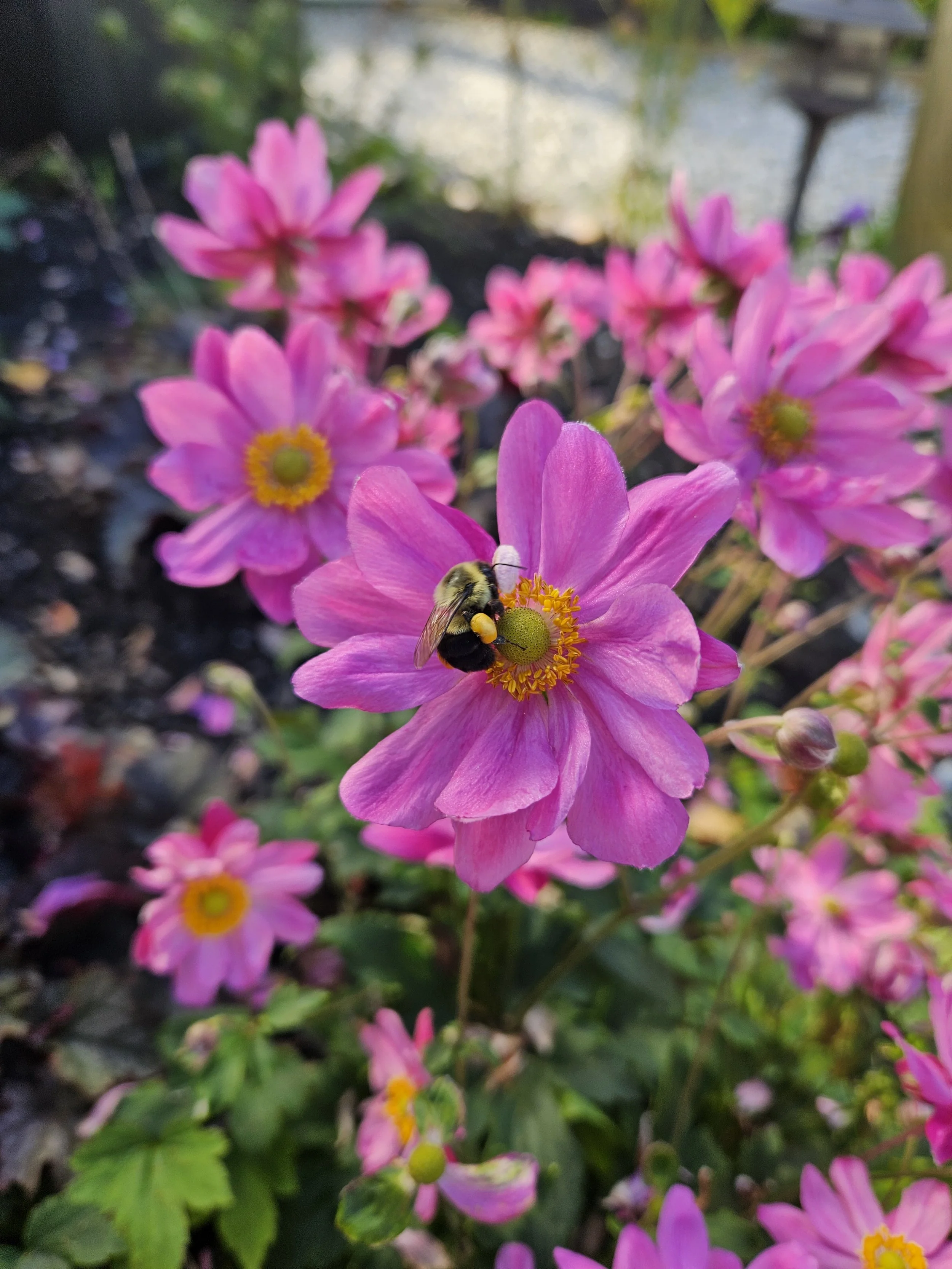
Bumble
Pollinators love the late season blooms of the Japanese anemone
What Makes a Botanical Garden Different?
A botanical garden is more than a beautiful landscape.
At its heart, a botanical garden brings together plants, education, horticulture and public enjoyment.
Plants can be organized into collections. Visitors can discover unfamiliar varieties. Labels and educational resources can help people understand what they are seeing and potentially find plants that could work in their own gardens.
That philosophy is increasingly shaping what we are building at 19 Birch Lane.
Our goal isn't simply to create beautiful gardens.
We want to create a place where someone might walk through a collection of 100-plus irises and discover a variety they have never seen before—or find a hydrangea, rose or perennial they want to grow at home.
That idea has become one of the foundations for the future of 19 Birch Lane.
Building a Botanical Garden in Midcoast Maine
Our gardens didn't begin with a master plan to become a botanical destination.
They evolved.
What started as improvements to the landscape surrounding our home and greenhouse gradually became larger gardens. Those gardens became collections, and the collections began influencing what we wanted the property to become.
Today, you'll find gardens and plantings featuring roses, irises, dahlias, daylilies, hydrangeas, peonies, hostas, ornamental grasses, flowering shrubs, trees and an expanding assortment of perennials.
Some areas are formal.
Others are intentionally naturalistic.
Some are designed around a particular plant collection, while others are designed around an experience—a view across the pond, the sound of moving water, a shaded woodland path or a quiet place to sit.
Together, they are becoming the botanical identity of 19 Birch Lane.
Plant Collections at 19 Birch Lane
One of our biggest focuses has been developing recognizable plant collections.
The Iris Collection
Our iris gardens have become one of our most ambitious collections.
More than 120 varieties of dwarf and standard irises have been planted near our brook and surrounding gardens, creating what should become an increasingly impressive spring and early-summer display as the plants mature.
The collection also allows visitors to compare flower colors, heights, forms and bloom characteristics within a single genus.
The Rose Gardens
Roses have become another important part of the property.
Our collection includes dozens of roses, with a particular emphasis on David Austin English roses.
Rather than treating roses simply as individual specimens, we're increasingly using them as part of larger garden compositions—combined with perennials and other plants to create the layered appearance of an established garden.
Dahlias
Late summer belongs to the dahlias.
Our growing collection includes approximately 100 dahlias, bringing dramatic color to the gardens when many earlier-season plants have begun to fade.
Their extraordinary diversity—from compact flowers to enormous dinner-plate blooms—is one reason dahlias have become such an important seasonal feature here.
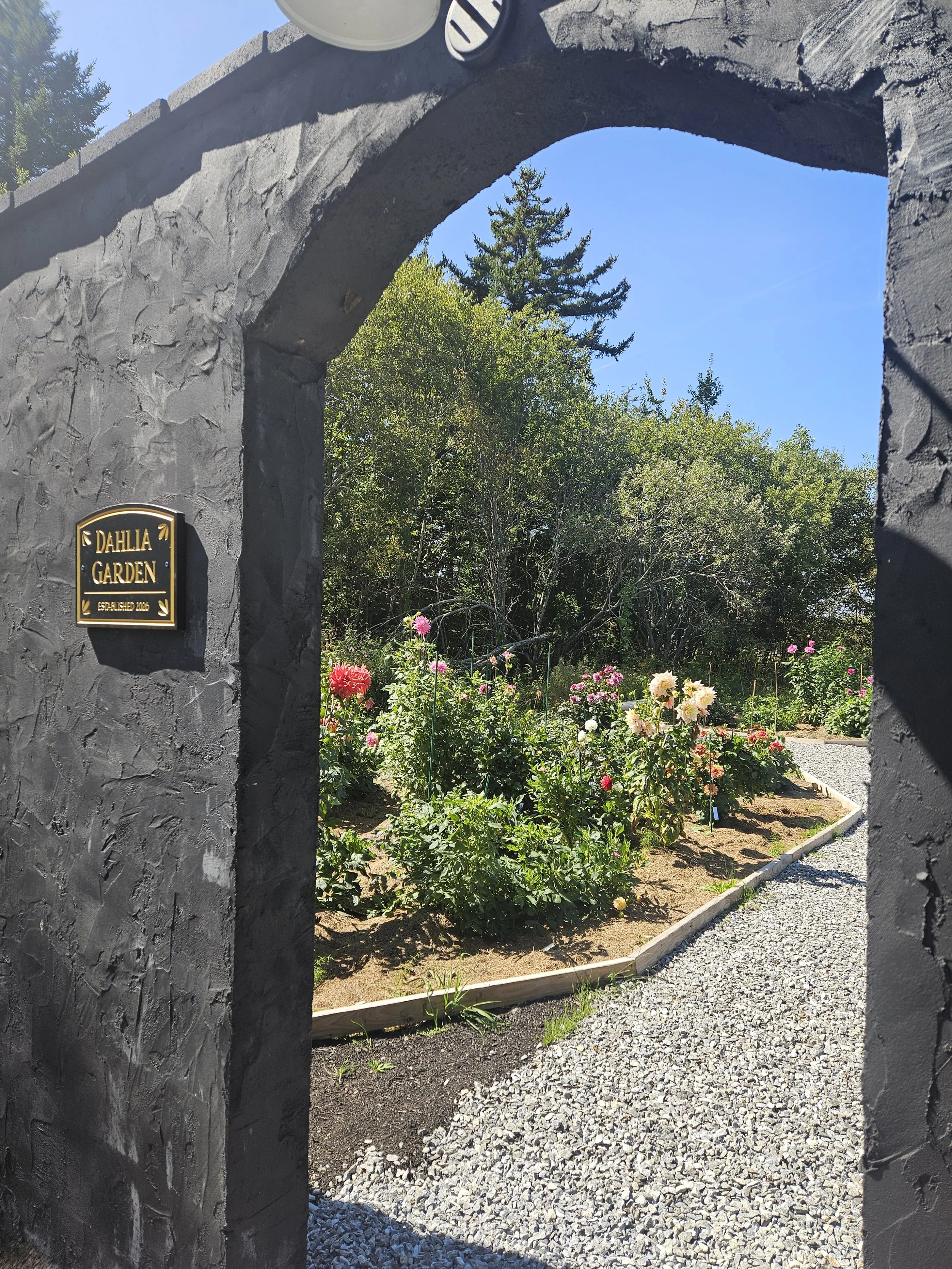
Dhalia
The entrance into Dhalia Garden at 19 Birch Lane
Daylilies
More than 35 varieties of daylilies add another layer of summer color.
Daylilies are especially useful in Maine gardens because they can provide impressive flowering displays while remaining relatively adaptable and dependable.
Hydrangeas
Hydrangeas have become one of the structural foundations of our landscape.
We grow numerous varieties and types throughout the property, using them both as individual specimens and in larger mass plantings.
Their long flowering season makes them particularly valuable in a garden designed to remain interesting from summer into fall.
Gardening in Maine Means Gardening With the Seasons
One of the lessons we've learned while developing 19 Birch Lane is that a Maine garden shouldn't be designed around one spectacular week.
We want something happening throughout the growing season.
Spring may begin with early bulbs, hellebores and emerging perennials.
Then come peonies and irises.
Summer brings roses, catmint, daylilies, coneflowers and hydrangeas.
Late summer introduces dahlias, anemones and ornamental grasses.
And autumn brings seed heads, foliage, grasses and changing tree color.
The objective isn't constant peak bloom.
It's constant interest.
That distinction has become increasingly important as we plan the gardens for future visitors.
A Garden Should Be an Experience
Plants are only part of what makes a memorable garden.
How someone moves through the landscape matters just as much.
At 19 Birch Lane, we're creating pathways that reveal different views rather than showing the entire property at once.
A path may lead toward the pond.
Another follows our brook.
Another will eventually take visitors into our Asian-inspired garden and toward the Japanese tea house.
Elsewhere, stone paths, arbors, terraces and seating areas create moments where visitors can stop rather than simply walk through.
Water has also become an important element of the property—from our pond and reflection pool to the brook and developing water features.
Our goal is to make the gardens feel explorable.
Helping Visitors Identify the Plants They Discover
As our plant collections have grown, we've also been building the 19 Birch Lane Plant Finder.
The Plant Finder is becoming a searchable online resource documenting plants growing throughout the property.
Individual entries can provide information such as:
Botanical and common names
Sun and moisture requirements
Mature size
Hardiness
Bloom season
Garden uses
Growing information
Where the plant can be found at 19 Birch Lane
Eventually, physical plant identification throughout the gardens can connect the real-world garden experience with these deeper online resources.
A visitor will be able to discover a plant while walking the gardens and then continue learning about it afterward.
That connection between garden + technology + education will become an important part of the 19 Birch Lane experience.
From Wedding Venue to Botanical Destination
19 Birch Lane will continue to host a limited number of weddings each year.
In many ways, the gardens and weddings complement one another.
Couples aren't simply choosing an event space. They're celebrating within a landscape that changes throughout the season.
But our long-term vision reaches beyond weddings.
We are working toward opening the gardens more regularly to visitors, developing educational programs and classes, expanding plant identification and eventually creating additional indoor horticultural spaces.
The intention is to create a destination where someone might come for a garden visit, attend a horticultural class, explore a plant collection or simply spend an afternoon surrounded by plants.
Why Midcoast Maine?
Midcoast Maine already attracts people because of its coastline, historic towns, islands, art, food and extraordinary natural landscape.
Gardens add another reason to explore the region.
19 Birch Lane sits in South Thomaston, close to Rockland, Rockport, Camden and other Midcoast destinations.
As the gardens develop, we hope 19 Birch Lane can become another stop for people exploring this part of Maine—particularly gardeners and travelers interested in horticulture, landscape design and unusual places.
The Gardens Will Never Really Be Finished
Perhaps the most important thing we've learned is that a botanical garden is never truly complete.
Plants mature.
Trees grow.
Collections expand.
Gardens get redesigned.
Some experiments succeed and others teach us what to do differently.
That constant evolution is exactly what excites us about the future of 19 Birch Lane.
Every year should look a little different from the year before.
And eventually, we hope visitors will return not because they've already seen the gardens—but because they know there will always be something new to discover.
Welcome to the evolving gardens at 19 Birch Lane.
Continue Exploring the Gardens at 19 Birch Lane
Azaleas are just one part of the growing plant collections at 19 Birch Lane. As we continue transforming our Midcoast Maine property into a botanical garden destination, we’re documenting the plants, gardens and lessons we learn along the way.
Explore the 19 Birch Lane Plant Finder
Discover plants growing throughout our gardens, with information about growing conditions, bloom times, garden uses and more.
Explore Our Plant Collections
Take a closer look at the roses, irises, dahlias, daylilies and other collections that are becoming part of the botanical identity of 19 Birch Lane.
Visit the Garden Map
See how the individual gardens, plant collections and landscape features come together across 19 Birch Lane.
More from In the Garden
Explore practical Maine gardening advice, plant profiles, garden-design ideas and the ongoing story of building the gardens at 19 Birch Lane.