
Creating Our New Asian Garden: A Tranquil Woodland Retreat in Mid Coast Maine
In the Garden at 19 Birch Lane
Creating Our New Asian Garden: A Tranquil Woodland Retreat in Mid Coast Maine
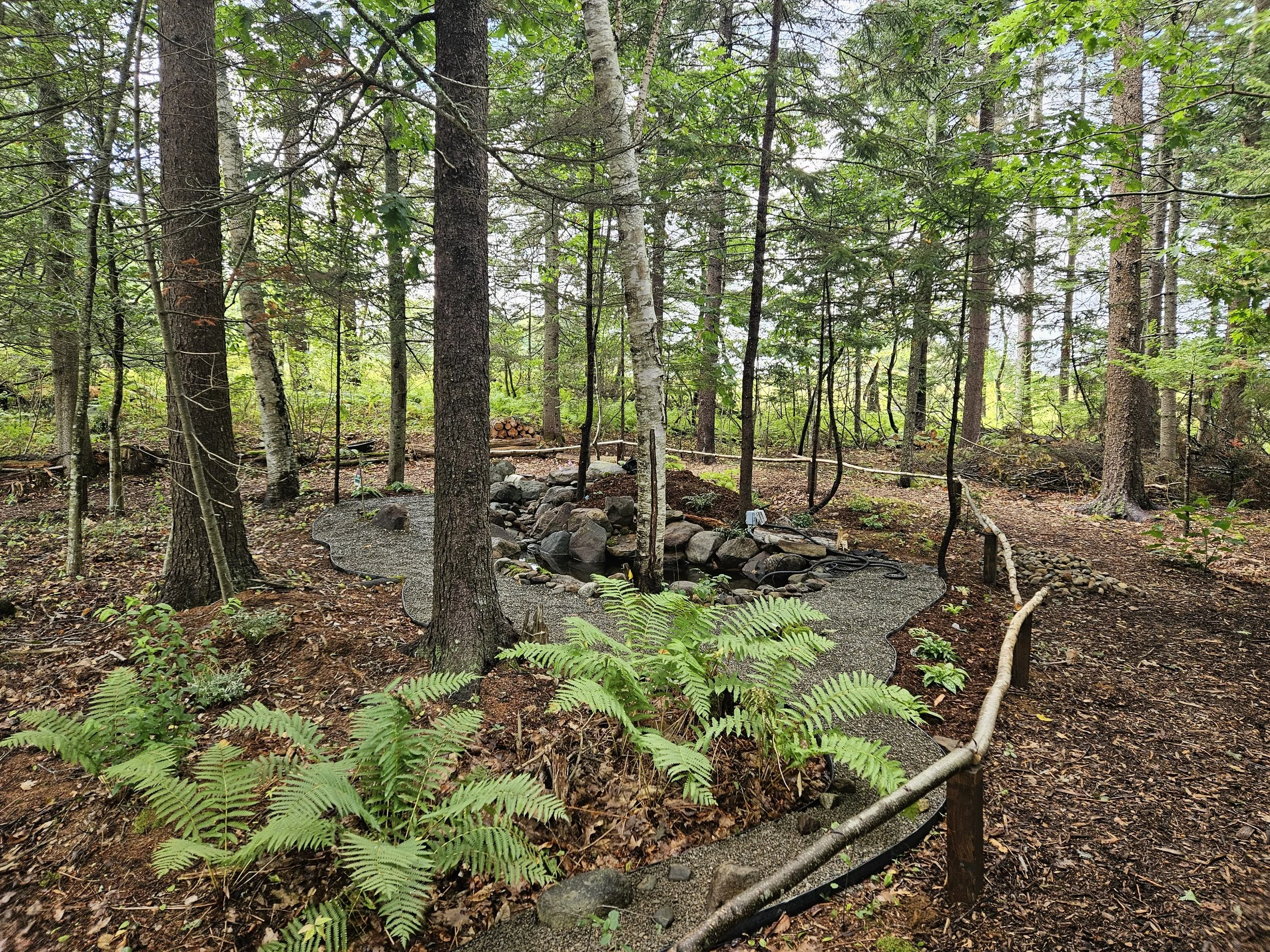
Our new Asian inspired garden being built out.
One of the most exciting projects we have taken on this summer at 19 Birch Lane has been the creation of a brand-new Asian-inspired woodland garden tucked into a quiet corner of the property.
Unlike some of our more formal garden areas, this new space has been designed to feel peaceful, shaded, natural and contemplative. We wanted it to feel almost discovered rather than built—a place where visitors can leave the more open areas of the gardens behind, follow a wooded path, hear the sound of water, and arrive somewhere that feels calm and completely different.
At the heart of the garden will be a small teahouse, a Japanese-inspired water feature, winding woodland paths and layered plantings of shade-loving plants including hostas, ferns and other foliage plants chosen to create texture, softness and a sense of enclosure.
The project began this summer and will be completed through the fall, with the goal of having the garden ready for visitors next year.
For us, this has been one of those garden projects where the process has been just as exciting as the finished vision.
From Woodland Corner to Garden Room
This part of 19 Birch Lane began as a wooded corner of the property with dense understory growth and very little reason for anyone to walk through it.
The mature trees, however, immediately gave us something valuable that would take decades to recreate from scratch: shade, height, atmosphere and a natural canopy.
Rather than clearing the area and starting over, we decided to work with what was already there.
That became the guiding principle for the entire garden.
We wanted to preserve the woodland feeling while carefully editing the space underneath it. The goal was not to make the forest disappear. It was to create pathways, views and garden moments within it.
That meant beginning with the least glamorous part of any garden project: clearing brush.
Cutting the First Trails
The first major step was physically establishing how visitors would move through the garden.
We began by cutting trails into the wooded area and removing much of the low brush and unwanted vegetation that crowded the forest floor.
Once those paths began to appear, the entire area changed.
Suddenly we could visualize where someone might walk.
Where they might stop.
Where a view could open toward the pond.
Where a bench or lantern might eventually sit.
And where the teahouse would make the greatest impact.
We intentionally avoided making the paths perfectly straight.
Asian and Japanese-inspired gardens often reward a slower pace, with paths that gently curve and reveal the landscape in stages. That approach also felt much more natural within this existing Maine woodland.
We then began covering portions of the paths with wood chips, giving the trails a soft, natural surface that blends into the surrounding forest.
Creating a Japanese-Inspired Water Feature
Water was always going to be central to the design.
Few elements change the atmosphere of a garden as completely as moving water.
We wanted visitors to hear the garden before they fully saw it.
So one of the largest parts of the project involved digging a pond and beginning construction of a series of waterfalls and stone-lined waterways.
The water feature is designed with Japanese garden inspiration rather than as a highly formal pond.
Large stones, natural edges and moving water are intended to make the feature appear as though it has been part of the woodland for years.
Creating it required considerably more work than the finished garden will ever reveal.
Excavation had to be done.
Stone needed to be selected and positioned.
Water levels had to be considered.
Edges had to blend naturally into the surrounding soil.
And the waterfalls had to be shaped so that the water moved naturally rather than simply dropping from one level to another.
As gardeners, we often talk about plants first, but features like this remind us that sound can be just as important as color in garden design.
Once the water began moving through the stones, the garden immediately felt different.
Building the Teahouse
Another defining feature of this new garden is the teahouse.
The structure is positioned within the woods so that it feels connected to the garden rather than placed on top of it.
The design includes traditional Asian-inspired elements, including round openings that frame views of the woodland beyond.
We want the teahouse to become a destination within the garden—a place where someone can sit, slow down and simply observe.
From inside, visitors will be able to experience the garden differently than they do while walking through it.
The round openings become natural picture frames.
A tree trunk.
A fern.
Moving water.
Changing leaves.
Eventually, carefully positioned plants.
That idea of framing a view is something we have become increasingly interested in as we develop 19 Birch Lane.
A successful garden isn't only about what you plant.
It's also about deciding how people will see it.
Designing With Shade-Loving Plants
Because the garden sits beneath an established woodland canopy, plant selection has been very different from many of our sunny perennial gardens.
Instead of relying heavily on flowers, we are using foliage.
That is one of the things we find especially interesting about this project.
The garden already includes a growing variety of hostas, chosen for differences in leaf size, shape, texture and color.
We are also using long war ferns and other woodland ferns, which immediately bring softness and movement to the landscape.
As the plantings continue, we will add additional shade-loving plants that complement the Asian woodland atmosphere.
The goal is not to fill every inch of soil.
Instead, we want plants to appear in thoughtful groupings—almost as though they naturally found the right place to grow.
In this type of garden, foliage becomes the flower.
A blue-green hosta beside a bright green fern can be just as beautiful as a traditional perennial border in bloom.
Why Hostas Work So Well in an Asian Garden
Hostas are particularly useful because their bold foliage provides contrast against delicate ferns and fine-textured woodland plants.
Different cultivars can create dramatically different effects.
Large-leaved hostas can become almost architectural.
Smaller varieties can edge paths.
Variegated cultivars brighten dark corners.
Blue-green varieties introduce cool, calming tones.
Because they perform well in shade, hostas allow us to create substantial plantings without fighting the natural conditions of the site.
This is an important principle we've learned throughout the gardens at 19 Birch Lane:
The easiest garden to maintain is usually the garden designed for the conditions you already have.
Trying to force full-sun plants beneath mature woodland trees would create an endless battle.
Designing around shade turns the site's greatest limitation into its greatest strength.
Ferns Add Movement and a Woodland Character
Ferns have become another important part of the garden.
Their delicate fronds bring movement and texture beneath the trees and help soften hard elements such as stones, pathways and the edges of the water feature.
In a woodland setting, ferns also create continuity.
Instead of individual plants looking isolated, repeating fern groupings helps connect one area of the garden to another.
This repetition is subtle, but it is one of the techniques that makes a garden feel intentional.
Using Existing Trees as the Structure
One of the greatest advantages of building this garden in an established woodland is that much of its architecture was already there.
The mature trunks form vertical columns throughout the garden.
Branches overhead create a natural ceiling.
Filtered light changes constantly as the day progresses.
Instead of planting a garden and waiting twenty years for trees to mature, we were able to design underneath an existing canopy.
That means our work has mostly focused on the lower layers of the garden:
paths, water, shrubs, perennials, stones and structures.
This layered approach is what will ultimately make the garden feel immersive.
A Garden Designed Around Quiet
Not every garden needs to be filled with bold color.
This new Asian garden has made us think differently about what makes a garden memorable.
Sometimes it is the absence of color.
The repetition of green.
The sound of water.
The crunch of a wood-chip path.
A stone partially covered with moss.
A fern moving in the breeze.
A glimpse of the pond through the trees.
These quieter experiences can be incredibly powerful.
And they are very different from the experience of walking through a rose garden or a large perennial border.
That contrast is exactly what we want as 19 Birch Lane continues developing.
Each garden should have its own personality.
The Importance of Creating Different Garden Experiences
As we continue transforming the property, one of our larger goals is to avoid creating a collection of gardens that all feel the same.
The David Austin Rose Garden should feel different from the iris gardens.
The hydrangea plantings should feel different from the woodland.
The pond should create a different experience from an open perennial border.
And this Asian garden should offer something completely different again.
We want visitors to move from one garden room into another and feel the atmosphere change.
That sense of discovery makes a garden destination far more interesting than simply displaying plants.
Building the Garden Over One Summer
It is surprising how much a landscape can change in a single season.
At the beginning of summer, this was essentially a wooded area with dense understory growth.
Within a few months, we have:
cleared brush,
cut new trails,
laid wood-chip paths,
begun installing gravel walkways,
dug the main pond,
built waterfalls,
positioned stone,
begun construction of the teahouse,
and started planting hostas, ferns and other shade-loving plants.
There is still plenty left to do.
But the bones of the garden are now visible.
And once you can see the structure of a new garden, the imagination begins filling in the years ahead.
What Comes Next This Fall
Our work will continue through the fall as we finish the major construction and establish more of the plantings.
Autumn is an excellent time for much of this work because cooler temperatures reduce stress on newly planted perennials and shrubs while giving roots an opportunity to establish before winter.
We will continue refining paths, completing the water feature, finishing details around the teahouse and adding plants where the garden still needs additional texture or structure.
We will also resist the urge to overplant everything immediately.
Part of creating a believable woodland garden is leaving some space for plants to mature naturally.
The garden we see next year will already look different.
The garden five years from now will be something else entirely.
Ready for Visitors Next Year
Our goal is to have the Asian Garden ready for visitors next season.
By then, paths will be established, the water feature will be flowing, the teahouse will be complete and the first generation of plants will have begun settling into the landscape.
Of course, like every garden at 19 Birch Lane, it will never truly be finished.
We expect the collection to grow.
New hostas will be added.
Additional woodland plants will appear.
Moss will slowly soften stones.
Ferns will expand.
Trees will change.
And the garden will gradually look less newly created and more as though it has always belonged there.
A Place to Sit, Reflect and Slow Down
Perhaps the most important purpose of this garden has nothing to do with plants.
We want it to become a place where people can slow down.
A place to sit quietly beside the water.
A place to listen to the waterfalls.
A place to look through the teahouse toward the woods.
A place where people can simply be still for a few minutes.
Gardens can be educational.
They can be beautiful.
They can inspire people to grow something at home.
But gardens can also provide something increasingly rare:
quiet.
Our hope is that this little corner of 19 Birch Lane becomes exactly that—a cool, tranquil woodland retreat where people can sit, reflect and reconnect with the natural world for many years to come.
And like so many of our gardens, the most exciting part is knowing that this is only the beginning.
Frequently Asked Questions About Asian and Japanese-Inspired Woodland Gardens
What plants work well in a shaded Asian-inspired garden?
Shade-tolerant foliage plants are especially useful. Hostas, many ferns and other woodland perennials can create layers of green, contrasting textures and a calm atmosphere beneath existing trees. Plant choices should always be matched to local climate, soil moisture and light levels.
Do Japanese-inspired gardens need a lot of flowers?
No. In fact, foliage, form, stone, water and negative space can be more important than flowers. A restrained color palette can create a quieter and more cohesive atmosphere.
Why are water features commonly used in Japanese-inspired gardens?
Water introduces movement, reflection and sound. Even a relatively small pond or waterfall can completely change the emotional experience of a garden.
How do you make a woodland garden feel intentional instead of overgrown?
Define circulation first. Establish paths, selectively clear understory growth, preserve important mature trees, repeat key plants and create focal points such as water, stone, seating or a small structure.
Can you create an Asian-inspired garden in Maine?
Yes. The goal does not have to be reproducing a garden from another climate exactly. At 19 Birch Lane, we are using Japanese and broader Asian garden inspiration while choosing plants and materials appropriate for our Zone 6a coastal Maine conditions.