
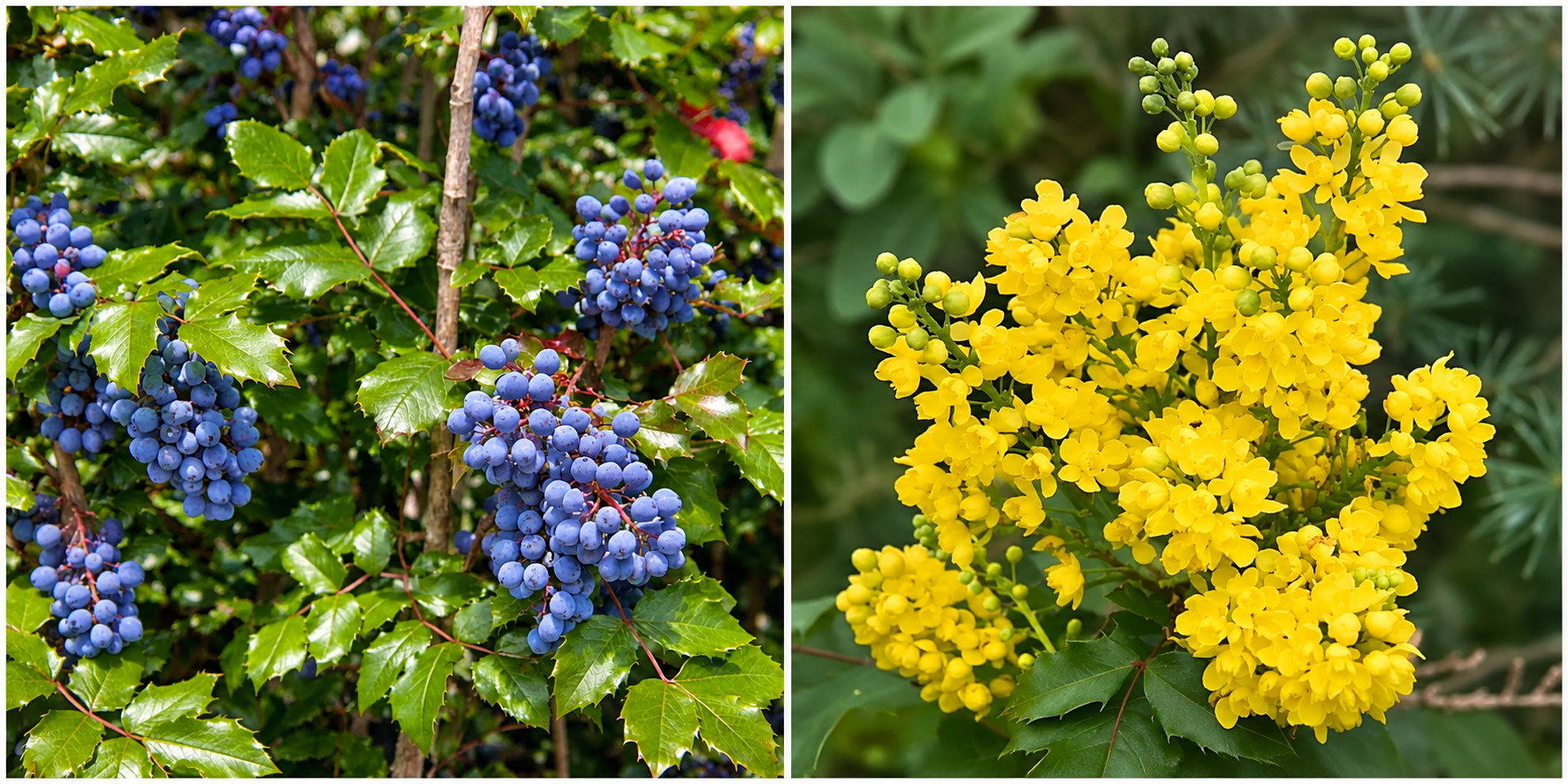
Oregon Grape Berberis aquifolium (Syn. Mahonia aquifolium)
An architectural broadleaf evergreen shrub with glossy holly-like foliage, cheerful golden-yellow spring flowers, blue-black berries, and striking bronze-purple winter color.
Plant Overview
Common Name: Oregon Grape
Botanical Name: Berberis aquifolium
Botanical Synonym: Mahonia aquifolium
Other Common Names: Tall Oregon Grape, Oregon Grape Holly, Holly-Leaved Barberry
Family: Berberidaceae — Barberry Family
Plant Type: Broadleaf Evergreen Shrub
USDA Hardiness Zones: Generally 5–8
Primary Seasons of Interest: Spring, Summer, Fall, and Winter
Flower Color: Golden Yellow
Fruit Color: Blue to Blue-Black
Foliage Color: Glossy Green, Often Developing Bronze, Red, or Purple Winter Tones
Oregon Grape is a distinctive evergreen shrub valued for its architectural foliage, bright yellow spring flowers, ornamental berries, and colorful winter leaves.
Despite its name, Oregon Grape is not a true grape and is not related to grapevines. Instead, it belongs to the barberry family, Berberidaceae.
Its common name comes from the clusters of blue-black berries that resemble small grapes.
The plant is native to western North America, where it grows in woodlands, forest edges, and other partially shaded habitats.
One of Oregon Grape's most recognizable characteristics is its glossy evergreen foliage. The leaves are composed of several stiff, leathery leaflets with pointed, holly-like edges.
In spring, clusters of brilliant yellow flowers emerge near the ends of the branches, creating a striking contrast against the dark green leaves.
Following flowering, the shrub develops clusters of small, rounded berries that gradually mature to blue or nearly black, often with a pale, powdery coating.
During colder weather, the foliage may develop rich bronze, burgundy, or purple tones, providing welcome color in the winter landscape.
For gardeners in Maine, Oregon Grape offers an interesting combination of evergreen structure, early-season flowers, wildlife interest, and colorful foliage.
Its success depends on choosing a sheltered planting location and protecting the leaves from drying winter winds.
Why Oregon Grape Belongs in the 19 Birch Lane Plant Finder
As we continue developing the gardens at 19 Birch Lane, one of our goals is to create landscapes that remain interesting throughout the entire year.
Flowers are an important part of garden design, but they represent only one element of a successful planting.
Foliage, texture, structure, fruit, and seasonal color are equally important.
Oregon Grape is an excellent example of a shrub that offers all of these characteristics.
Its evergreen leaves provide structure when deciduous shrubs and perennials are dormant.
Its yellow flowers introduce color early in the growing season.
The blue berries create another ornamental feature during summer, while the foliage may develop attractive purple and bronze tones in colder weather.
Oregon Grape also provides valuable opportunities for botanical education.
Visitors and home gardeners can learn about:
Broadleaf evergreen shrubs
Evergreen foliage adaptations
Early spring flowering plants
Pollinator-friendly shrubs
Ornamental berries and wildlife
Native plants of western North America
Winter foliage coloration
Shade-tolerant landscape plants
Woodland garden design
Plant taxonomy and botanical synonyms
The importance of winter wind protection
Designing gardens for four-season interest
At 19 Birch Lane, we believe the most successful gardens are created by combining plants with different seasonal characteristics.
Oregon Grape demonstrates how a single shrub can contribute to the landscape throughout much of the year.
Quick Facts
Common Name: Oregon Grape
Botanical Name: Berberis aquifolium
Synonym: Mahonia aquifolium
Family: Berberidaceae
Plant Type: Broadleaf Evergreen Shrub
Native Range: Western North America
USDA Hardiness Zones: Generally 5–8
Mature Height: Commonly 3–6 Feet; Can Grow Taller
Mature Spread: Approximately 3–5 Feet
Growth Habit: Upright, Arching, Sometimes Suckering
Growth Rate: Slow to Moderate
Flower Color: Golden Yellow
Flower Shape: Small Flowers in Upright Clusters
Bloom Time: Spring, Often April–May in Northern Gardens
Fruit Color: Blue to Blue-Black
Fruit Season: Summer into Fall
Foliage: Glossy, Leathery, Holly-Like
Winter Foliage: Green, Bronze, Burgundy, or Purple
Sun Exposure: Partial Shade Preferred
Water Requirements: Moderate During Establishment
Soil: Well-Drained, Organic-Rich, Slightly Acidic Preferred
Maintenance: Low to Moderate
Pollinator Value: Early-Season Flowers for Bees and Other Insects
Wildlife Value: Berries May Attract Birds
Deer Resistance: Generally Considered Resistant
Drought Tolerance: Moderate Once Established
Winter Protection: Recommended in Exposed Maine Locations
Garden Uses: Woodland Gardens, Evergreen Borders, Foundation Plantings, Wildlife Gardens, and Mixed Shrub Collections
Growing Conditions
Light Requirements
Oregon Grape performs best in partial shade, although it can tolerate a range of light conditions.
Ideal planting locations include:
Morning Sun
Afternoon Shade
Filtered Woodland Light
Bright Partial Shade
Sheltered Woodland Edges
Protected East-Facing Garden Beds
In Maine, a location receiving gentle morning sunlight with protection from intense afternoon sun and winter winds is often a good choice.
Plants growing in excessive sunlight may experience leaf scorch, particularly when soil moisture is limited.
Deep shade is tolerated, but flowering and fruit production may be reduced.
Soil Requirements
Oregon Grape prefers well-drained soil with adequate organic matter.
Suitable conditions include:
Well-Drained Garden Loam
Slightly Acidic Soil
Organic-Rich Woodland Soil
Good Root Aeration
Moderate Moisture
Minimal Compaction
Although the plant can tolerate a range of soil conditions, poor drainage and prolonged waterlogging should be avoided.
In woodland gardens, incorporating composted organic matter into the surrounding planting area can help improve soil structure.
Avoid excessive soil amendments directly within the planting hole.
Instead, focus on creating a healthy, well-drained planting area that encourages roots to grow outward.
Water Requirements
Oregon Grape benefits from consistent moisture while establishing.
During its first growing season:
Water deeply after planting.
Monitor soil moisture regularly.
Avoid prolonged drought.
Apply organic mulch.
Avoid keeping the root zone saturated.
Once established, Oregon Grape can tolerate periods of dry weather.
However, extended drought can still cause stress, especially in sunny locations or where nearby trees compete for moisture.
Flower Characteristics
Oregon Grape produces bright golden-yellow flowers during spring.
The flowers appear in upright clusters near the ends of the branches.
Flower Features
Golden-Yellow Color
Small Individual Flowers
Dense, Upright Flower Clusters
Often Lightly Fragrant
Spring Flowering
Attractive Against Dark Evergreen Foliage
Visited by Bees and Other Pollinating Insects
In the Pacific Northwest, Oregon Grape may bloom relatively early in spring.
In Maine, flowering generally occurs later, depending on temperature and seasonal conditions.
The yellow flowers create a particularly attractive contrast against the glossy dark green leaves.
For garden design, this makes Oregon Grape useful near woodland paths or entrances where the flowers can be appreciated at close range.
Fruit Characteristics
Following successful pollination, Oregon Grape produces clusters of small, rounded fruits.
The berries gradually develop a blue to blue-black color.
A pale, waxy coating may give them a dusty blue appearance.
Fruit Features
Small and Rounded
Blue to Blue-Black
Often Covered with a Pale Waxy Bloom
Arranged in Clusters
Generally Ripening in Summer
Attractive to Some Birds and Wildlife
Although the berries resemble grapes, Oregon Grape is botanically unrelated to true grapevines.
The ripe berries have a tart flavor and have historically been used in preserves.
However, Oregon Grape also contains biologically active alkaloids, particularly in the roots and bark.
At 19 Birch Lane, the berries should be treated as ornamental and wildlife-supporting features rather than encouraged for casual consumption.
Never consume unidentified berries, and keep roots, bark, and other plant parts out of reach of children and pets.
Foliage Characteristics
The foliage is one of Oregon Grape's most valuable ornamental features.
Spring Foliage
New growth may emerge with bronze or copper tones before maturing to green.
The new leaves create an attractive contrast against the older evergreen foliage.
Summer Foliage
Mature leaves are:
Dark Green
Glossy
Leathery
Compound
Stiff and Architectural
Edged with Sharp, Holly-Like Points
Each compound leaf contains multiple individual leaflets.
This is an important botanical distinction: the pointed leaflets are not separate leaves but parts of a larger compound leaf.
Fall and Winter Foliage
As temperatures decline, some leaves may develop:
Bronze
Burgundy
Purple
Reddish Purple
The intensity varies with exposure, temperature, and growing conditions.
The winter coloration can be especially attractive when combined with evergreen conifers, ornamental grasses, or snow-covered landscapes.
Cold Hardiness in Maine
Oregon Grape is generally considered hardy in USDA Zones 5–8.
This includes many protected Zone 6 locations in Midcoast Maine.
However, its evergreen foliage can be vulnerable to winter damage.
Even when the roots and stems survive cold temperatures, exposed leaves may experience drying, discoloration, or winter burn.
Common Causes of Winter Damage
Cold, Drying Winds
Frozen Soil
Strong Winter Sunlight
Sudden Temperature Changes
Inadequate Autumn Moisture
Exposed Planting Locations
Recommended Maine Growing Practices
Choose a sheltered planting site.
Avoid open, windswept areas.
Provide protection from harsh winter afternoon sun.
Maintain adequate soil moisture before freeze-up.
Apply organic mulch around the root zone.
Avoid excessive late-season fertilization.
Protect young plants during severe winters when practical.
Coastal Maine Considerations
Although coastal Maine can experience somewhat moderated winter temperatures, strong winds and freeze-thaw cycles remain important concerns.
For this reason, a protected woodland edge or east-facing planting area may provide better growing conditions than an exposed open border.
Oregon Grape is best regarded as a useful evergreen shrub for sheltered northern gardens rather than a plant for every exposed location.
Pollinator & Wildlife Benefits
Oregon Grape can provide valuable early-season resources for pollinating insects.
Its yellow spring flowers may attract:
Bumble Bees
Solitary Bees
Other Native Bees
Flower-Visiting Insects
Its berries may also provide food for birds and other wildlife.
Because Oregon Grape is native to western North America rather than Maine, its ecological role in northeastern landscapes differs from that of locally native shrubs.
For gardens focused on biodiversity, it is best used as part of a diverse planting that also includes native Maine flowering plants.
Deer Resistance
Oregon Grape is generally considered relatively deer resistant.
Its tough, spiny foliage may discourage browsing.
However, no shrub is completely deer-proof.
Deer may occasionally browse young plants, especially during periods of limited food availability.
Garden Uses
Oregon Grape is especially useful in:
Woodland Gardens
Shaded Shrub Borders
Evergreen Collections
Foundation Plantings
Wildlife Gardens
Pollinator Gardens
Garden Entrances
Naturalistic Landscapes
Mixed Shrub Borders
Asian-Inspired Gardens
Four-Season Gardens
Botanical Collections
Sheltered Garden Pathways
Informal Evergreen Groupings
Its upright form and glossy foliage make it a useful contrast to softer, finer-textured plants.
Allow sufficient space for its mature size and potential suckering habit.
Using Oregon Grape in a Woodland Garden
Oregon Grape is particularly attractive when combined with plants that have contrasting foliage shapes and textures.
Consider:
Oregon Grape + Hosta + Ferns + Hellebores
The Oregon Grape provides evergreen structure.
Hostas contribute broad summer foliage.
Ferns add delicate texture.
Hellebores introduce early-season flowers and attractive foliage.
Together, these plants can create a layered woodland composition with interest across several seasons.
Using Oregon Grape in an Asian-Inspired Garden
The architectural foliage and upright branching structure of Oregon Grape can complement Asian-inspired landscapes.
It works particularly well with:
Japanese Maples
Japanese Forest Grass
Ferns
Hostas
Natural Stone
Mossy Garden Features
Its bold leaves provide a strong contrast to the delicate foliage of Japanese maples and ferns.
When using Oregon Grape in a carefully composed garden, avoid overcrowding the plant.
Allow its natural structure to remain visible.
Companion Plants
Recommended companion plants include:
Ferns
Hellebores
Brunnera
Astilbe
Heuchera
Tiarella
Japanese Forest Grass
Rhododendrons
Japanese Maples
Mountain Laurel
Woodland Phlox
Shade-Tolerant Hydrangeas
Other Evergreen Shrubs
Choose companions with compatible light, soil, and moisture requirements.
Care & Maintenance
Oregon Grape is generally a manageable shrub when planted in favorable conditions.
Important maintenance practices include:
Watering During Establishment
Maintaining Good Drainage
Applying Organic Mulch
Protecting from Winter Winds
Removing Damaged Branches
Monitoring for Suckering Growth
Avoiding Excessive Pruning
Monitoring for Leaf Problems
Once established, the plant usually requires relatively little intervention.
Pruning Oregon Grape
When Should Oregon Grape Be Pruned?
The best time for routine shaping is shortly after flowering in spring.
This allows gardeners to maintain the plant's form without unnecessarily removing developing flower buds for the following year.
How to Prune
Remove dead or damaged stems.
Remove occasional crossing branches.
Thin older stems if necessary.
Shorten excessively tall stems selectively.
Remove unwanted suckers.
Preserve the natural upright growth habit.
Oregon Grape can tolerate renovation pruning, but heavy cutting may temporarily reduce flowering and fruit production.
Maine Pruning Advice
Avoid heavy pruning in late summer or fall.
Late pruning may encourage tender new growth that has insufficient time to harden before winter.
Mulching
Apply approximately 2–3 inches of organic mulch around the root zone.
Suitable materials include:
Shredded Leaves
Fine Bark Mulch
Composted Leaf Material
Pine Needles
Mulch helps conserve moisture and moderate soil temperatures.
Keep mulch away from direct contact with the stems.
Fertilizing
Oregon Grape generally does not require heavy fertilization.
In healthy garden soil, an annual application of compost may be sufficient.
If soil testing indicates nutrient deficiencies, use an appropriate balanced fertilizer according to label directions.
Avoid excessive nitrogen, which can encourage soft growth without improving flowering.
Potential Problems
Oregon Grape may occasionally experience:
Leaf Spot
Rust
Aphids
Scale Insects
Whiteflies
Leaf Scorch
Winter Burn
Poor Growth in Compacted Soil
Root Stress from Poor Drainage
Good planting conditions and appropriate moisture management help prevent many problems.
Important Plant Safety Note
Oregon Grape contains alkaloids, including berberine, in various plant tissues.
Although properly identified ripe berries have a history of culinary use, other plant parts should not be consumed.
The berries can also cause digestive upset.
For public gardens and family landscapes, Oregon Grape should primarily be appreciated as an ornamental plant.
Landscape Design Ideas
Four-Season Evergreen Border
Oregon Grape + Rhododendron + Hellebores + Ferns
This combination provides evergreen structure, spring flowers, and contrasting foliage.
Woodland Garden
Oregon Grape + Hosta + Brunnera + Japanese Forest Grass
The bold evergreen leaves contrast with softer woodland foliage.
Spring Pollinator Garden
Oregon Grape + Hellebores + Native Spring-Flowering Perennials
This combination creates a succession of flowers for early-season visitors.
Asian-Inspired Garden
Oregon Grape + Japanese Maple + Ferns + Natural Stone
The contrasting foliage forms create a layered, tranquil composition.
Winter Interest Garden
Oregon Grape + Evergreen Conifers + Ornamental Grasses
The glossy foliage and possible bronze-purple winter coloration provide contrast during the dormant season.
Why Gardeners Love Oregon Grape
✓ Glossy Evergreen Foliage
✓ Bright Yellow Spring Flowers
✓ Ornamental Blue-Black Berries
✓ Attractive Winter Foliage Color
✓ Useful in Partial Shade
✓ Provides Four-Season Interest
✓ Early-Season Pollinator Value
✓ Berries Can Attract Birds
✓ Generally Deer Resistant
✓ Good for Woodland Gardens
✓ Excellent Foliage Texture
✓ Useful in Mixed Evergreen Borders
✓ Suitable for Sheltered Zone 6 Gardens
✓ Relatively Low Maintenance
✓ Valuable Botanical Education Plant
Plant Finder Details
Common Name: Oregon Grape
Botanical Name: Berberis aquifolium
Botanical Synonym: Mahonia aquifolium
Family: Berberidaceae
Plant Type: Broadleaf Evergreen Shrub
Native Range: Western North America
USDA Hardiness Zones: 5–8
Mature Height: Commonly 3–6 Feet
Mature Spread: Approximately 3–5 Feet
Growth Habit: Upright, Arching, Suckering
Growth Rate: Slow to Moderate
Sun Exposure: Partial Shade
Soil: Well-Drained, Organic-Rich
Water: Moderate During Establishment
Bloom Season: Spring
Flower Color: Golden Yellow
Flower Form: Upright Clusters
Fruit Color: Blue to Blue-Black
Fruit Season: Summer into Fall
Foliage: Glossy, Holly-Like, Evergreen
Winter Color: Bronze, Burgundy, Purple
Pollinator Value: Early-Season Flowering Resource
Wildlife Value: Berries for Birds
Deer Resistance: Generally Resistant
Winter Protection: Recommended in Exposed Maine Gardens
Woodland Garden: Excellent
Evergreen Border: Excellent
Foundation Planting: Good in Sheltered Locations
Maintenance: Low to Moderate
Maine Garden Suitability: Good in Protected Zone 6 Locations
📍 Where to Find Oregon Grape at 19 Birch Lane
Oregon Grape is particularly well suited to sheltered woodland gardens, partially shaded shrub borders, and areas where evergreen foliage provides year-round structure.
Its yellow spring flowers and blue summer berries make it an interesting plant to position near a garden path where visitors can observe its changing seasonal characteristics.
Oregon Grape at 19 Birch Lane can be found at the outer edge of our main showcase garden.
🌸 Seasonal Interest Calendar
🌱 Spring
Bright yellow flower clusters emerge above the glossy evergreen foliage.
New leaves may display bronze or copper tones.
🌿 Early Summer
Flowers fade and small green fruits begin developing.
🫐 Midsummer
Berries gradually mature to blue or blue-black.
🍂 Fall
The evergreen foliage remains attractive, with some leaves beginning to develop bronze or reddish-purple tones.
❄️ Winter
Glossy leaves provide structure and color.
Some foliage may deepen to burgundy or purple.
Protection from harsh winter winds helps preserve attractive leaves.
🎓 Garden Design Tips from 19 Birch Lane
One of the most valuable lessons in garden design is understanding the importance of foliage.
Flowers may last only a few weeks, but foliage can contribute structure and visual interest for months.
Oregon Grape demonstrates this beautifully.
Its glossy, holly-like leaves provide a strong architectural presence, while its yellow spring flowers and blue berries add seasonal variety.
For a layered woodland composition, consider:
Oregon Grape + Hosta + Ferns + Hellebores
The Oregon Grape provides evergreen height and structure.
Hostas contribute broad leaves.
Ferns introduce finer texture.
Hellebores offer early-season flowers.
Another effective approach is to combine Oregon Grape with a Japanese maple.
The contrast between the shrub's bold evergreen foliage and the maple's delicate leaves creates an attractive composition.
At 19 Birch Lane, this kind of thoughtful layering is an important part of creating gardens that become more interesting as they mature.
🌿 Plants That Grow Well with Oregon Grape at 19 Birch Lane
Recommended companions and related Plant Finder subjects include:
Ferns
Hellebores
Brunnera
Astilbe
Heuchera
Tiarella
Mountain Laurel
Where corresponding Plant Finder profiles already exist, these plant names should become contextual internal links.
Frequently Asked Questions
What is Oregon Grape?
Oregon Grape is a broadleaf evergreen shrub known for glossy holly-like leaves, yellow spring flowers, and clusters of blue-black berries.
What is the botanical name of Oregon Grape?
The currently accepted name used by several botanical authorities is Berberis aquifolium. The plant is also widely known by its traditional name, Mahonia aquifolium.
Is Oregon Grape actually a grape?
No. Oregon Grape belongs to the barberry family and is not related to true grapevines.
Is Oregon Grape evergreen?
Yes. It retains its foliage throughout the year, although leaves may develop bronze, red, or purple coloration during winter.
How large does Oregon Grape grow?
It commonly grows approximately 3–6 feet tall and 3–5 feet wide in cultivated landscapes, although older plants can become larger.
When does Oregon Grape bloom?
It generally flowers during spring. In northern gardens, flowering often occurs around April or May, depending on weather conditions.
What color are Oregon Grape flowers?
The flowers are golden yellow.
Does Oregon Grape produce berries?
Yes. It produces small, blue to blue-black berries following successful pollination.
Can Oregon Grape grow in Maine?
Yes. It can grow in protected Maine gardens within its recommended hardiness range, particularly in sheltered Zone 6 locations.
Is Oregon Grape hardy in Zone 6?
Yes. Zone 6 falls within its commonly published hardiness range.
Does Oregon Grape grow in shade?
Yes. It performs well in partial shade and tolerates deeper shade, although flowering may be reduced.
Does Oregon Grape need acidic soil?
It prefers well-drained soil, often slightly acidic, but tolerates a broader pH range than some acid-loving woodland shrubs.
Is Oregon Grape drought tolerant?
Established plants can tolerate periods of dry weather, but consistent moisture during establishment is important.
Does Oregon Grape attract pollinators?
Yes. Its spring flowers can attract bees and other flower-visiting insects.
Do birds eat Oregon Grape berries?
Yes. The berries can provide food for some bird species.
Is Oregon Grape deer resistant?
It is generally considered relatively deer resistant because of its tough, spiny foliage.
When should Oregon Grape be pruned?
Prune shortly after flowering if shaping or thinning is necessary.
Is Oregon Grape poisonous?
The plant contains alkaloids, particularly in the roots and bark. Ripe berries have a history of culinary use, but other plant parts should not be consumed, and the berries can cause digestive upset.
Is Oregon Grape native to Maine?
No. Oregon Grape is native to western North America.
Is Oregon Grape suitable for woodland gardens?
Yes. Its evergreen foliage and tolerance of partial shade make it useful in sheltered woodland and woodland-edge plantings.
What plants grow well with Oregon Grape?
Hostas, ferns, hellebores, rhododendrons, azaleas, Japanese maples, and other shade-tolerant plants make attractive companions.
Botanical Garden Notes
Oregon Grape belongs to the barberry family, Berberidaceae.
Its botanical classification has changed over time.
The plant has long been known in horticulture as Mahonia aquifolium, but several modern botanical authorities include it within the genus Berberis, using the name Berberis aquifolium.
Both names remain important for gardeners because nurseries, botanical collections, and gardening publications may use either one.
The species is native to western North America and is especially associated with the Pacific Northwest.
It is also the state flower of Oregon.
The species name aquifolium refers to the plant's holly-like foliage.
Although the leaves resemble those of holly, Oregon Grape is not closely related to true hollies in the genus Ilex.
The blue berries have historically been used in food preparations and dyes, while other plant tissues have been used in traditional practices.
Oregon Grape also provides educational opportunities for discussing:
Botanical Classification
Plant Naming and Synonyms
Broadleaf Evergreen Adaptations
Compound Leaves
Spring Pollination
Fruit Development
Wildlife Food Sources
Winter Foliage Color
Native Plant Geography
Woodland Ecology
Evergreen Shrub Design
Cold-Climate Plant Selection
For the 19 Birch Lane Plant Finder, Oregon Grape represents an excellent example of a plant whose value extends beyond its flowers.
It demonstrates how evergreen foliage, seasonal color, and wildlife interest can contribute to a more diverse and visually interesting garden.