
Early Scout Fernleaf Peony (Paeonia hybrid ‘Early Scout’)
An Award-Winning Early-Blooming Peony with Crimson Flowers and Finely Cut Fern-Like Foliage
Plant Overview
Common Name: Early Scout Fernleaf Peony
Botanical Name:Paeonia hybrid ‘Early Scout’
Plant Type: Herbaceous Hybrid Peony
Family: Paeoniaceae
Hardiness Zones: Best suited to cold-winter climates; not recommended for USDA Zones 9–11
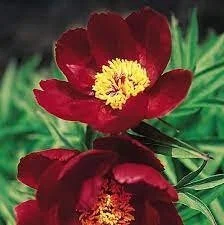
Early Scout Fernleaf Peony is an exceptional compact peony celebrated for its rich crimson-red flowers, finely dissected foliage, and remarkably early bloom time. One of the first peony cultivars to flower each spring, ‘Early Scout’ helps announce the beginning of peony season before many traditional garden peonies have opened.
The single red flowers are held upright on sturdy stems above dense, fern-like green foliage inherited from its fernleaf peony ancestry. Unlike ordinary peony foliage, the leaves are narrow, finely divided, and highly ornamental, giving the plant a soft, textural appearance that remains attractive through summer and into fall.
Introduced in 1952 by hybridizer Edward Auten, ‘Early Scout’ has earned significant recognition from the American Peony Society, including the Gold Medal in 2001 and a Landscape Merit Award. Its compact habit, early flowering, vigorous growth, and resilience to late spring frosts make it an outstanding peony for northern gardens.
Why We Grow It at 19 Birch Lane
At 19 Birch Lane, Early Scout Fernleaf Peony is valued for its ability to extend the peony season and introduce rich color into the gardens earlier than many traditional peony varieties.
Its crimson flowers create a bold spring display, while the finely cut foliage contributes graceful texture long after flowering has ended. The compact size also makes it especially useful near pathways, at the front of borders, and within curated peony collections where visitors can closely appreciate its unusual leaves.
As 19 Birch Lane continues developing its botanical collections, plants such as ‘Early Scout’ help demonstrate the diversity found within the peony family—from differences in flower shape and bloom time to foliage texture and growth habit.
Quick Facts
Botanical Name:Paeonia hybrid ‘Early Scout’
Common Name: Early Scout Fernleaf Peony
Plant Type: Herbaceous Hybrid Peony
Flower Class: Herbaceous Hybrid
Hybridizer: Edward Auten
Year Introduced: 1952
Height: Approximately 21–24 inches
Spread: Approximately 24 inches
Growth Habit: Dense, Compact, Upright Clump
Growth Rate: Moderate to Vigorous
Bloom Time: Early Peony Season; Late Spring to Early Summer
Flower Type: Single
Flower Color: Deep Crimson Red
Fragrance: None
Foliage Color: Rich Green
Maintenance: Easy
Award: American Peony Society Gold Medal, 2001
Additional Recognition: Landscape Merit Award
Growing Conditions
Light Requirements
Early Scout performs best in:
Full Sun
Partial Sun
Filtered Sun
Light Afternoon Shade
For the strongest stems and most abundant flowering, provide at least six hours of direct sunlight each day. In warmer regions within its recommended growing range, some afternoon shade can help protect the foliage from excessive heat.
Soil Requirements
For best growth, plant Early Scout in soil that is:
Fertile
Moist but well drained
Enriched with organic matter
Slightly acidic to neutral
Loose enough to prevent standing water
Peonies dislike consistently soggy conditions. Good drainage is essential for preventing crown and root problems.
An annual application of compost can improve soil structure and provide gentle, long-term nutrition.
Water Requirements
Keep soil evenly moist during establishment
Water deeply during prolonged dry periods
Avoid constantly saturated soil
Reduce watering frequency once plants are established
Water at the soil level when possible
During the first growing season, regular deep watering helps establish a strong and extensive root system.
Winter Chill Requirements
Early Scout is an herbaceous peony that requires a period of winter cold to initiate flower buds.
It generally needs approximately:
500–1,000 winter chill hours
Because of this requirement, it is not recommended for USDA Hardiness Zones 9–11, where winters may not provide sufficient cold temperatures for consistent flowering.
Its need for winter chill makes it particularly well suited to Maine and other northern climates.
Flower Characteristics
Early Scout is prized for being one of the earliest peonies to bloom.
Flower Features
Rich crimson-red flowers
Single flower form
Prominent golden-yellow centers
Upright blooms held above the foliage
Strong early-season color
Excellent cut flowers
Showy landscape display
No noticeable fragrance
The simple flower form allows the bright central stamens to remain visible, providing a beautiful contrast against the deep red petals.
Its blossoms remain upright on sturdy stems, reducing the need for staking under normal growing conditions.
Foliage Characteristics
The foliage is one of Early Scout’s most distinctive features.
Foliage Features
Finely cut leaves
Fern-like texture
Rich green color
Dense and compact habit
Attractive after flowering
Provides summer and fall interest
Inherited from fernleaf peony ancestry
The delicate foliage gives Early Scout a softer appearance than traditional peonies with broad, divided leaves.
Its textural quality allows it to remain valuable in the landscape even after the brief flowering period has ended.
Pollinator and Wildlife Benefits
The open, single flowers make pollen easier for visiting insects to access than densely doubled peony flowers.
May Attract
Bees
Early-season pollinators
Beneficial insects
Although peonies are not generally considered major nectar plants, single-flowered cultivars can contribute additional pollen resources during the spring garden season.
Deer and Urban Tolerance
Early Scout is considered:
Deer resistant
Tolerant of urban pollution
Resilient in cold northern gardens
Relatively resistant to late spring frost damage
Although no plant is completely deer proof, peonies are generally avoided because their foliage is not especially palatable.
Garden Uses
Early Scout is an exceptional landscape peony because of its compact size, early flowering, and highly ornamental foliage.
Recommended Uses
Perennial Borders
Cottage Gardens
Cutting Gardens
Botanical Gardens
Specimen Plantings
Foundation Beds
Front-of-Border Plantings
Mixed Shrub Borders
Pollinator Gardens
Large Containers
Formal Garden Beds
Because it remains relatively compact, Early Scout can be positioned closer to garden paths than many larger peonies.
Companion Plants
At 19 Birch Lane, Early Scout Fernleaf Peony can be paired with plants that complement its early flowers and later-season foliage.
Recommended Companion Plants
Weigela
Virginia Sweetspire
Shasta Daisy
Garden Phlox
Delphinium
Catmint
Siberian Iris
Allium
Lady’s Mantle
Salvia
Hardy Geranium
Ornamental Grasses
Low-growing companion plants can soften the base of the peony while later-flowering perennials maintain color after Early Scout finishes blooming.
When companion Plant Finder listings are available, these plant names should be internally linked to their corresponding pages.
Care and Maintenance
Early Scout is long lived and relatively easy to maintain when planted correctly.
Planting Tips
Select a permanent location with good drainage.
Enrich the soil with compost before planting.
Position the crown and uppermost buds close to the soil surface.
Avoid planting too deeply, which can prevent flowering.
Allow adequate space for air circulation.
Water thoroughly after planting.
Peony eyes are generally positioned approximately one to two inches below the soil surface in colder climates. Planting significantly deeper may result in vigorous foliage with few or no flowers.
Ongoing Maintenance
Water deeply during dry weather.
Apply compost annually.
Avoid heavy applications of high-nitrogen fertilizer.
Remove spent flowers after blooming.
Leave healthy foliage in place through summer.
Cut stems and foliage to the ground after frost in fall.
Remove discarded foliage from the garden.
Avoid disturbing the roots unnecessarily.
Established peonies can remain in the same location for many decades.
Dividing and Transplanting
Peonies generally perform best when left undisturbed.
Divide or transplant only when necessary, preferably in early fall after the foliage begins to decline.
When dividing:
Dig carefully around the root system.
Retain several healthy eyes on each division.
Replant promptly.
Position the eyes near the soil surface.
Water thoroughly after planting.
Newly divided plants may require several growing seasons before returning to full flowering.
Landscape Design Ideas
Early Scout can be used to introduce strong early-season color without overwhelming smaller garden spaces.
Use it:
At the front of a peony collection
Near a garden entrance
Beside a pathway
In groups of three for greater visual impact
Among spring bulbs
In a red, silver, or blue-themed border
Near low stone walls
Beside compact flowering shrubs
In a cutting garden
As an early-blooming focal point
Its rich crimson flowers pair especially well with silver, chartreuse, blue-green, and deep purple foliage.
Why Gardeners Love Early Scout
✔ One of the earliest peonies to bloom
✔ Award-winning garden performance
✔ Rich crimson-red flowers
✔ Compact and dense growth habit
✔ Unique fern-like foliage
✔ Strong upright flower stems
✔ Deer-resistant perennial
✔ Excellent cut flower
✔ Reliable in cold climates
✔ Attractive foliage through summer and fall
✔ Resilient to late spring frosts
✔ Long-lived garden plant
Plant Finder Details
Botanical Name:Paeonia hybrid ‘Early Scout’
Common Name: Early Scout Fernleaf Peony
Plant Type: Herbaceous Hybrid Peony
Family: Paeoniaceae
Hybridizer: Edward Auten
Year Introduced: 1952
Flower Class: Herbaceous Hybrid
Height: Approximately 21–24 inches
Spread: Approximately 24 inches
Bloom Time: Early Peony Season; Late Spring to Early Summer
Flower Color: Crimson Red
Flower Form: Single
Fragrance: None
Foliage Color: Rich Green
Foliage Texture: Finely Cut and Fern-Like
Growth Habit: Compact, Dense, Upright Clump
Growth Rate: Moderate to Vigorous
Sun Exposure: Full Sun to Partial Shade
Water Requirements: Moderate; Moist but Well-Drained Soil
Soil Requirements: Fertile, Organically Enriched, Slightly Acidic to Neutral
Maintenance: Easy
Deer Resistance: Yes
Urban Tolerance: Yes
Cut Flower: Yes
Container Friendly: Yes, with adequate space and winter protection
Winter Chill Required: Approximately 500–1,000 hours
Warm-Climate Suitability: Not recommended for USDA Zones 9–11
American Peony Society Award: Gold Medal, 2001
Additional Award: Landscape Merit Award📍 Where to Find This Plant at 19 Birch Lane
Visitors can find Early Scout Fernleaf Peony growing within the expanding peony and perennial collections at 19 Birch Lane.
Its compact habit makes it particularly well suited to prominent locations near pathways and at the front of planting beds, where visitors can appreciate both its early crimson flowers and its finely textured foliage.
As the gardens continue developing into a botanical destination, Early Scout will help illustrate the diversity of peony forms, flowering times, foliage types, and hybrid histories represented within the collection.
🌸 Seasonal Interest Calendar
🌱 Spring
Finely divided red-green shoots emerge early in the season and quickly develop into dense mounds of fern-like foliage. Deep crimson flower buds form above the leaves as many traditional peonies are only beginning their spring growth.
🌺 Late Spring to Early Summer
Single crimson-red flowers open at the beginning of peony season. The flowers are held upright above the foliage and provide a dramatic display while also serving as excellent cut flowers.
☀️ Summer
After blooming, the finely dissected green foliage remains attractive and contributes soft texture to perennial borders and mixed garden beds.
🍂 Fall
The foliage continues providing structure into autumn before declining after frost. Once the foliage has been damaged by freezing temperatures, it should be cut to the ground and removed from the garden.
❄️ Winter
Early Scout remains dormant below ground and benefits from the prolonged winter chill required to develop flower buds for the following spring.
🎓 Garden Design Tips from 19 Birch Lane
At 19 Birch Lane, we recommend using Early Scout Fernleaf Peony where its distinctive foliage can remain visible after flowering. Unlike peonies that are primarily appreciated during bloom, this variety contributes a fine, airy texture throughout much of the growing season.
Plant Early Scout near a pathway, garden entrance, or the front of a mixed border where visitors can see the finely dissected leaves up close. Its compact size makes it easier to integrate into layered perennial plantings without allowing it to disappear behind taller plants.
For a strong spring composition, pair its crimson flowers with blue catmint, purple alliums, pale yellow lady’s mantle, or silver-leaved perennials. After flowering, surround it with plants such as Shasta daisies, garden phlox, delphiniums, and ornamental grasses that will carry the border into summer and fall.
Groups of three can create a stronger landscape statement, but each plant should still receive enough room to develop into a dense, rounded clump. Avoid placing aggressive groundcovers directly over the crown, and preserve good air circulation around the plant.
🌿 Plants That Grow Well with Early Scout at 19 Birch Lane
Early Scout combines well with plants that complement its color, texture, and early flowering season.
Recommended companions include:
Allium
Siberian Iris
Shasta Daisy
Garden Phlox
Delphinium
Weigela
Virginia Sweetspire
Hardy Geranium
Salvia
Ornamental Grasses
Whenever possible, each companion plant should link directly to its individual 19 Birch Lane Plant Finder page. These internal links help visitors explore related plants while strengthening the website’s botanical authority and search performance.
Frequently Asked Questions
When does Early Scout Peony bloom?
Early Scout is one of the earliest peony cultivars to flower. It generally blooms in late spring, near the beginning of the peony season.
How large does Early Scout Peony grow?
It typically reaches approximately 21–24 inches tall and about 24 inches wide, forming a dense and compact clump.
What makes Early Scout different from other peonies?
Its early bloom time, single crimson flowers, compact growth habit, and finely divided fern-like foliage distinguish it from many traditional garden peonies.
Is Early Scout a true fernleaf peony?
Early Scout is an herbaceous hybrid with fernleaf peony ancestry. Its finely dissected foliage reflects the influence of Paeonia tenuifolia.
Does Early Scout need full sun?
It flowers most abundantly in full sun but can tolerate partial sun or filtered shade. In northern gardens, at least six hours of sunlight is generally ideal.
Does Early Scout need winter cold?
Yes. Like other herbaceous peonies, it requires winter chill to form flower buds and is not recommended for USDA Zones 9–11.
Is Early Scout deer resistant?
It is generally considered deer resistant, although hungry deer may occasionally browse almost any plant.
Does this peony require staking?
Its sturdy stems generally hold the single flowers upright without staking, especially when the plant receives adequate sunlight.
Can Early Scout be grown in a container?
It can be grown in a large, deep container, but in cold climates the root system may require additional winter protection. Peonies generally perform best when planted directly in the ground.
Is Early Scout fragrant?
No. The flowers are not known for fragrance.
Can Early Scout be used as a cut flower?
Yes. Its upright crimson blooms make attractive and unusual additions to spring floral arrangements.
How long can Early Scout live?
When planted properly and left relatively undisturbed, herbaceous peonies can survive and bloom for many decades.
Botanical Garden Notes
Early Scout Fernleaf Peony is historically and horticulturally significant because it combines early flowering, fern-like foliage, compact growth, and strong landscape performance in one cultivar.
Introduced by Edward Auten in 1952, it has remained a respected peony for generations and continues to be recognized by collectors, gardeners, and landscape professionals. Its American Peony Society Gold Medal and Landscape Merit recognition further demonstrate its lasting value.
Within the gardens at 19 Birch Lane, Early Scout helps tell the broader story of peony breeding and plant selection. It shows how hybridizers have combined the ornamental foliage of fernleaf peonies with the vigor, flower color, and reliability required for long-term garden performance.
Early Scout Fernleaf Peony (Paeonia hybrid ‘Early Scout’)
An Award-Winning Early-Blooming Peony with Crimson Flowers and Finely Cut Fern-Like Foliage