
Girard’s Rainbow LeucothoeLeucothoe fontanesiana ‘Girard’s Rainbow’
An elegant broadleaf evergreen shrub with arching branches, colorful variegated foliage, delicate white spring flowers, and exceptional value in shaded woodland gardens.
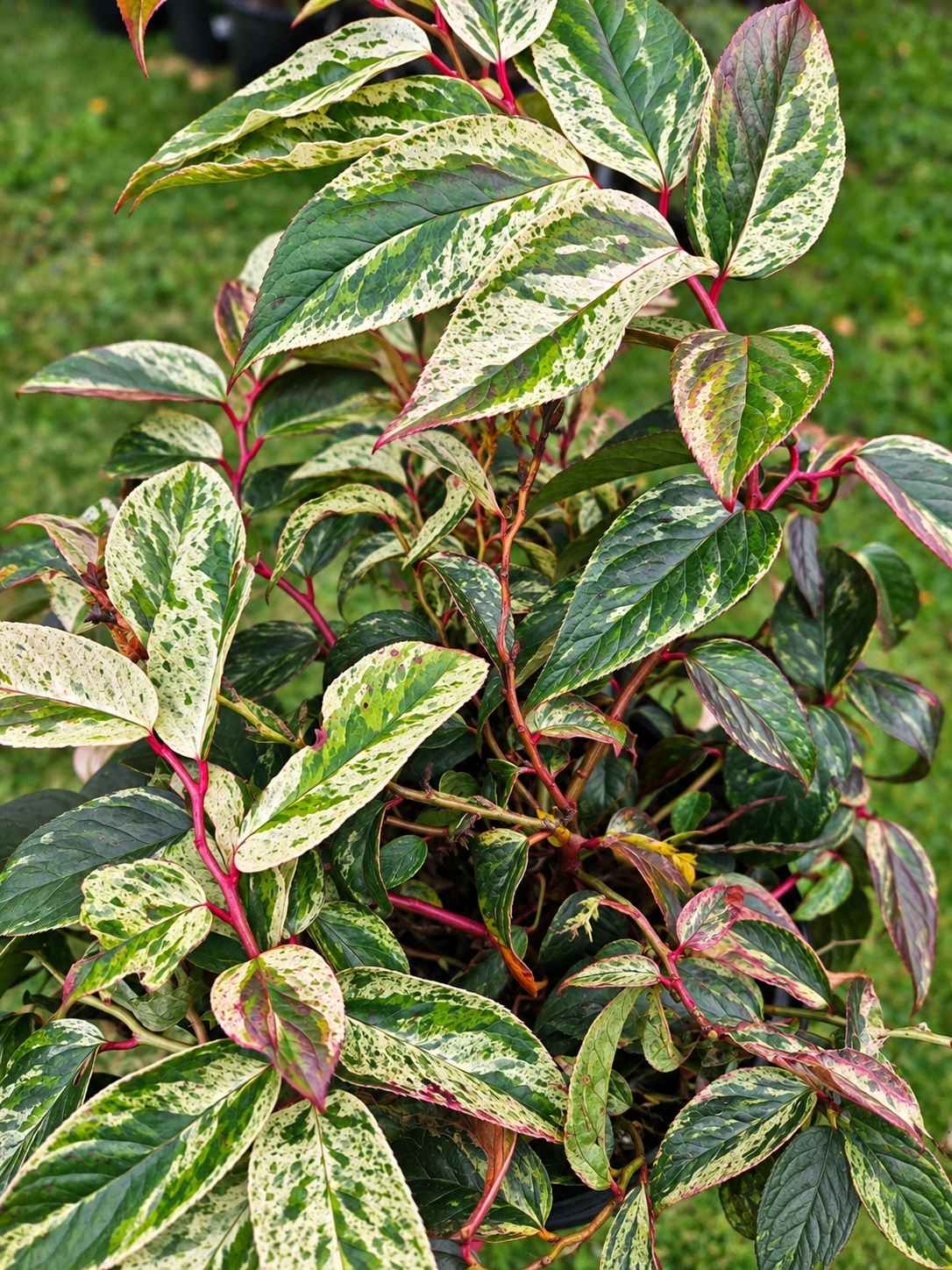
Girard’s Rainbow LeucothoeLeucothoe fontanesiana ‘Girard’s Rainbow’
An elegant broadleaf evergreen shrub with arching branches, colorful variegated foliage, delicate white spring flowers, and exceptional value in shaded woodland gardens.
Plant Overview
Common Name: Girard’s Rainbow Leucothoe
Botanical Name: Leucothoe fontanesiana ‘Girard’s Rainbow’
Also Known As: Rainbow Leucothoe, Variegated Drooping Leucothoe, Mountain Doghobble
Family: Ericaceae — Heath Family
Plant Type: Broadleaf Evergreen Shrub
USDA Hardiness Zones: Generally 5–8
Primary Seasons of Interest: Spring, Summer, Fall, and Winter
Flower Color: White
Foliage Color: Green, Cream, Pink, Copper, and Burgundy
Girard’s Rainbow Leucothoe is an outstanding ornamental evergreen shrub valued for its colorful foliage, graceful arching branches, and ability to brighten partially shaded landscapes.
Unlike many flowering shrubs that rely on a brief blooming period for their ornamental appeal, Girard’s Rainbow provides changing foliage colors throughout the year.
In spring, new growth emerges in a remarkable combination of pink, copper, cream, and green. As the leaves mature, they develop softer green-and-cream variegation, creating a layered appearance across the plant.
During late spring, delicate clusters of white, bell-shaped flowers hang beneath the foliage. Although the flowers are smaller and less conspicuous than those of many rhododendrons, they add a charming woodland character.
As temperatures cool in autumn and winter, the foliage may develop bronze, reddish, or burgundy tones, extending the plant's ornamental interest well beyond the growing season.
Its naturally spreading, arching growth habit makes Girard’s Rainbow particularly useful in woodland gardens, shaded shrub borders, foundation plantings, and mixed evergreen collections.
For gardeners in Maine, this plant offers something especially valuable: evergreen foliage with colorful variegation in places where many sun-loving shrubs would struggle.
Why Girard’s Rainbow Belongs in the 19 Birch Lane Plant Finder
As we continue developing the botanical gardens at 19 Birch Lane, one of our goals is to create landscapes that remain interesting throughout the year.
That means looking beyond flowers.
Foliage color, texture, plant form, and seasonal changes are just as important as a plant's blooming period.
Girard’s Rainbow demonstrates this beautifully.
Its arching branches create movement and softness, while the variegated leaves introduce color into shaded planting areas.
This is particularly valuable when designing woodland gardens, where sunlight is limited and foliage often plays a greater role than flowers.
Girard’s Rainbow also offers an opportunity to teach visitors about:
Variegated foliage and how it develops
Evergreen shrubs for northern gardens
Acid-loving plants
Woodland garden design
Seasonal foliage changes
Shrub form and texture
Companion planting in shade
The relationship between sunlight, soil moisture, and plant performance
The differences between leucothoe, azaleas, and rhododendrons
At 19 Birch Lane, we believe that successful garden design is about creating combinations of plants that complement one another throughout the seasons.
Girard’s Rainbow is an excellent example of a shrub that contributes color and structure even when very little else is flowering.
Quick Facts
Common Name: Girard’s Rainbow Leucothoe
Botanical Name: Leucothoe fontanesiana ‘Girard’s Rainbow’
Family: Ericaceae
Plant Type: Broadleaf Evergreen Shrub
Species Native Range: Southeastern United States
Cultivar Origin: Horticultural selection
USDA Hardiness Zones: 5–8
Mature Height: Approximately 3–4 feet
Mature Spread: Approximately 4–5 feet
Growth Habit: Arching, Spreading, Mounding
Growth Rate: Slow to Moderate
Flower Color: White
Flower Shape: Small, Bell-Shaped
Bloom Time: Mid-to-Late Spring
Flower Fragrance: Lightly Fragrant
Spring Foliage: Pink, Copper, Cream, and Green
Summer Foliage: Green and Cream Variegation
Fall/Winter Foliage: Green with Possible Bronze or Burgundy Tones
Sun Exposure: Partial Shade to Full Shade
Water Requirements: Moderate to High; Consistent Moisture Preferred
Soil: Acidic, Organic-Rich, Moist but Well-Drained
Maintenance: Low to Moderate
Pollinator Value: Spring Flowers Can Attract Bees
Deer Resistance: Generally Considered Resistant
Drought Tolerance: Poor
Woodland Garden: Excellent
Shaded Border: Excellent
Foundation Planting: Good in Appropriate Conditions
Winter Interest: Excellent
Growing Conditions
Light Requirements
Girard’s Rainbow performs best in:
Partial Shade
Filtered Sunlight
Woodland-Edge Conditions
Morning Sun with Afternoon Shade
Bright Shade
It can also tolerate deeper shade, although growth and foliage coloration may be less vigorous.
For Midcoast Maine, a location receiving filtered sunlight beneath deciduous trees or gentle morning sun followed by afternoon shade is particularly suitable.
Avoid exposed locations receiving intense sun and drying winds.
The colorful leaves can suffer stress when the plant experiences excessive sunlight combined with insufficient moisture.
Soil Requirements
Girard’s Rainbow belongs to the heath family, alongside rhododendrons, azaleas, blueberries, and mountain laurels.
Like many members of this family, it prefers acidic soil.
Ideal soil conditions include:
Acidic pH
Organic-rich soil
Consistent moisture
Good drainage
Loose, well-aerated soil
Minimal compaction
A soil pH of approximately 4.5–5.5 is a useful target.
Heavy, compacted soil should be improved before planting, particularly where drainage is poor.
Although leucothoe naturally grows in moist environments, prolonged stagnant water around the roots can still create problems.
Water Requirements
Girard’s Rainbow prefers consistently moist soil.
Unlike drought-tolerant shrubs, leucothoe can decline when allowed to become excessively dry.
During establishment:
Water deeply and regularly.
Monitor soil moisture during warm weather.
Avoid allowing the root zone to dry completely.
Apply organic mulch.
Avoid waterlogged conditions.
Established plants may still require supplemental watering during extended summer drought.
In woodland settings, remember that mature trees can compete strongly for available soil moisture.
A shaded location is not necessarily a moist location.
Flower Characteristics
Girard’s Rainbow produces delicate white flowers in spring.
Flower Features
White
Small and Bell-Shaped
Hanging in Drooping Clusters
Often Lightly Fragrant
Appearing in Mid-to-Late Spring
Attractive to Some Pollinating Insects
The flowers resemble small bells suspended beneath the foliage.
They are especially charming when viewed at close range.
Although Girard’s Rainbow is primarily grown for its foliage, these spring flowers provide an additional ornamental feature.
Foliage Characteristics
The foliage is the defining feature of Girard’s Rainbow.
Spring Foliage
New growth emerges with a mixture of:
Pink
Copper
Cream
Green
These colors are especially attractive against the darker leaves remaining from the previous season.
Summer Foliage
As the leaves mature, the pink and copper tones become less prominent.
The foliage develops a combination of green and cream variegation.
This creates a bright, layered effect in partially shaded landscapes.
Fall Foliage
Cooler temperatures may introduce warmer bronze, red, and burgundy tones.
The intensity varies with weather and growing conditions.
Winter Foliage
Girard’s Rainbow retains its foliage through winter under favorable conditions.
In exposed northern locations, leaves may experience winter discoloration, drying, or damage.
Protection from harsh winter wind is important for maintaining attractive foliage.
Cold Hardiness in Maine
Girard’s Rainbow is generally listed for USDA Zones 5–8.
This makes it a suitable candidate for protected Zone 6 locations in coastal and Midcoast Maine.
However, evergreen shrubs can experience winter injury even when the temperature remains within their published hardiness range.
Winter damage may result from:
Drying winds
Frozen soil
Winter sunlight
Sudden temperature changes
Inadequate soil moisture
Exposed planting locations
For Maine gardens, consider:
A sheltered woodland location
Protection from prevailing winter winds
Organic mulch around the roots
Consistent soil moisture before winter
Avoiding highly exposed planting beds
Protection from harsh afternoon winter sun
A sheltered location is especially important because evergreen leaves continue losing moisture during winter, even when frozen soil limits water uptake.
Pollinator & Wildlife Benefits
The small spring flowers of leucothoe can provide resources for visiting insects, including bees.
Its dense, arching evergreen branches may also provide cover for small wildlife.
Girard’s Rainbow is not generally selected as a major pollinator shrub, but it can contribute to a more diverse woodland planting.
For stronger ecological value, combine it with plants offering additional flowering periods and locally appropriate native species.
Deer Resistance
Girard’s Rainbow is generally considered relatively deer resistant.
However, deer resistance does not mean deer-proof.
Browsing pressure varies by location, season, and food availability.
Where deer pressure is severe, young plants may benefit from temporary protection.
Garden Uses
Girard’s Rainbow is especially useful in:
Woodland Gardens
Shade Gardens
Shaded Shrub Borders
Evergreen Collections
Foundation Plantings
Mixed Shrub Plantings
Naturalistic Gardens
Asian-Inspired Gardens
Woodland Pathways
Garden Entrances
Mass Plantings
Informal Low Screens
Four-Season Gardens
Its spreading habit makes it particularly effective where branches can arch naturally without requiring frequent pruning.
Using Girard’s Rainbow in a Woodland Garden
Woodland gardens are among the best settings for Girard’s Rainbow.
Its colorful leaves brighten darker planting areas while the arching branches soften the transition between taller shrubs and lower-growing perennials.
Consider placing it where visitors can appreciate the foliage at close range.
Near a shaded path or natural stone feature, the colorful leaves can become an important part of the composition.
Allow sufficient room for the branches to spread.
Using Girard’s Rainbow in an Asian-Inspired Garden
The graceful arching branches and colorful foliage make Girard’s Rainbow a useful companion for Japanese-inspired garden design.
It can complement:
Ferns
Hostas
Japanese Forest Grass
Mossy Stone Features
Rhododendrons
Other Evergreen Shrubs
The key is restraint.
Rather than combining too many variegated plants, use Girard’s Rainbow as a contrasting foliage feature among predominantly green plants.
This allows its colorful leaves to stand out without overwhelming the composition.
Companion Plants
Recommended Companions for 19 Birch Lane
Hellebores
Brunnera
Astilbe
Heuchera
Tiarella
Bleeding Hearts
Japanese Forest Grass
Mountain Laurel
Woodland Phlox
Shade-Tolerant Hydrangeas
Choose companions with compatible light, soil, and moisture requirements.
Care & Maintenance
Girard’s Rainbow is relatively low maintenance when planted in suitable conditions.
Its most important needs include:
Acidic soil
Consistent moisture
Good drainage
Partial shade
Protection from winter winds
Organic mulch
Minimal pruning
Monitoring for leaf spot and other fungal problems
Correct placement is especially important.
A leucothoe planted in unsuitable soil or an excessively dry location may require more attention than one growing in naturally favorable woodland conditions.
Pruning Girard’s Rainbow Leucothoe
When Should Girard’s Rainbow Be Pruned?
The preferred pruning period is shortly after spring flowering.
Pruning at this time allows the plant to develop new growth while minimizing interference with the following year's flower buds.
How to Prune
Remove dead or damaged branches.
Remove occasional crossing stems.
Thin older stems when necessary.
Shorten excessively long branches selectively.
Preserve the natural arching form.
Avoid heavy annual shearing.
The shrub's graceful branching structure is one of its most attractive characteristics.
Mulching
Apply approximately 2–3 inches of organic mulch around the root zone.
Suitable materials include:
Shredded Leaves
Pine Needles
Fine Bark Mulch
Composted Leaf Material
Mulch helps conserve moisture and moderate soil temperatures.
Keep mulch away from direct contact with the stems.
Fertilizing
Girard’s Rainbow generally does not require heavy fertilization.
Where soil testing indicates a nutrient deficiency, use an appropriate fertilizer formulated for acid-loving plants.
Avoid excessive nitrogen.
Healthy soil structure, proper pH, and consistent moisture are more important than frequent fertilizer applications.
Potential Problems
Possible problems include:
Leaf Spot
Root Rot
Winter Burn
Drought Stress
Leaf Scorch
Poor Growth in Alkaline Soil
Damage from Drying Winds
Good air circulation can help reduce fungal leaf problems.
Avoid overhead irrigation late in the day when possible.
Do not allow the root zone to remain excessively dry.
Important Plant Safety Note
Leucothoe contains toxic compounds and should not be eaten.
Leaves and flowers can be harmful to people and animals if ingested.
Keep plant material away from children and pets who may chew or consume foliage.
Landscape Design Ideas
Colorful Woodland Combination
Girard’s Rainbow + Hosta + Ferns + Brunnera
The variegated foliage brightens the woodland planting while the surrounding green and blue foliage provides contrast.
Japanese-Inspired Garden Combination
Girard’s Rainbow + Japanese Maple + Japanese Forest Grass + Ferns
This creates a layered composition of arching branches, fine foliage, and contrasting leaf shapes.
Evergreen Woodland Border
Girard’s Rainbow + Rhododendron + Hellebores + Tiarella
The evergreen shrubs provide structure while the lower-growing perennials introduce seasonal interest.
Shaded Garden Entrance
Use Girard’s Rainbow in a sheltered location near an entrance or pathway where visitors can appreciate its colorful new growth.
Why Gardeners Love Girard’s Rainbow Leucothoe
✓ Colorful variegated foliage
✓ Pink and copper spring growth
✓ Cream and green summer leaves
✓ Attractive evergreen structure
✓ Delicate white spring flowers
✓ Graceful arching branches
✓ Excellent woodland shrub
✓ Thrives in partial shade
✓ Useful in shaded borders
✓ Beautiful with Japanese maples
✓ Excellent companion for hostas and ferns
✓ Generally deer resistant
✓ Multi-season interest
✓ Suitable for protected Zone 6 gardens
✓ Valuable addition to botanical collections
Plant Finder Details
Common Name: Girard’s Rainbow Leucothoe
Botanical Name: Leucothoe fontanesiana ‘Girard’s Rainbow’
Family: Ericaceae
Plant Type: Broadleaf Evergreen Shrub
Species Native Range: Southeastern United States
USDA Zones: 5–8
Mature Height: 3–4 Feet
Mature Spread: 4–5 Feet
Growth Habit: Arching, Spreading
Growth Rate: Slow to Moderate
Sun Exposure: Partial Shade to Full Shade
Soil: Acidic, Moist, Well-Drained
Water Requirements: Consistent Moisture
Bloom Time: Spring
Flower Color: White
Flower Form: Bell-Shaped
Spring Foliage: Pink, Copper, Cream, Green
Summer Foliage: Green and Cream
Winter Interest: Evergreen Foliage
Pollinator Value: Moderate
Deer Resistance: Generally Resistant
Drought Tolerance: Poor
Woodland Garden: Excellent
Shade Garden: Excellent
Foundation Planting: Good
Asian-Inspired Garden: Excellent
Maintenance: Low to Moderate
📍 Where to Find Girard’s Rainbow Leucothoe at 19 Birch Lane
Girard’s Rainbow is particularly well suited to shaded woodland gardens, sheltered shrub borders, and Asian-inspired planting areas where its colorful foliage and arching branches can be appreciated.
Its variegated foliage is especially effective when planted among darker evergreen shrubs or green woodland perennials.
At this time we currently have one beautiful specimen located in the Asian Garden area
🌸 Seasonal Interest Calendar
🌱 Spring
New growth emerges in a colorful combination of pink, copper, cream, and green.
🤍 Late Spring
Small white bell-shaped flowers appear beneath the foliage.
🌿 Summer
Mature green-and-cream variegated foliage becomes the main ornamental feature.
🍂 Fall
Cooler temperatures may introduce bronze, reddish, and burgundy tones.
❄️ Winter
Evergreen foliage provides structure and color in sheltered locations.
Protect plants from harsh drying winds and excessive winter exposure.
🎓 Garden Design Tips from 19 Birch Lane
One of the most important lessons in designing a woodland garden is understanding how foliage creates visual interest.
In shaded areas, flowers may be less abundant or bloom for relatively short periods.
That makes foliage color, texture, and form especially important.
Girard’s Rainbow is an excellent example.
Its variegated leaves introduce light into shaded areas while the arching branches provide movement.
For a strong composition, consider:
Girard’s Rainbow + Hosta + Ferns + Japanese Forest Grass
The leucothoe provides color, the hostas introduce broad leaves, the ferns add delicate texture, and the Japanese forest grass creates movement.
Another effective approach is to place Girard’s Rainbow near a dark green rhododendron.
The contrast between colorful and solid green foliage makes both plants more noticeable.
At 19 Birch Lane, this is the kind of layering we want to emphasize as the gardens continue developing.
🌿 Plants That Grow Well with Girard’s Rainbow at 19 Birch Lane
Recommended companions include:
Ferns
Hellebores
Brunnera
Astilbe
Heuchera
Tiarella
Bleeding Hearts
Mountain Laurel
Shade-Tolerant Hydrangeas
Where corresponding Plant Finder profiles already exist, these plant names should become contextual internal links.
Frequently Asked Questions
What is Girard’s Rainbow Leucothoe?
Girard’s Rainbow is a variegated evergreen shrub known for colorful pink, cream, copper, and green foliage, arching branches, and small white spring flowers.
What is the botanical name of Girard’s Rainbow?
The botanical name is Leucothoe fontanesiana ‘Girard’s Rainbow’.
Is Girard’s Rainbow evergreen?
Yes. It is a broadleaf evergreen shrub, although foliage may experience winter damage in exposed northern locations.
How large does Girard’s Rainbow grow?
It typically grows approximately 3–4 feet tall and 4–5 feet wide, depending on climate and growing conditions.
What color is Girard’s Rainbow foliage?
New foliage emerges in shades of pink, copper, cream, and green. Mature leaves typically develop green-and-cream variegation.
When does Girard’s Rainbow bloom?
It generally flowers in mid-to-late spring.
What color are Girard’s Rainbow flowers?
The flowers are white and bell-shaped.
Does Girard’s Rainbow grow in shade?
Yes. Partial shade to full shade is generally preferred.
Can Girard’s Rainbow grow in Maine?
Yes. Its commonly reported Zone 5–8 hardiness range includes many Maine gardens, particularly sheltered Zone 6 locations.
Is Girard’s Rainbow suitable for Zone 6?
Yes. Zone 6 falls within its generally recommended hardiness range.
Does Girard’s Rainbow need acidic soil?
Yes. It performs best in acidic, organic-rich, moist but well-drained soil.
Is Girard’s Rainbow drought tolerant?
No. It prefers consistent moisture and may suffer during prolonged dry periods.
When should Girard’s Rainbow be pruned?
Prune shortly after spring flowering if shaping or thinning is necessary.
Is Girard’s Rainbow deer resistant?
It is generally considered relatively deer resistant, although browsing can occur.
Is Girard’s Rainbow poisonous?
Yes. Leucothoe contains toxic compounds and should not be ingested by people or pets.
What plants grow well with Girard’s Rainbow?
Hostas, ferns, hellebores, Japanese maples, rhododendrons, azaleas, and other acid-loving woodland plants make excellent companions.
Is Girard’s Rainbow good for woodland gardens?
Yes. Its preference for shade, acidic soil, and consistent moisture makes it particularly well suited to woodland and woodland-edge gardens.
Botanical Garden Notes
Girard’s Rainbow belongs to the genus Leucothoe, a group of shrubs in the heath family, Ericaceae.
The species Leucothoe fontanesiana is native to the southeastern United States, where it naturally occurs in moist, wooded environments, including mountain slopes, ravines, and streamside habitats.
Its graceful arching branches and evergreen foliage make it a valuable ornamental shrub.
Girard’s Rainbow is a cultivated selection distinguished by its colorful variegated foliage.
The variegation introduces shades of cream, pink, copper, and green, particularly on new growth.
This makes it an excellent educational plant for demonstrating:
Cultivar selection
Variegated foliage
Evergreen plant adaptations
Acid-loving shrub culture
Woodland plant communities
Seasonal foliage changes
The importance of soil moisture
Garden design using foliage rather than flowers
For the 19 Birch Lane Plant Finder, Girard’s Rainbow represents the kind of plant that helps broaden our horticultural collection beyond traditional flowering perennials.
It demonstrates how evergreen shrubs can contribute structure, color, and texture throughout the year.