
Spring Sizzle® Panicle Hydrangea
A Cold-Hardy, Early-Blooming Panicle Hydrangea with White Flowers That Mature to Deep Red on Strong, Upright Stems
Spring Sizzle® Panicle Hydrangea
A Cold-Hardy, Early-Blooming Panicle Hydrangea with White Flowers That Mature to Deep Red on Strong, Upright Stems
Plant Overview
Common Name: Spring Sizzle® Panicle Hydrangea
Plant Type: Deciduous Flowering Shrub
Hydrangea Type: Panicle Hydrangea
Hardiness Zones: USDA Zones 3–8
Heat Zone: 8
Primary Season of Interest: Early Summer through Fall
Spring Sizzle® Panicle Hydrangea is an exceptionally early-flowering panicle hydrangea valued for its strong stems, compact-to-medium size, and dramatic flower-color transformation.
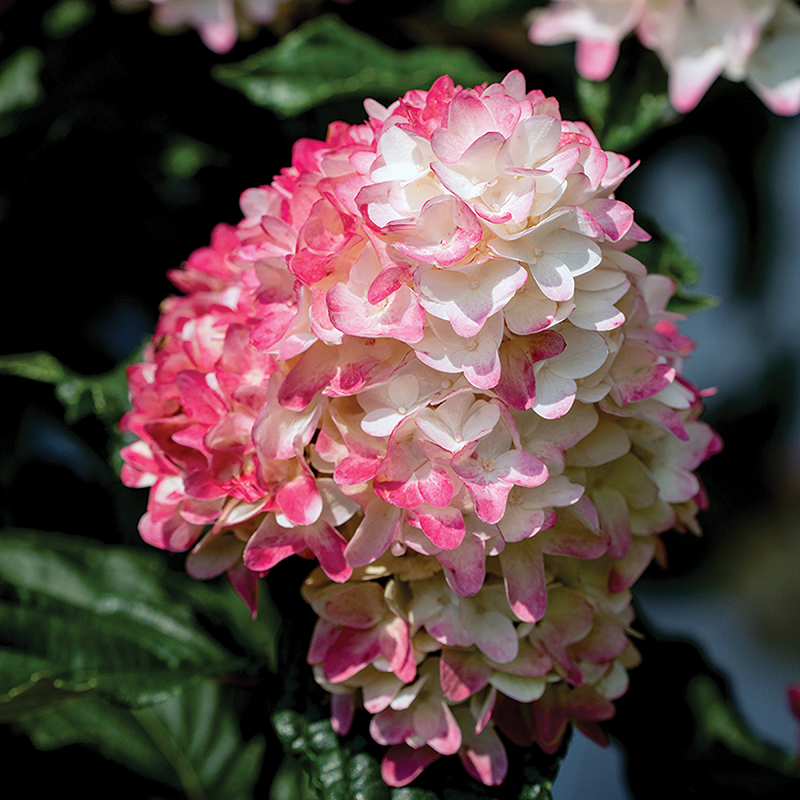
Beginning in early summer, the shrub becomes covered with white flowers that quickly transition to deep red as the blooms mature. This early color change is especially notable because the flowers develop rich coloration even in warmer regions.
Unlike hydrangeas whose large flowers can cause branches to bend or flop, Spring Sizzle® produces sturdy stems capable of holding its flower clusters upright. This creates a cleaner, more structured appearance throughout the flowering season.
Reaching approximately 4–6 feet tall and 4–5 feet wide, Spring Sizzle® is substantial enough to create an impressive flowering display while remaining manageable for foundation plantings, hedges, mixed borders, and specimen plantings.
With cold hardiness to Zone 3, this is also a particularly interesting hydrangea for northern gardens and the Maine landscape.
Why We Grow It at 19 Birch Lane
Hydrangeas already play an important role in the gardens at 19 Birch Lane, and Spring Sizzle® offers several characteristics that make it particularly interesting for an expanding collection.
The first is timing.
Because Spring Sizzle® is one of the earlier-blooming panicle hydrangeas, it can help extend the overall hydrangea season rather than having every variety reach peak flower at the same time.
The second is color progression.
The flowers begin white and quickly transition toward deep red, allowing the same shrub to change its appearance as the season progresses.
Finally, its strong stems are an important garden-design advantage. Flowers that remain upright create a cleaner architectural effect, particularly when hydrangeas are repeated as a hedge or foundation planting.
For a botanical garden, these differences between cultivars are exactly what make a collection more interesting. Visitors can compare bloom timing, flower color, mature size, growth habit, and seasonal changes rather than simply seeing a collection of similar-looking hydrangeas.
Quick Facts
Common Name: Spring Sizzle® Panicle Hydrangea
Plant Type: Deciduous Flowering Shrub
Hydrangea Type: Panicle Hydrangea
USDA Hardiness Zones: 3–8
Heat Zone: 8
Mature Height: 4–6 feet
Mature Width: 4–5 feet
Growth Habit: Upright, Vase-Shaped
Bloom Time: Beginning in Early Summer
Initial Flower Color: White
Mature Flower Color: Deep Red
Foliage: Dark Green
Sun Exposure: Full Sun to Part Shade
Water Needs: Medium
Pruning Time: Early Spring
Fertilizer: Balanced NPK
Drought Tolerant: Yes
Cut Flower: Yes
Strong Stems: Yes
Hedge Plant: Excellent
Foundation Planting: Excellent
Growing Conditions
Light Requirements
Spring Sizzle® grows in:
Full Sun
Part Shade
In cooler northern climates, panicle hydrangeas can be excellent choices for sunny garden locations.
Adequate sunlight also helps support strong flowering.
When choosing a location, consider the overall combination of sunlight, available moisture, and surrounding plants rather than light exposure alone.
Water Requirements
Spring Sizzle® has medium water requirements.
During establishment:
Water deeply and consistently.
Monitor during dry weather.
Avoid allowing newly planted shrubs to become severely drought stressed.
Once established, Spring Sizzle® is listed as drought tolerant.
Even drought-tolerant established shrubs can benefit from supplemental water during prolonged periods of hot, dry weather, particularly when developing a heavy flower display.
Flower Characteristics
Spring Sizzle® is especially valuable for its early bloom and dramatic color progression.
Flower Features
Begins flowering in early summer
Flowers initially open white
Blooms quickly transition toward deep red
Strong seasonal color progression
Flowers remain supported on sturdy stems
Excellent for fresh-cut arrangements
Rather than providing one static flower color, Spring Sizzle® changes as its flowers mature.
That transition gives the shrub a dynamic quality within the garden.
Why Do Spring Sizzle® Hydrangea Flowers Change Color?
The flowers naturally change as they mature.
They begin white and then develop increasingly rich coloration, eventually reaching deep red.
Unlike bigleaf hydrangeas whose blue and pink coloration is often associated with soil chemistry, the color progression of a panicle hydrangea is primarily part of the flower's natural aging process.
For gardeners, this means Spring Sizzle® can provide several different visual stages from the same flowers.
Strong Stems
One of Spring Sizzle®'s important landscape characteristics is its strong stems.
Large hydrangea flower clusters can sometimes weigh branches downward, particularly after rain.
Spring Sizzle® is specifically valued for stems capable of holding its blooms upright.
This is particularly useful in:
Formal plantings
Hedges
Foundation plantings
Garden entrances
High-visibility borders
Cutting gardens
Strong stems help the shrub maintain a cleaner overall silhouette throughout its flowering season.
Foliage Characteristics
Spring Sizzle® produces dark green foliage.
The foliage provides a rich background for the changing flowers and helps create a dense shrub presence within the landscape.
Dark foliage also increases the visual contrast of the white early-season flowers.
Cold Hardiness
Spring Sizzle® is rated for USDA Zones 3–8.
That level of cold hardiness makes it especially interesting for northern landscapes.
For gardeners in Maine and New England, cold-hardy panicle hydrangeas can provide substantial flower displays while tolerating winters that limit the use of more tender shrubs.
Its Zone 3 rating also makes Spring Sizzle® a useful Plant Finder entry for people searching for:
Cold-hardy hydrangeas
Hydrangeas for Maine
Hydrangeas for New England
Zone 4 hydrangeas
Zone 5 hydrangeas
Zone 6 hydrangeas
Drought Tolerance
Spring Sizzle® is listed as drought tolerant once established.
This does not mean it should be treated as a desert or xeric plant.
During establishment, consistent watering remains important.
After a strong root system develops, the shrub becomes better equipped to tolerate periods of reduced rainfall.
Garden Uses
Spring Sizzle® has a versatile 4–6 foot mature size that works in many landscape situations.
Recommended Uses
Hydrangea Gardens
Flowering Hedges
Foundation Plantings
Mixed Shrub Borders
Perennial Borders
Specimen Plantings
Focal Points
Cutting Gardens
Cottage Gardens
Garden Entrances
Driveway Borders
Mass Plantings
Botanical Collections
Using Spring Sizzle® as a Hydrangea Hedge
Its upright growth habit, strong stems, and manageable mature size make Spring Sizzle® particularly well suited to flowering hedges.
A repeated row can create:
Summer flowers
Seasonal color progression
Visual screening
Garden-room definition
Strong landscape structure
Unlike a traditional evergreen hedge, a hydrangea hedge changes considerably throughout the season.
That seasonal evolution can become part of the garden experience.
Foundation Plantings
At approximately 4–6 feet tall and 4–5 feet wide, Spring Sizzle® can also be useful in appropriately scaled foundation plantings.
Before planting, account for its mature dimensions, not its nursery-container size.
Giving the shrub sufficient room allows it to develop its natural upright, vase-shaped form without constant corrective pruning.
Cut Flower Use
Spring Sizzle® is considered good for cut flowers.
Its strong stems are particularly useful for floral arrangements because they help support the substantial flower clusters.
Flowers can be harvested at different stages to provide different colors:
White during the earlier stage
Transitional tones as flowers mature
Deeper red later in their development
This allows a single cultivar to provide different looks for seasonal arrangements.
Companion Plants
Spring Sizzle® works beautifully with plants that contrast with its changing flower colors.
Recommended Companions for 19 Birch Lane
Salvia
Bee Balm
Sedum ‘Autumn Joy’
Japanese Anemone
Hardy Geranium
Ninebark
Blue, purple, and silver plants are particularly effective when the hydrangea flowers are white.
Later in the season, grasses and autumn-flowering perennials complement the deeper red flower tones.
Whenever these plants have corresponding Plant Finder entries, their names should link directly to those pages.
Care & Maintenance
Spring Sizzle® is relatively straightforward to maintain when given suitable growing conditions.
Its primary maintenance needs include:
Establishment watering
Early-spring pruning
Balanced fertilization
Monitoring during extended drought
Allowing enough room for mature growth
Pruning Spring Sizzle® Panicle Hydrangea
When Should Spring Sizzle® Hydrangea Be Pruned?
The recommended pruning time is:
Early Spring
This is an important distinction between different types of hydrangeas.
Panicle hydrangeas are generally managed differently from old-wood flowering bigleaf hydrangeas, making correct identification important before pruning.
How to Prune Spring Sizzle® Hydrangea
In early spring:
Remove dead or damaged stems.
Remove weak or crossing branches if necessary.
Shape the shrub while preserving its natural vase-shaped habit.
Avoid unnecessary severe pruning simply to keep an improperly placed shrub small.
The goal should be to encourage a strong framework capable of supporting the season's flower display.
Fertilizing
Spring Sizzle® can be fed with a balanced NPK fertilizer.
Apply fertilizer according to label directions rather than assuming more fertilizer will create more flowers.
Excessive fertilization can produce unnecessary vegetative growth.
Landscape Design Ideas
Spring Sizzle® can work as either a single specimen or a repeated structural shrub.
Try it:
As a flowering hedge
In a dedicated hydrangea collection
Along a garden path
Behind lower perennials
Near a garden entrance
In a cutting garden
In repeated groups through a large border
With ornamental grasses for late-season texture
Against darker evergreen backgrounds
Its flower transition from white to red makes it especially effective in a garden designed around changing seasonal color.
Why Gardeners Love Spring Sizzle® Panicle Hydrangea
✔ One of the earlier-blooming panicle hydrangeas
✔ White flowers beginning in early summer
✔ Flowers mature to deep red
✔ Strong stems resist flopping
✔ Hardy in Zones 3–8
✔ Excellent cold hardiness
✔ Full sun to part shade
✔ Upright vase-shaped habit
✔ 4–6 foot manageable height
✔ Excellent hedge plant
✔ Excellent foundation shrub
✔ Drought tolerant once established
✔ Good cut flower
✔ Dark green foliage
✔ Long seasonal interest
✔ Excellent for northern gardens
Plant Finder Details
Common Name: Spring Sizzle® Panicle Hydrangea
Plant Type: Deciduous Flowering Shrub
Hydrangea Type: Panicle Hydrangea
USDA Hardiness Zones: 3–8
Heat Zone: 8
Mature Height: 4–6 feet
Mature Width: 4–5 feet
Growth Habit: Upright, Vase-Shaped
Sun Exposure: Full Sun to Part Shade
Water Requirements: Medium
Bloom Season: Beginning in Early Summer
Initial Flower Color: White
Mature Flower Color: Deep Red
Foliage: Dark Green
Stem Strength: Strong, Upright
Pruning Time: Early Spring
Fertilizer: Balanced NPK
Drought Tolerant: Yes
Cut Flower: Yes
Hedge Use: Excellent
Foundation Use: Excellent
📍 Where to Find Spring Sizzle® Hydrangea at 19 Birch Lane
Spring Sizzle® would be particularly well suited to a hydrangea collection, flowering hedge, mixed border, or other sunny-to-part-shade location where visitors can observe its flowers changing from white to deep red through the season.
The exact permanent garden location of Spring Sizzle® Panicle Hydrangea at 19 Birch Lane has not yet been provided for this Plant Finder entry.
Once its location is confirmed, this section should be updated with the specific garden name so visitors can use the Plant Finder as a digital guide to find the living plant at 19 Birch Lane.
🌸 Seasonal Interest Calendar
🌱 Spring
New foliage emerges and the shrub begins its annual growth cycle.
Early spring is the recommended pruning period.
Remove dead or damaged growth and shape the shrub as necessary.
🤍 Early Summer
Spring Sizzle® begins flowering earlier than many panicle hydrangeas.
White flower clusters create strong contrast against the dark green foliage.
🌸 Summer
Flowers continue developing and begin transitioning away from white.
Strong stems keep the flower clusters upright.
❤️ Late Summer
The blooms develop increasingly rich coloration, moving toward deep red.
This changing color gives the shrub a noticeably different appearance from its early-summer display.
🍂 Fall
Mature flowers can provide continued seasonal interest as the garden transitions toward autumn.
❄️ Winter
The deciduous shrub enters dormancy.
Its next major maintenance period comes in early spring when pruning can be performed before the new growing season advances.
🎓 Garden Design Tips from 19 Birch Lane
Spring Sizzle® offers something particularly useful for garden design: the plant changes color during the season without needing to change plants.
In early summer, its white flowers work beautifully with cool colors.
One combination we would consider is:
Spring Sizzle® + purple Catmint + blue Salvia + silver Artemisia.
As the hydrangea flowers mature toward red, the same planting develops a richer late-summer palette.
Another combination could be:
Spring Sizzle® + ornamental grasses + Sedum ‘Autumn Joy’ + Japanese Anemone.
That pairing would become increasingly effective as summer moves toward fall.
For a hedge, repetition is more important than complexity. A continuous grouping of Spring Sizzle® can make a much stronger statement than mixing numerous hydrangea cultivars together.
Within a botanical collection, however, placing Spring Sizzle® near other panicle hydrangeas can help visitors compare bloom timing, mature size, flower shape, stem strength, and color progression.
🌿 Plants That Grow Well with Spring Sizzle® Hydrangea at 19 Birch Lane
Recommended companions include:
Catmint
Salvia
Coneflower
Bee Balm
Russian Sage
Sedum ‘Autumn Joy’
Japanese Anemone
Daylilies
Iris
Hardy Geranium
Artemisia
Ninebark
Ornamental Grasses
Whenever corresponding Plant Finder listings are available, link these plant names directly to their individual pages.
This creates a stronger interconnected plant database while helping visitors move naturally between plants with compatible growing conditions and complementary garden uses.
Frequently Asked Questions
What is Spring Sizzle® Panicle Hydrangea?
Spring Sizzle® is an early-blooming panicle hydrangea with white flowers that quickly transition toward deep red as they mature.
When does Spring Sizzle® Hydrangea bloom?
It begins flowering in early summer, making it one of the earlier-blooming panicle hydrangeas.
What color is Spring Sizzle® Hydrangea?
The flowers begin white and mature to deep red.
Does Spring Sizzle® Hydrangea stay white?
No. One of its defining features is the transition from white flowers to deep red as the blooms mature.
How tall does Spring Sizzle® Hydrangea grow?
It reaches approximately 4–6 feet tall.
How wide does Spring Sizzle® Hydrangea grow?
It typically reaches approximately 4–5 feet wide.
Does Spring Sizzle® Hydrangea flop?
It is specifically noted for strong stems that hold its flowers upright and resist flopping.
Is Spring Sizzle® a panicle hydrangea?
Yes. Spring Sizzle® is a panicle hydrangea.
Is Spring Sizzle® Hydrangea cold hardy?
Yes. It is rated for USDA Zones 3–8.
Can Spring Sizzle® Hydrangea grow in Maine?
Its Zone 3–8 hardiness range makes it suitable for many Maine gardens within those zones.
Does Spring Sizzle® need full sun?
It can grow in full sun to part shade.
Is Spring Sizzle® drought tolerant?
Yes. It is listed as drought tolerant once established, although newly planted shrubs should receive consistent water.
When should Spring Sizzle® Hydrangea be pruned?
The recommended pruning time is early spring.
Is Spring Sizzle® good for a hedge?
Yes. Its 4–6 foot height, 4–5 foot spread, upright habit, strong stems, and heavy flower display make it particularly useful for flowering hedges.
Is Spring Sizzle® good for foundation planting?
Yes. Its manageable size and upright vase-shaped form make it useful for appropriately scaled foundation plantings.
Can Spring Sizzle® flowers be cut for arrangements?
Yes. It is considered a good cut-flower hydrangea.
What plants grow well with Spring Sizzle® Hydrangea?
Catmint, Salvia, Coneflower, Russian Sage, Sedum, Japanese Anemone, Artemisia, Ninebark, and ornamental grasses can all create attractive combinations.
Botanical Garden Notes
Spring Sizzle® is particularly interesting from a collection standpoint because it demonstrates how much variation exists within panicle hydrangeas.
Not every panicle hydrangea:
Begins flowering at the same time
Reaches the same mature size
Develops the same flower coloration
Holds flowers equally upright
Changes color at the same rate
Spring Sizzle® can therefore become part of a larger educational story within the hydrangea collections at 19 Birch Lane.
Rather than simply labeling it "Hydrangea," the Plant Finder can help visitors understand why this particular cultivar is different: early flowering, strong stems, cold hardiness, manageable size, and a rapid transition from white to deep red.
That cultivar-level information is exactly what can make the 19 Birch Lane Plant Finder more useful than a basic plant identification database.