
Summerific® ‘Cookies and Cream’ Rose Mallow (Hibiscus hybrid)
A Dramatic Hardy Hibiscus with Matte Black Foliage and Pure White Flowers from Midsummer into Fall
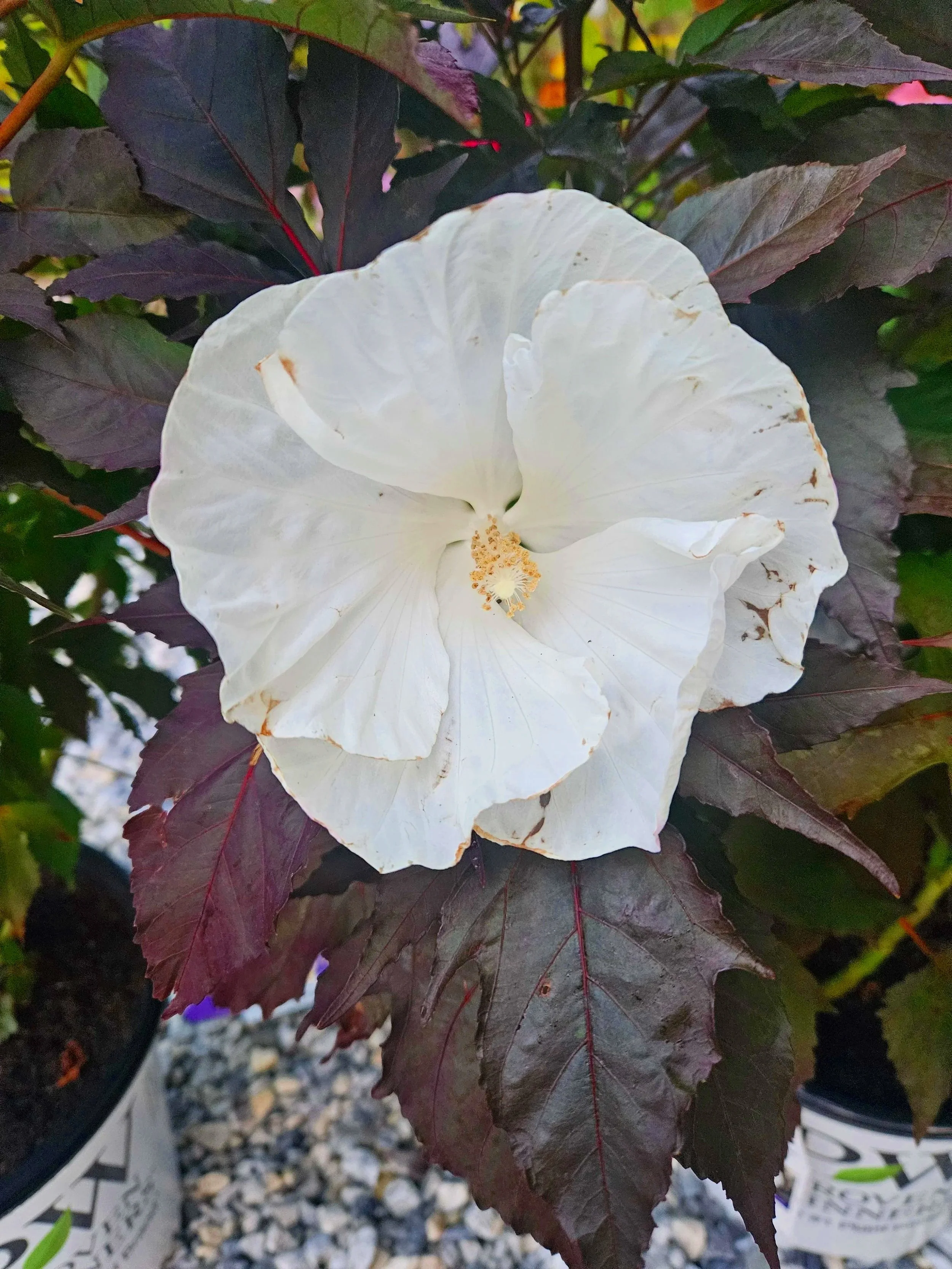
Summerific® ‘Cookies and Cream’ Rose Mallow (Hibiscus hybrid)
A Dramatic Hardy Hibiscus with Matte Black Foliage and Pure White Flowers from Midsummer into Fall
Plant Overview
Common Name: Summerific® ‘Cookies and Cream’ Rose Mallow
Botanical Name: Hibiscus hybrid
Plant Type: Herbaceous Perennial
Hardiness Zones: USDA Zones 4–9
Native Heritage: North American
Primary Season of Interest: Late Spring through Fall
Summerific® ‘Cookies and Cream’ Rose Mallow is a bold hardy hibiscus prized for its dramatic matte black foliage and large, pure white flowers. The contrast between the dark leaves and bright flowers gives this perennial an unusually striking presence in the landscape.
From late spring onward, the foliage develops its rich dark coloration, especially in strong sunlight. Beginning in midsummer, large white flowers open above the mound and continue into fall, creating a long season of interest.
At maturity, ‘Cookies and Cream’ reaches approximately 30–36 inches tall and 42–48 inches wide, forming a substantial clump that works well in perennial borders, mixed landscapes, and focal-point plantings.
It combines ornamental impact with strong garden performance: long blooming, deer resistant, attractive to butterflies, hardy across a broad range, and well suited to sunny gardens.
Why We Grow It at 19 Birch Lane
At 19 Birch Lane, Summerific® ‘Cookies and Cream’ is especially valuable because it brings something very different to a perennial planting.
Its nearly black foliage provides strong contrast long before the first flower opens. That makes it useful not only as a flowering plant, but also as a foliage plant and structural element within larger garden compositions.
The white flowers then create a dramatic seasonal shift against the dark leaves from midsummer into fall.
This kind of plant helps us design gardens that remain visually interesting even between peak bloom periods. It also contributes to our goal of creating layered plantings that combine foliage, form, flower color, pollinator value, and season-long interest.
Quick Facts
Botanical Name: Hibiscus hybrid
Common Name: Summerific® ‘Cookies and Cream’ Rose Mallow
Plant Type: Herbaceous Perennial
Hardiness Zones: USDA Zones 4–9
Height: 30–36 inches
Spread: 42–48 inches
Recommended Spacing: 42–48 inches
Growth Habit: Upright, Mounded
Growth Rate: Vigorous
Bloom Time: Midsummer through Fall
Flower Color: Pure White
Foliage Color: Matte Black
Foliage Interest: Late Spring through Frost
Sun Exposure: Part Sun to Full Sun
Minimum Light: 4+ Hours Daily
Water Requirements: Moist, Consistent
Soil: Moist, Well Drained
Pollinator Friendly: Yes
Attracts Butterflies: Yes
Deer Resistant: Yes
Long Blooming: Yes
Fall Interest: Yes
Native Heritage: North American
Growing Conditions
Light Requirements
Summerific® ‘Cookies and Cream’ performs best in:
Full Sun
Part Sun
Locations Receiving at Least 4 Hours of Direct Sunlight Daily
The richest dark foliage color develops in stronger sunlight.
For the most dramatic matte black foliage and strongest flowering, choose a sunny location whenever possible.
Soil Requirements
Hardy Hibiscus prefers soil that is:
Moist
Well Drained
Fertile
Consistently Moist Through Summer
Although these plants appreciate substantial moisture, avoid locations where water remains stagnant for extended periods.
The combination of moisture and drainage is important for vigorous growth.
Water Requirements
‘Cookies and Cream’ performs best when consistently watered.
Adequate moisture supports:
Larger flowers
Lush foliage
Strong stem growth
Longer seasonal performance
During Establishment
Water regularly.
Do not allow the root zone to dry severely.
Apply mulch to help maintain even moisture.
Once Established
Continue watering during dry periods.
Maintain moisture through hot summer weather.
Avoid repeated drought stress.
Unlike drought-tolerant perennials, hardy Hibiscus generally performs better with dependable moisture.
Flower Characteristics
The flowers of ‘Cookies and Cream’ are one of its strongest ornamental features.
Flower Features
Pure white blooms
Large tropical-looking flowers
Bloom beginning in midsummer
Flowering continuing into fall
Strong contrast against black foliage
Long blooming
Attractive to butterflies
Each bloom is relatively short-lived, but the plant produces new flowers over an extended period.
Foliage Characteristics
The foliage is equally important to the ornamental value of this cultivar.
Foliage Features
Matte black coloration
Bold visual contrast
Dense growth
Strong architectural presence
Foliage color from late spring to frost
Darkest color in stronger sunlight
The dark foliage makes this plant especially effective in gardens where contrast is needed.
Seasonal Contrast
Few perennials create as dramatic a color relationship as:
matte black foliage + pure white flowers
This gives ‘Cookies and Cream’ a contemporary look that also works beautifully in traditional perennial gardens.
The plant can function almost like a dark-leaved shrub during the growing season while retaining the seasonal cycle of an herbaceous perennial.
Pollinator & Wildlife Benefits
Summerific® ‘Cookies and Cream’ attracts butterflies and contributes to summer and fall pollinator activity.
Wildlife Benefits
Attracts Butterflies
Supports Pollinator Gardens
Provides Long-Season Floral Interest
Because the flowers continue over an extended period, the plant can provide repeated floral resources through late summer.
Deer Resistance
‘Cookies and Cream’ is considered deer resistant.
This makes it particularly useful in gardens where deer browsing is a recurring concern.
As with most deer-resistant plants, browsing can still occur under heavy pressure, but it is generally less appealing than many other garden perennials.
Garden Uses
This hardy hibiscus works best where its dramatic foliage and large flowers can be fully appreciated.
Recommended Uses
Perennial Borders
Mixed Borders
Landscape Plantings
Pollinator Gardens
Butterfly Gardens
Focal-Point Plantings
Dark-Foliage Gardens
White Gardens
Contemporary Gardens
Cottage Gardens
Botanical Collections
Large Mass Plantings
Because it reaches approximately four feet wide, give it enough room to mature without crowding neighboring plants.
Companion Plants
‘Cookies and Cream’ combines beautifully with plants that contrast with its dark foliage.
Recommended Companion Plants
Salvia
Black-Eyed Susan
Sedum ‘Autumn Joy’
Asters
Hydrangeas
Ornamental Grasses
Daylilies
Iris
Artemisia
Lady’s Mantle
White Phlox
Joe Pye Weed
The foliage works especially well with:
Silver foliage
Lime-green foliage
Blue flowers
Purple flowers
Soft pink flowers
Golden flowers
Whenever corresponding Plant Finder entries are available, these companion plants should link directly to their individual pages.
Care & Maintenance
Summerific® Hardy Hibiscus is vigorous and relatively easy to grow once established.
Planting Tips
For best results:
Plant before the hottest part of summer.
Choose a sunny location.
Provide moist, well-drained soil.
Water consistently during establishment.
Space plants approximately 42–48 inches apart.
Allow enough room for the mature clump.
Mulch heavily during the first winter.
Late Spring Emergence
One of the most important things to understand about hardy Hibiscus is that it is often one of the last perennials to emerge in spring.
Gardeners may assume the plant has died because neighboring perennials begin growing weeks earlier.
Be patient.
Once soil temperatures warm sufficiently, hardy Hibiscus can emerge quickly and grow with remarkable speed.
When Should Hardy Hibiscus Be Cut Back?
Do not cut Summerific® Hibiscus back in fall.
Instead, leave the stems standing through winter.
In spring:
Wait until winter has passed.
Cut remaining stems back before new growth begins.
Use strong loppers or a pruning saw if stems are thick.
Remove old stems from the garden.
Allow new shoots to emerge from the crown.
Why You Should Not Cut Hardy Hibiscus Back in Fall
Leaving the stems standing through winter helps identify the crown location and can provide some additional protection around the base of the plant.
Spring cleanup is therefore preferred.
Deadheading
Deadheading may improve the appearance of the plant but is not required for continued flowering.
The plant will continue producing blooms without constant removal of spent flowers.
This makes it relatively easy to maintain despite its dramatic appearance.
Fertilizing
Feed in:
Spring
Midsummer
A balanced fertilizer formulated for flowering perennials can help support vigorous growth and flowering.
Avoid excessive feeding beyond recommended rates.
Japanese Beetles
Japanese beetles may feed heavily on Hardy Hibiscus.
They may damage:
Flowers
Foliage
Developing buds
Monitor plants during beetle season and manage populations as needed.
Healthy, vigorous plants generally recover from moderate feeding damage.
Ongoing Maintenance
Water consistently.
Maintain mulch around the root zone.
Do not allow prolonged drought.
Deadhead if desired.
Monitor for Japanese beetles.
Fertilize in spring and midsummer.
Leave stems standing through fall and winter.
Cut old stems back in spring before new growth begins.
Landscape Design Ideas
‘Cookies and Cream’ is particularly effective as a strong visual anchor within a perennial planting.
Use it:
In groups of three for dramatic repetition
As a focal point in a mixed border
Behind lower-growing perennials
Near pale stone or gravel
Against light-colored walls
Among silver foliage plants
With white flowering plants
In pollinator gardens
In dark foliage collections
Beside ornamental grasses
Its black foliage gives it a stronger visual presence than most green-leaved perennials.
Why Gardeners Love Summerific® ‘Cookies and Cream’
✔ Matte black foliage
✔ Pure white flowers
✔ Dramatic color contrast
✔ Long blooming
✔ Midsummer through fall flowers
✔ Hardy in Zones 4–9
✔ Attracts butterflies
✔ Deer resistant
✔ Vigorous growth
✔ Excellent focal point
✔ Strong late-season interest
✔ Large tropical-looking flowers
✔ Great for perennial borders
✔ North American native heritage
✔ Easy spring cleanup
Plant Finder Details
Botanical Name: Hibiscus hybrid
Common Name: Summerific® ‘Cookies and Cream’ Rose Mallow
Plant Type: Herbaceous Perennial
Hardiness Zones: USDA Zones 4–9
Native Heritage: North American
Height: 30–36 inches
Spread: 42–48 inches
Recommended Spacing: 42–48 inches
Growth Rate: Vigorous
Growth Habit: Upright, Mounded
Bloom Time: Midsummer through Fall
Flower Color: Pure White
Foliage Color: Matte Black
Foliage Season: Late Spring through Frost
Sun Exposure: Part Sun to Full Sun
Minimum Sun: 4+ Hours Daily
Water Needs: Moderate to High
Soil Requirements: Moist, Well Drained
Pollinator Friendly: Yes
Attracts Butterflies: Yes
Deer Resistant: Yes
Long Blooming: Yes
Fall Interest: Yes
Deadheading Required: No
Pruning Time: Spring
Winter Care: Leave stems standing; mulch heavily first winter
Primary Pest Concern: Japanese Beetles
📍 Where to Find This Plant at 19 Birch Lane
Summerific® ‘Cookies and Cream’ is especially well suited to sunny perennial borders at 19 Birch Lane where its black foliage can create strong visual contrast.
Potential collection areas include:
Main Perennial Borders
Pollinator Garden
Dark-Foliage Plantings
White Garden
Late-Summer Garden
Mixed Shrub and Perennial Beds
The exact permanent garden location has not yet been provided for this Plant Finder entry.
Once the location is confirmed, this section should be updated with the specific garden name so visitors can use the Plant Finder as a guide to find the living plant at 19 Birch Lane.
🌸 Seasonal Interest Calendar
🌱 Early Spring
The plant remains dormant while many other perennials begin growing.
Do not assume the plant has died.
🌿 Late Spring
New shoots finally emerge as soil temperatures warm.
Growth quickly accelerates, and the distinctive dark foliage begins developing.
☀️ Early Summer
The plant forms a broad, dense mound of matte black foliage.
Even before flowering, it creates strong ornamental contrast within the garden.
🤍 Midsummer
Pure white flowers begin opening above the black foliage.
This marks the start of the primary flowering season.
🦋 Late Summer
Flower production continues and butterflies visit the blooms.
The contrast between dark foliage and white flowers becomes especially dramatic.
🍂 Fall
Flowering may continue into fall while the dark foliage remains ornamental until frost.
❄️ Winter
The plant becomes completely dormant.
Leave the old stems standing rather than cutting them back in fall.
🎓 Garden Design Tips from 19 Birch Lane
At 19 Birch Lane, we would treat ‘Cookies and Cream’ as much as a foliage plant as a flowering perennial.
The matte black leaves create a visual anchor that can make surrounding colors appear stronger.
One particularly effective combination is:
‘Cookies and Cream’ + silver Artemisia + purple Catmint + white Hydrangea.
The dark foliage makes both the silver and white colors appear brighter while blue-purple flowers soften the overall composition.
For another dramatic combination, surround it with golden or chartreuse foliage. The contrast between almost-black and bright yellow-green foliage creates an especially strong botanical-garden effect.
Because the plant spreads approximately 42–48 inches, avoid planting it too close to pathways or smaller neighboring plants.
Give it room to become the substantial mound it naturally wants to be.
For maximum impact, use it where visitors can see the dark foliage from a distance and then discover the large white flowers as they approach.
🌿 Plants That Grow Well with Summerific® ‘Cookies and Cream’ at 19 Birch Lane
Recommended companions include:
Artemisia
Russian Sage
Salvia
Coneflower
Sedum ‘Autumn Joy’
Ornamental Grasses
Asters
Black-Eyed Susan
Joe Pye Weed
White Garden Phlox
Whenever Plant Finder profiles exist for these plants, link each name directly to its corresponding 19 Birch Lane page.
This helps gardeners explore plants by color combination, bloom period, growing conditions, and landscape function while strengthening the internal structure of the Plant Finder.
Frequently Asked Questions
What is Summerific® ‘Cookies and Cream’ Rose Mallow?
It is a hardy perennial Hibiscus with matte black foliage and pure white flowers that bloom from midsummer into fall.
Is Summerific® ‘Cookies and Cream’ a perennial?
Yes. It is an herbaceous perennial that dies back completely during winter and returns from the crown each spring.
How tall does ‘Cookies and Cream’ Hibiscus grow?
It reaches approximately 30–36 inches tall.
How wide does ‘Cookies and Cream’ Hibiscus grow?
A mature plant typically spreads approximately 42–48 inches.
How far apart should hardy Hibiscus be planted?
Space plants approximately 42–48 inches apart to allow room for their mature width.
When does ‘Cookies and Cream’ Hibiscus bloom?
It begins flowering in midsummer and continues into fall.
What color are the flowers?
The flowers are pure white.
What color is the foliage?
The foliage is matte black and remains dark from late spring until frost.
Does black foliage need full sun?
Strong sunlight helps develop and maintain the darkest foliage coloration.
How much sun does hardy Hibiscus need?
Plant in part sun to full sun with at least approximately four hours of sunlight daily.
Does hardy Hibiscus like wet soil?
Hardy Hibiscus prefers consistently moist, well-drained soil and performs best when kept adequately watered.
Does Summerific® Hibiscus attract butterflies?
Yes. The flowers attract butterflies.
Is ‘Cookies and Cream’ deer resistant?
Yes. It is considered deer resistant.
Should I deadhead Hardy Hibiscus?
Deadheading is optional. Removing old flowers may improve appearance, but it is not necessary for continued blooming.
When should Hardy Hibiscus be cut back?
Cut the old stems back in spring before new growth begins.
Should Hardy Hibiscus be cut back in fall?
No. Leave the old stems standing through fall and winter and remove them in spring.
Why hasn't my Hardy Hibiscus come up in spring?
Hardy Hibiscus is naturally one of the latest perennials to emerge. Wait for warmer soil temperatures before assuming the plant has died.
Can Hardy Hibiscus grow in Maine?
Yes. Summerific® ‘Cookies and Cream’ is listed for USDA Zones 4–9, making it suitable for many cold-climate gardens within that hardiness range.
Should Hardy Hibiscus be mulched in winter?
The supplied care information recommends heavy mulching during the first winter after planting.
What pests commonly affect Hardy Hibiscus?
Japanese beetles are particularly attracted to Hardy Hibiscus and may feed on its foliage and flowers.
Botanical Garden Notes
Hardy Hibiscus provides one of the most dramatic examples of how a cold-hardy perennial can create a tropical appearance in northern gardens.
Unlike tropical Hibiscus grown as annuals or houseplants, hardy Rose Mallow dies back completely each winter and regrows from the crown.
Its late emergence is an important part of its growth cycle and is worth explaining to garden visitors because it can initially appear that the plant has not survived winter.
Summerific® ‘Cookies and Cream’ adds another layer of horticultural interest through its dark foliage.
Within the developing collections at 19 Birch Lane, this cultivar can help demonstrate how modern plant breeding combines flower color, foliage color, compact habit, hardiness, wildlife value, and extended seasonal interest within a single perennial.