
Snow White™ Mockorange (Philadelphus 'Snowwhite Fantasy')
A Fragrant Flowering Shrub with Double White Blooms, Dark Green Foliage & Classic Cottage-Garden Appeal
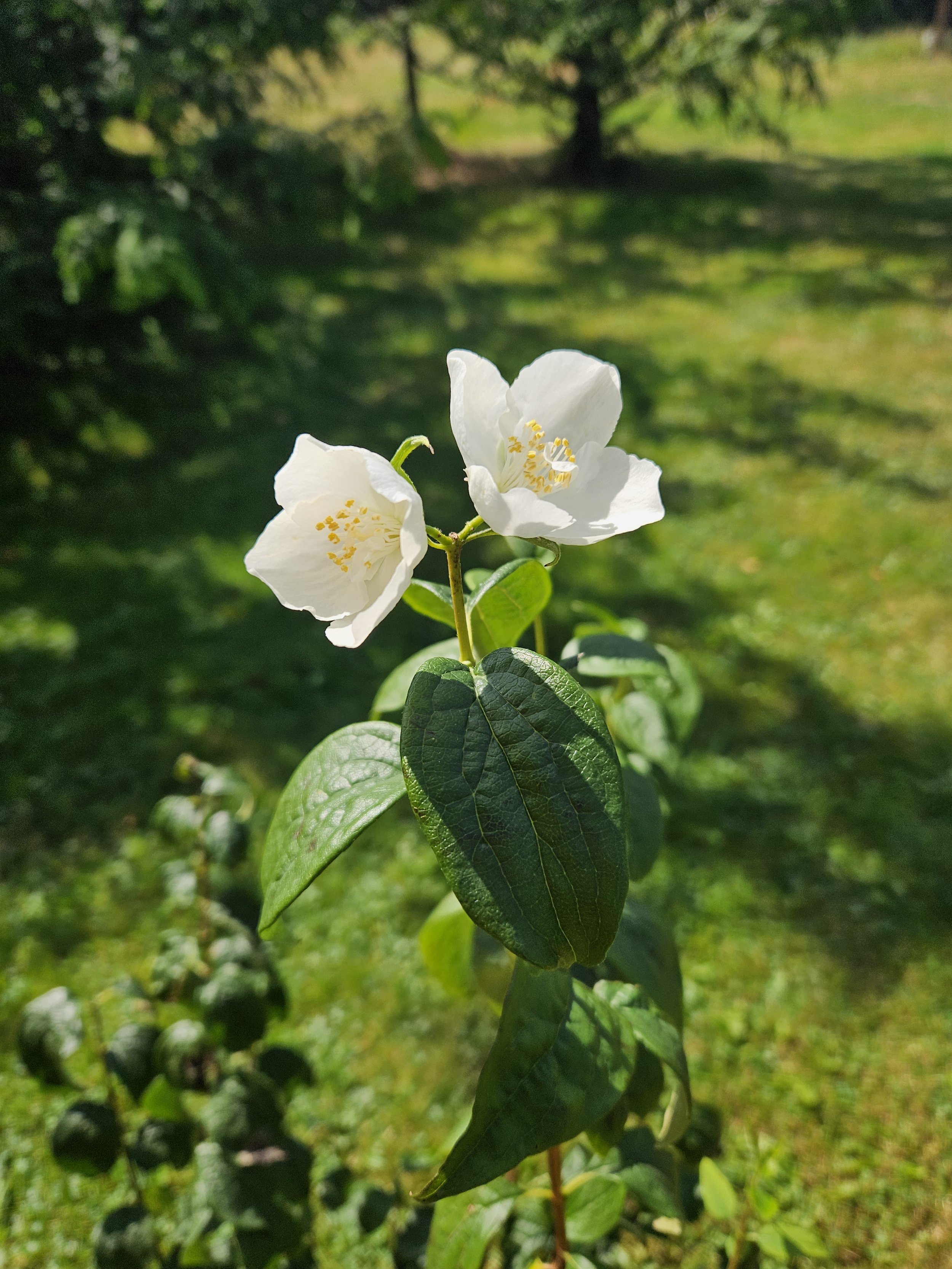
Snow White™ Mockorange (Philadelphus 'Snowwhite Fantasy')
A Fragrant Flowering Shrub with Double White Blooms, Dark Green Foliage & Classic Cottage-Garden Appeal
Plant Overview
Common Name: Snow White™ Mockorange
Botanical Name:Philadelphus 'Snowwhite Fantasy'
Plant Type: Deciduous Flowering Shrub
Plant Patent: PP13,774
Hardiness: Hardy to USDA Zone 4
Mature Height: 5–6 feet
Mature Spread: 4–5 feet
Snow White™ Mockorange is a beautifully fragrant flowering shrub known for its masses of approximately two-inch, double white flowers and deep green foliage.
The highly fragrant blossoms create a classic early-summer garden experience and make this Mockorange particularly valuable near pathways, patios, seating areas, garden entrances, and other locations where its perfume can be appreciated at close range.
Growing approximately five to six feet tall and four to five feet wide, Snow White™ develops into a substantial vase-shaped shrub that can serve as a specimen, flowering backdrop, informal privacy planting, foundation shrub, or anchor behind perennial and rose gardens.
Its combination of fragrant flowers, manageable size, moderate growth, relatively simple maintenance, and wildlife value makes it a versatile flowering shrub for northern landscapes.
Why We Grow It at 19 Birch Lane
At 19 Birch Lane, Snow White™ Mockorange represents an important element of garden design that photographs alone cannot capture: fragrance.
As the gardens continue developing into a botanical destination, we want visitors to experience plants through more than color and form. Fragrant shrubs positioned near pathways and gathering areas can create moments visitors remember long after they have left the garden.
Snow White™ also works beautifully within the layered planting style we use throughout 19 Birch Lane. Its large white flowering form can provide a backdrop for roses and perennials while its dark green foliage creates a strong visual anchor after the main bloom period has finished.
Because the flowers attract pollinators while the dense branching can offer shelter for birds and other small wildlife, it also combines ornamental and ecological value.
Quick Facts
Botanical Name:Philadelphus 'Snowwhite Fantasy'
Common Name: Snow White™ Mockorange
Plant Type: Deciduous Flowering Shrub
Plant Patent: PP13,774
Hardiness: Hardy to USDA Zone 4
Mature Height: 5–6 feet
Mature Spread: 4–5 feet
Growth Rate: Moderate
Growth Habit: Vase-Shaped Shrub
Bloom Period: May through August
Flower Color: White
Flower Form: Double
Flower Size: Approximately 2 inches
Fragrance: Highly Fragrant
Foliage Color: Dark Green
Fall Color: Not Significant
Sun Exposure: Full Sun; Some Dappled Light Tolerated
Minimum Recommended Sun: Approximately 5 hours
Soil: Moist, Well Drained
Wildlife Value: Good
Deer Resistance: Fairly Resistant
Rabbit Resistance: Fairly Resistant
Pollinator Friendly: Yes
Maintenance: Easy to Moderate
Growing Conditions
Light Requirements
Snow White™ Mockorange performs best in:
Full Sun
Locations Receiving at Least 5 Hours of Sunlight
Some Dappled Sunlight
Adequate sunlight is especially important for flowering.
Plants grown with insufficient light may remain healthy but are less likely to produce the abundant floral display that makes Mockorange so desirable.
For the greatest bloom production, choose the brightest appropriate location available.
Soil Requirements
Snow White™ performs best in soil that is:
Moist
Well Drained
Typical Garden Soil
Not Constantly Saturated
The plant benefits from consistent soil moisture during warm summer weather, but drainage remains important.
Avoid allowing the root zone to remain waterlogged.
Water Requirements
Consistent moisture is particularly important during dry periods.
During Establishment
Water regularly.
Keep the root zone evenly moist.
Encourage development of a strong root system.
Established Plants
Water approximately weekly when rainfall is insufficient.
Provide additional water during prolonged hot or dry weather.
Avoid allowing the soil to become excessively dry.
Avoid oversaturating the soil.
One potential sign of insufficient moisture is wilting during extended dry weather.
Flower Characteristics
The flowers are the defining feature of Snow White™ Mockorange.
Flower Features
Approximately 2 inches wide
Double flowers
Pure white coloration
Strong fragrance
Abundant floral display
Excellent contrast against dark green foliage
Attractive to pollinators
The cascading white blooms make this shrub particularly effective as a flowering backdrop to roses and perennial beds.
Fragrance in the Garden
Mockorange is especially valued for its powerful floral fragrance.
At 19 Birch Lane, fragrant shrubs are most effective when placed where visitors naturally slow down.
Consider planting Snow White™ near:
Garden Paths
Benches
Patios
Garden Entrances
Courtyards
Seating Areas
Transition Points Between Garden Rooms
Fragrance adds another sensory layer to a botanical garden and can help create stronger memories of a particular garden space.
Foliage Characteristics
After flowering, Snow White™ continues contributing structure through its dark green foliage.
Foliage Features
Deep green leaves
Dense branching
Strong background foliage
Useful contrast for flowering perennials
Provides summer structure after flowering
Its fall color is not considered a major ornamental feature, so this shrub is primarily valued for its flowers, fragrance, and summer foliage.
Pollinator & Wildlife Benefits
Snow White™ Mockorange provides multiple forms of wildlife value.
Flowers May Attract
Bees
Butterflies
Hummingbirds
The fragrant flowers provide an additional nectar source during the blooming period.
Bird & Wildlife Habitat
The dense branching can create useful shelter and potential nesting habitat for birds.
Small wildlife may also use the interior of a mature shrub for cover.
This makes Snow White™ useful in gardens where the goal is to combine ornamental planting with wildlife-friendly structure.
Deer & Rabbit Resistance
Snow White™ Mockorange is considered fairly resistant to:
Deer
Rabbits
Occasional browsing may still occur, especially when preferred food sources are scarce.
It should therefore be considered resistant rather than completely deer-proof.
Garden Uses
Snow White™ Mockorange is versatile enough to serve both ornamental and structural roles within the landscape.
Recommended Uses
Flowering Shrub Borders
Rose Garden Backdrops
Perennial Border Backdrops
Foundation Plantings
Informal Privacy Screens
Cottage Gardens
Fragrance Gardens
Pollinator Gardens
Wildlife Gardens
Mixed Shrub Borders
Specimen Plantings
Garden Entrances
Botanical Collections
Using Snow White™ Behind a Rose Garden
One particularly effective landscape use is as a backdrop behind roses.
The white flowers create a clean visual background for:
Red Roses
Apricot Roses
Yellow Roses
Lavender Roses
After the Mockorange finishes flowering, its dark green foliage continues serving as a visual backdrop for roses blooming later in the season.
This makes it especially useful in gardens designed around succession of bloom.
Using Snow White™ as a Privacy Shrub
At approximately five to six feet tall, Snow White™ can help create an informal seasonal screen.
It can be used:
Along property boundaries
Between garden rooms
Behind seating areas
Along large perennial borders
Near patios
As part of a mixed flowering hedge
Its natural vase-shaped form works especially well in relaxed or naturalistic planting designs.
Companion Plants
Snow White™ Mockorange pairs beautifully with a wide range of shrubs and perennials.
Recommended Companion Plants
Roses
Spirea
Weigela
Barberry
Dogwood (Cornus)
Witch Hazel (Hamamelis virginiana)
Chokeberry (Aronia)
Lilac (Syringa)
Salvia
Hardy Geranium
Ornamental Grasses
Whenever corresponding 19 Birch Lane Plant Finder listings exist, these companion names should link directly to their individual pages.
Care & Maintenance
Snow White™ Mockorange is relatively simple to maintain when provided with adequate sunlight and moisture.
Pruning Snow White™ Mockorange
When Should Mockorange Be Pruned?
Prune Snow White™ after it finishes flowering.
This is one of the most important care points for Mockorange.
Pruning at the wrong time can remove developing flower buds and reduce flowering the following season.
How to Prune Mockorange
After flowering:
Remove dead or damaged stems.
Remove weak or poorly positioned growth.
Lightly shape the shrub if needed.
Maintain its natural vase-shaped habit.
Avoid excessive shearing.
If the shrub is being used in a naturalistic landscape, it can also be allowed to develop a somewhat looser form with minimal pruning.
Fertilizing
Snow White™ does not require an aggressive feeding program.
A balanced fertilizer with a relatively even NPK ratio can be applied in spring if needed.
Avoid excessive fertilization, which can encourage foliage growth at the expense of flowers.
Ongoing Maintenance
Maintain consistent moisture during dry weather.
Prune after flowering.
Remove dead or damaged branches as needed.
Apply balanced fertilizer in spring if necessary.
Monitor foliage periodically for insects.
Maintain good airflow through the shrub.
Avoid chronically saturated soil.
Pests & Potential Problems
Snow White™ Mockorange generally has relatively few serious pest problems.
Occasional insects may include:
Aphids
Thrips
Other Small Sap-Feeding Insects
These may become more noticeable during warm, humid portions of the season.
In most cases, occasional insect activity does not significantly affect long-term plant health.
Another potential problem is excessively dry soil, which may cause the plant to wilt.
Consistent watering during drought helps prevent moisture-related stress.
Landscape Design Ideas
Snow White™ works particularly well where its flowers and fragrance can serve as both a visual and sensory focal point.
Use it:
Behind a rose garden
Behind perennial borders
Near garden entrances
At the back of cottage gardens
Near patios and terraces
Along pathways
In informal flowering hedges
As a transition between garden rooms
Near outdoor seating
As a foundation shrub
In a dedicated fragrance garden
Because it matures to five or six feet tall, position it behind lower plants rather than at the front of a border.
Why Gardeners Love Snow White™ Mockorange
✔ Highly fragrant flowers
✔ Double white blooms
✔ Approximately 2-inch flowers
✔ Hardy to Zone 4
✔ Moderate growth rate
✔ Five- to six-foot mature height
✔ Excellent rose garden backdrop
✔ Works as an informal privacy shrub
✔ Pollinator friendly
✔ Attracts butterflies
✔ Attracts bees
✔ May attract hummingbirds
✔ Fairly deer resistant
✔ Fairly rabbit resistant
✔ Easy to maintain
✔ Beautiful dark green foliage
✔ Useful in northern gardens
Plant Finder Details
Botanical Name:Philadelphus 'Snowwhite Fantasy'
Common Name: Snow White™ Mockorange
Plant Type: Deciduous Flowering Shrub
Plant Patent: PP13,774
Hardiness: Hardy to USDA Zone 4
Mature Height: 5–6 feet
Mature Spread: 4–5 feet
Growth Rate: Moderate
Growth Habit: Vase-Shaped
Bloom Period: May, June, July, August
Flower Color: White
Flower Form: Double
Flower Size: Approximately 2 inches
Fragrance: Strongly Fragrant
Foliage Color: Dark Green
Fall Color: Not Significant
Sun Exposure: Full Sun; Some Dappled Light Tolerated
Minimum Recommended Sun: Approximately 5 Hours
Soil Requirements: Moist, Well Drained
Water Requirements: Consistent, Moderate Moisture
Deer Resistance: Fairly Resistant
Rabbit Resistance: Fairly Resistant
Attracts Bees: Yes
Attracts Butterflies: Yes
Attracts Hummingbirds: Yes
Wildlife Shelter: Yes
Fruit: Insignificant Seeds Following Flowering
Maintenance: Easy to Moderate
Best Pruning Time: Immediately After Flowering
📍 Where to Find This Plant at 19 Birch Lane
Snow White™ Mockorange is especially well suited to prominent sunny locations within the developing gardens at 19 Birch Lane where visitors can experience its fragrance at close range.
Potential locations include:
Rose Garden
Main Perennial Borders
Fragrance Garden
Cottage-Style Plantings
Garden Entrances
Mixed Shrub Borders
Seating Areas
The exact permanent garden location has not yet been provided for this Plant Finder entry.
Once the planting location is confirmed, this section should be updated with the specific garden name so visitors can use the Plant Finder as a digital guide to the living collections at 19 Birch Lane.
🌸 Seasonal Interest Calendar
🌱 Spring
Fresh dark green foliage develops as the shrub begins its new season of growth.
Flower buds begin forming in preparation for the main flowering period.
🤍 Late Spring to Early Summer
Double white flowers begin opening, covering the shrub with an intensely fragrant display.
This is the plant's primary ornamental season.
☀️ Summer
Depending on growing conditions, flowering may continue through portions of summer.
The dark green foliage remains an attractive structural backdrop within mixed borders.
✂️ After Flowering
Once flowering has finished, prune the shrub if shaping or size control is necessary.
This timing helps preserve the following season's flower display.
🍂 Fall
The foliage continues providing structure, although fall color is not considered a major ornamental feature.
❄️ Winter
The deciduous shrub enters dormancy and its branching structure remains visible until spring growth resumes.
🎓 Garden Design Tips from 19 Birch Lane
At 19 Birch Lane, we would use Snow White™ Mockorange where its fragrance becomes part of the visitor experience.
A fragrant shrub hidden at the back of a distant planting bed loses one of its greatest qualities. Instead, position Mockorange close enough to a path, bench, patio, or garden entrance that visitors naturally encounter its perfume.
One of our favorite design approaches would be using Snow White™ behind a rose garden.
The white flowers create a neutral backdrop that works with nearly every rose color, while the dark green foliage provides structure after the Mockorange bloom period ends.
Another effective combination is:
Snow White™ Mockorange + purple Catmint + soft pink roses + silver Artemisia.
The planting combines fragrance, foliage contrast, complementary colors, and succession of bloom.
Because the shrub reaches approximately five to six feet tall, give it enough space to develop its natural vase-shaped form. Avoid squeezing it tightly between smaller shrubs.
For a botanical-garden-quality composition, repeat Snow White™ at strategic points rather than creating a long rigid row. Repetition can help visually connect different portions of a large garden while maintaining a more natural appearance.
🌿 Plants That Grow Well with Snow White™ Mockorange at 19 Birch Lane
Recommended companions include:
Roses
Weigela
Spirea
Dogwood
Witch Hazel
Chokeberry
Lilac
Catmint
Salvia
Peonies
Iris
Hydrangeas
Hardy Geranium
Artemisia
Ornamental Grasses
Whenever corresponding Plant Finder pages are available, link these plant names directly to their individual listings.
This helps visitors discover related plants while creating a stronger internal-linking structure across the 19 Birch Lane botanical database.
Frequently Asked Questions
What is Snow White™ Mockorange?
Snow White™ Mockorange is a deciduous flowering shrub known for its fragrant double white flowers and dark green foliage.
What is the botanical name of Snow White™ Mockorange?
Its botanical name is Philadelphus 'Snowwhite Fantasy'.
How tall does Snow White™ Mockorange grow?
It typically reaches approximately five to six feet tall.
How wide does Snow White™ Mockorange grow?
A mature plant generally spreads approximately four to five feet.
When does Snow White™ Mockorange bloom?
The supplied growing information lists flowering during May, June, July, and August.
Are Snow White™ Mockorange flowers fragrant?
Yes. Strong fragrance is one of this cultivar's defining characteristics.
What color are the flowers?
Snow White™ produces double white flowers approximately two inches wide.
Does Mockorange need full sun?
It performs best in full sun. Snow White™ should receive at least approximately five hours of sunlight for strong flowering.
Can Snow White™ tolerate partial shade?
It can tolerate periods of dappled sunlight, although too little light may reduce flowering.
What type of soil does Mockorange prefer?
Snow White™ prefers moist, well-drained soil.
How much water does Snow White™ Mockorange need?
Maintain consistent moisture, particularly during dry summer weather, while avoiding oversaturated soil.
When should Snow White™ Mockorange be pruned?
Prune it after flowering has finished.
Why should Mockorange be pruned after flowering?
Pruning after bloom helps avoid removing developing flower buds that contribute to the following season's floral display.
Is Snow White™ Mockorange deer resistant?
It is considered fairly resistant to deer, although occasional browsing may occur.
Is it rabbit resistant?
It is also considered fairly resistant to rabbits.
Does Mockorange attract pollinators?
Yes. Its fragrant flowers attract bees and butterflies and may attract hummingbirds.
Is Snow White™ Mockorange good for birds?
Its dense branching can provide shelter and potential nesting locations for birds.
Can Mockorange be used as a privacy shrub?
Yes. Its mature height of approximately five to six feet makes it useful in informal privacy plantings and mixed borders.
Is Snow White™ Mockorange good with roses?
Yes. Its white flowers and dark green foliage make an excellent backdrop for rose gardens.
Is Snow White™ Mockorange hardy in Maine?
The supplied growing information lists Snow White™ as hardy to USDA Zone 4, making it potentially suitable for many cold-climate gardens where local conditions fall within its hardiness range.
Botanical Garden Notes
The genus name Philadelphus has been associated with a Greek term interpreted as "loving one's brother or sister." The name is also connected historically with the Greco-Roman family name Philadelphus, including Ptolemy Philadelphus of the third century B.C.
Snow White™ demonstrates why Mockorange has remained a valuable garden shrub: it combines substantial landscape structure with an intense sensory experience.
Within the developing collections at 19 Birch Lane, plants such as Snow White™ help us demonstrate that successful garden design involves more than selecting plants by flower color.
Fragrance, mature form, bloom succession, wildlife value, foliage contrast, and the relationship between a plant and its physical location all contribute to the way visitors experience a garden.