
Grand Bleu® Caryopteris (Caryopteris × clandonensis 'Inoveris')
A Compact, Long-Blooming Blue Mist Shrub with Fragrant Flowers for Bees, Butterflies & Hummingbirds
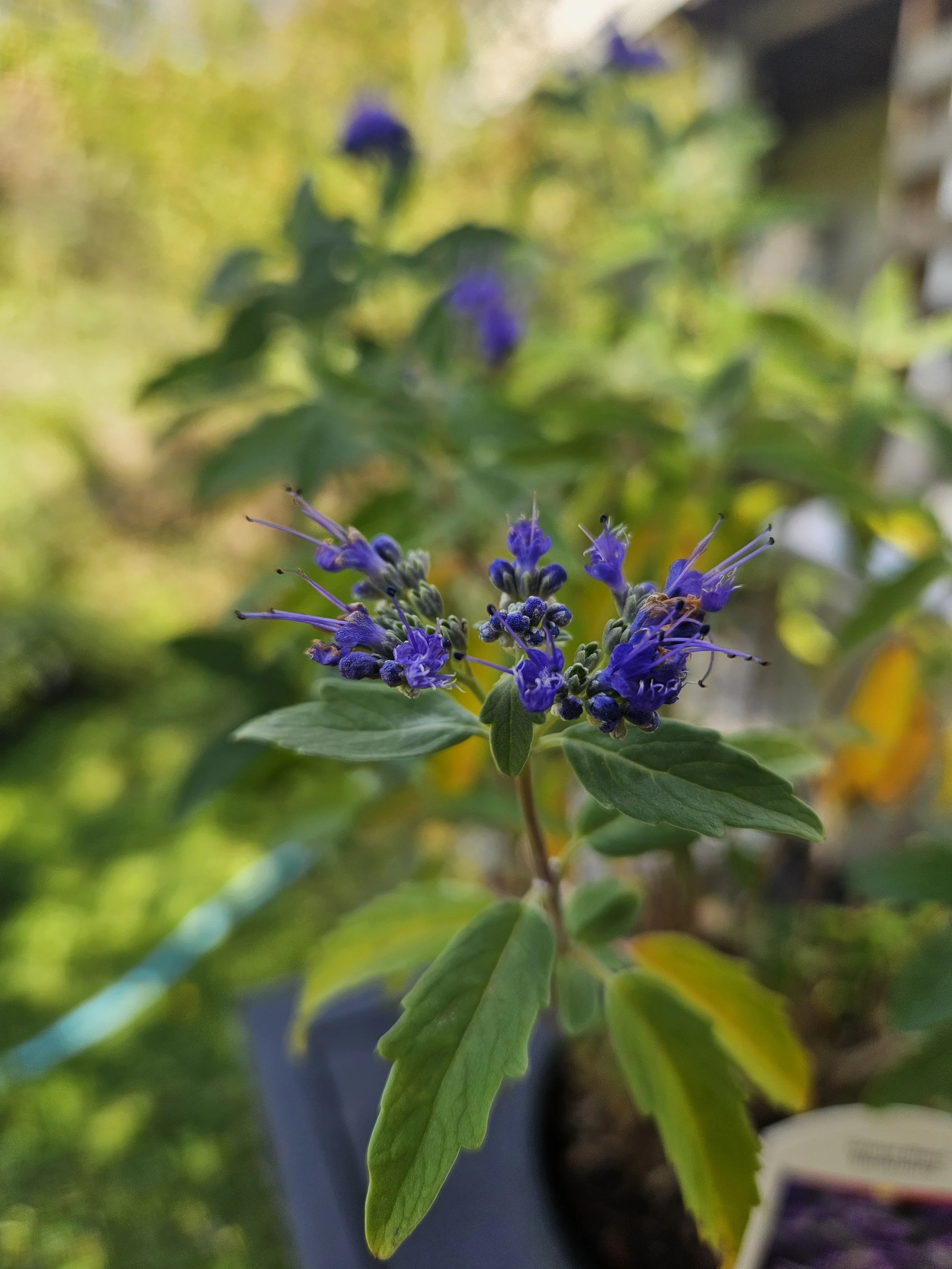
Grand Bleu® Caryopteris (Caryopteris × clandonensis 'Inoveris')
A Compact, Long-Blooming Blue Mist Shrub with Fragrant Flowers for Bees, Butterflies & Hummingbirds
Plant Overview
Common Name: Grand Bleu® Caryopteris, Blue Mist Shrub, Bluebeard
Botanical Name:Caryopteris × clandonensis 'Inoveris' Grand Bleu®
Plant Type: Deciduous Flowering Shrub
Plant Patent: PP17,837
Hardiness Zones: USDA Zones 5–9
Primary Season of Interest: Mid-Summer through Early Fall
Grand Bleu® Caryopteris is a compact deciduous flowering shrub valued for its rich purple-blue flowers, glossy green foliage, long bloom period, and exceptional appeal to late-season pollinators.
Beginning in midsummer, dense clusters of misty blue-purple flowers develop along the current season's stems, creating the cloud-like appearance that gives Caryopteris its common name, Blue Mist Shrub. The flowers continue into early fall, providing important color and nectar at a point in the gardening season when many spring and early-summer shrubs have finished flowering.
Grand Bleu® forms a uniform, rounded mound approximately two to three feet tall, making it especially useful in perennial borders, pollinator gardens, foundation plantings, low hedges, and large containers.
It is drought tolerant once established, deer and rabbit resistant, fragrant, long blooming, and relatively low maintenance.
Why We Grow It at 19 Birch Lane
At 19 Birch Lane, Grand Bleu® Caryopteris is particularly valuable because it helps carry the gardens through the important transition between summer and fall.
By midsummer, many traditional flowering shrubs have completed their main display. Caryopteris begins flowering just as that seasonal transition occurs, bringing strong blue-purple color back into the landscape while providing a fresh food source for bees, butterflies, hummingbirds, and other pollinators.
Its compact growth habit also makes it easy to integrate into layered perennial and shrub borders without overwhelming neighboring plants.
As we continue developing the gardens at 19 Birch Lane, plants such as Grand Bleu® help us design for succession of bloom—making sure something interesting and ecologically valuable is happening throughout the entire growing season rather than concentrating flowering into only spring and early summer.
Quick Facts
Botanical Name:Caryopteris × clandonensis 'Inoveris' Grand Bleu®
Common Name: Grand Bleu® Caryopteris
Other Common Names: Blue Mist Shrub, Bluebeard
Plant Type: Deciduous Flowering Shrub
Plant Patent: PP17,837
Hardiness Zones: USDA Zones 5–9
Height: Approximately 2–3 feet
Spread: Approximately 3 feet
Recommended Spacing: Approximately 3 feet apart
Growth Habit: Compact, Upright, Rounded
Bloom Time: Mid-Summer through Early Fall
Flower Color: Purple-Blue
Foliage Color: Glossy Green
Sun Exposure: Full Sun
Soil: Normal to Sandy, Well Drained
Water Needs: Medium during establishment; drought tolerant once established
Bloom Habit: Flowers on New Wood
Maintenance: Low
Fragrant: Yes
Long Blooming: Yes
Cut Flower: Yes
Container Friendly: Yes
Deer Resistant: Yes
Rabbit Resistant: Yes
Pollinator Friendly: Excellent
Growing Conditions
Light Requirements
Grand Bleu® Caryopteris performs best in:
Full Sun
Open, Sunny Borders
Locations Receiving At Least 6 Hours of Direct Sunlight
Full sun encourages:
Strong compact growth
Maximum flowering
Better stem strength
Denser foliage
More intense flower production
Too much shade may result in looser growth and fewer flowers.
Soil Requirements
Caryopteris grows well in:
Average Garden Soil
Sandy Soil
Moderately Lean Soil
Well-Drained Soil
The most important requirement is good drainage.
Avoid planting Caryopteris in locations where water remains around the roots for long periods.
Wet winter soil can be particularly problematic in colder climates.
Water Requirements
Grand Bleu® has moderate water requirements during establishment but becomes increasingly drought tolerant as its root system develops.
During Establishment
Water regularly during the first growing season.
Water deeply rather than frequently and shallowly.
Allow the upper soil layer to dry somewhat between watering.
Once Established
Tolerates periods of dry weather.
Water during prolonged drought.
Avoid constantly saturated soil.
Reduce watering in cooler weather.
Its ability to tolerate hot, dry conditions makes it an excellent choice for water-conscious landscapes.
Cold-Climate Considerations for Maine Gardens
Grand Bleu® Caryopteris is rated for USDA Zones 5–9, placing Midcoast Maine near the colder portion of its growing range.
In Zones 5 and 6, winter conditions may cause some or all of the above-ground stems to die back.
This does not necessarily mean the plant has died.
Healthy roots can produce vigorous new stems from the base in spring, and because Caryopteris flowers on new growth, it can still produce a strong floral display later that same season.
For the best performance in Maine:
Choose a sunny location.
Provide excellent winter drainage.
Avoid low areas where water collects.
Avoid overly wet clay soil.
Allow snow cover to provide natural winter insulation when possible.
Wait until spring before deciding whether stems survived the winter.
Flower Characteristics
Grand Bleu® produces dense clusters of fragrant purple-blue flowers from midsummer into early fall.
Flower Features
Misty blue-purple color
Dense clusters
Fragrant
Nectar rich
Long blooming
Excellent pollinator attraction
Useful as cut flowers
Produced on current-season stems
The unusually strong blue coloration is particularly valuable in late-season garden designs because true blue flowers are relatively uncommon among flowering shrubs.
Foliage Characteristics
Grand Bleu® develops attractive glossy green foliage that forms a compact rounded mound.
Foliage Features
Glossy green
Dense
Aromatic
Compact
Rounded
Provides excellent background for blue flowers
The foliage creates a clean, attractive framework before flowering begins and helps Caryopteris integrate easily into mixed shrub and perennial borders.
Pollinator & Wildlife Benefits
One of the greatest strengths of Grand Bleu® Caryopteris is its ability to provide nectar later in the growing season.
Attracts
Bees
Butterflies
Hummingbirds
Beneficial Insects
Other Late-Season Pollinators
The combination of abundant flowers and a long bloom period makes Caryopteris particularly useful in gardens designed to provide continuous pollinator resources from spring through fall.
Why Late-Season Flowers Matter
Late summer and early fall can become a transitional period in many gardens.
Spring bulbs, peonies, irises, and many early perennials have finished flowering, while some fall plants have not yet reached peak bloom.
Caryopteris helps bridge that gap.
At 19 Birch Lane, this makes it especially useful when designing a garden that provides:
Continuous seasonal color
Long-term pollinator support
Greater visitor interest
Better late-summer garden structure
Deer & Rabbit Resistance
Grand Bleu® Caryopteris is generally considered:
Deer Resistant
Rabbit Resistant
Its aromatic foliage tends to make it less appealing to browsing animals than many other flowering shrubs.
No landscape plant is completely immune to wildlife browsing, particularly when food is scarce, but Caryopteris can be an excellent choice where deer pressure is a concern.
Drought & Heat Tolerance
Once established, Grand Bleu® performs well in:
Hot Locations
Dry Garden Beds
Sunny Slopes
Water-Conscious Landscapes
Its combination of heat tolerance, drought tolerance, and late-season flowering makes it especially useful in difficult full-sun areas.
Garden Uses
Grand Bleu® Caryopteris is extremely versatile because of its compact size and rounded growth habit.
Recommended Uses
Pollinator Gardens
Butterfly Gardens
Hummingbird Gardens
Perennial Borders
Mixed Shrub Borders
Foundation Plantings
Low Hedges
Cottage Gardens
Cutting Gardens
Drought-Tolerant Gardens
Waterwise Gardens
Wildlife Gardens
Large Containers
Sunny Courtyard Gardens
Botanical Collections
Using Caryopteris as a Low Hedge
With plants spaced approximately three feet apart, Grand Bleu® can form an attractive informal low hedge.
This works particularly well:
Along sunny walkways
Around patios
At the front of larger shrub borders
Between garden rooms
Along low walls
Around pollinator gardens
Unlike traditional evergreen hedging, Caryopteris provides both structural definition and abundant seasonal flowers.
Companion Plants
Grand Bleu® Caryopteris combines beautifully with plants that bloom at the same time or provide contrasting foliage.
Recommended Companion Plants for 19 Birch Lane
Sedum 'Autumn Joy'
Coneflower
Asters
Black-Eyed Susan
Goldenrod
Yarrow
Salvia
Ninebark
Hydrangea
Joe Pye Weed
Lady's Mantle
Artemisia
Its purple-blue flowers work especially well with:
Yellow flowers
Soft pink flowers
White flowers
Silver foliage
Burgundy foliage
Golden foliage
Whenever possible, companion plants should link directly to their corresponding 19 Birch Lane Plant Finder listings.
Care & Maintenance
Grand Bleu® Caryopteris is relatively easy to maintain.
The most important thing to understand is that it flowers on new wood.
This means the flowers are produced on stems that grow during the current season.
Pruning Grand Bleu® Caryopteris
When Should Caryopteris Be Pruned?
Prune Grand Bleu® in:
Early spring, after signs of new growth begin to appear.
Waiting until spring makes it easier to identify which portions of the plant survived winter.
How to Prune Caryopteris
In early spring:
Examine the stems for living buds.
Remove dead or winter-damaged wood.
Cut remaining stems back hard to encourage vigorous new growth.
Shape the plant into a rounded mound if desired.
Remove weak or crossing stems.
Because the plant flowers on new wood, strong spring pruning encourages fresh flowering stems rather than eliminating the coming season's flowers.
Why Caryopteris Can Be Pruned Hard
Unlike shrubs that flower on old wood, Caryopteris produces its flowers on stems created during the current growing season.
This means gardeners can prune it substantially in early spring and still receive flowers later that summer.
In colder Zones 5 and 6, winter may perform some of this pruning naturally by killing stems back toward the crown.
Ongoing Maintenance
Prune in early spring.
Remove winter-damaged stems.
Avoid excessive fertilizer.
Water during prolonged drought.
Maintain good drainage.
Avoid consistently wet soil.
Remove unwanted seedlings if self-sowing occurs.
Monitor the overall size and shape annually.
Propagation & Natural Spread
Caryopteris may occasionally self-sow lightly.
Rooted stems may also develop and can be separated from the parent plant and transplanted in spring.
For patented cultivars, propagation restrictions may apply during the life of the plant patent.
Container Growing
Grand Bleu® is well suited to large containers because of its compact habit.
For container culture:
Use a pot with generous drainage holes.
Choose high-quality, free-draining potting soil.
Position in full sun.
Water more frequently than in-ground plants.
Avoid allowing the container to remain waterlogged.
In colder climates such as Maine, container-grown plants may require additional winter protection because roots in pots experience colder temperatures than plants growing directly in the ground.
Cut Flower Use
The blue-purple flowers can be used in fresh arrangements.
They combine especially well with:
Hydrangeas
Sedum
Goldenrod
Asters
Ornamental Grasses
White Flowers
Soft Pink Flowers
Cut stems when a significant portion of the flower clusters have opened.
Landscape Design Ideas
Grand Bleu® is particularly valuable for inserting a strong block of blue-purple color into late-season garden compositions.
Use it:
In groups of three or five
Along sunny paths
At the front of shrub borders
Among ornamental grasses
Between summer and fall flowering perennials
As an informal hedge
In large containers
Near patios where pollinator activity can be observed
In a dedicated butterfly garden
As part of a succession-of-bloom planting
Its compact rounded form allows Caryopteris to function visually like a flowering mound rather than a large woody shrub.
Why Gardeners Love Grand Bleu® Caryopteris
✔ Rich blue-purple flowers
✔ Exceptional late-season bloom
✔ Excellent pollinator plant
✔ Attracts butterflies
✔ Attracts hummingbirds
✔ Fragrant flowers
✔ Compact growth habit
✔ Drought tolerant once established
✔ Heat tolerant
✔ Deer resistant
✔ Rabbit resistant
✔ Good cut flower
✔ Excellent container plant
✔ Low maintenance
✔ Blooms on new wood
✔ Useful in Zones 5–9
Plant Finder Details
Botanical Name:Caryopteris × clandonensis 'Inoveris' Grand Bleu®
Common Name: Grand Bleu® Caryopteris
Other Names: Blue Mist Shrub, Bluebeard
Plant Type: Deciduous Flowering Shrub
Plant Patent: PP17,837
Hardiness Zones: USDA Zones 5–9
Height: 2–3 feet
Spread: Approximately 3 feet
Spacing: Approximately 3 feet apart
Growth Habit: Upright, Compact, Rounded
Bloom Time: Mid-Summer through Early Fall
Flower Color: Purple-Blue
Flower Fragrance: Fragrant
Foliage Color: Glossy Green
Sun Exposure: Full Sun
Water Requirements: Medium; drought tolerant once established
Soil Type: Normal to Sandy
Drainage Requirements: Well Drained
Bloom Wood: New Wood
Maintenance: Low
Pollinator Friendly: Excellent
Attracts Bees: Yes
Attracts Butterflies: Yes
Attracts Hummingbirds: Yes
Deer Resistant: Yes
Rabbit Resistant: Yes
Heat Tolerant: Yes
Drought Tolerant: Yes Once Established
Cut Flower: Yes
Container Friendly: Yes
Hedge Use: Yes
Cold Climate Note: May die back significantly in Zones 5–6 and regrow from the base in spring
📍 Where to Find This Plant at 19 Birch Lane
Grand Bleu® Caryopteris is well suited to sunny, well-drained areas within the developing gardens at 19 Birch Lane.
Potential locations include:
Pollinator Garden
Butterfly Garden
Main Perennial Borders
Waterwise Garden
Sunny Shrub Borders
Cutting Garden
Late-Season Display Gardens
The exact permanent garden location has not yet been provided for this Plant Finder entry.
Once its location is confirmed, this section should be updated with the specific garden name so visitors can use the online Plant Finder to locate Grand Bleu® within the physical gardens.
🌸 Seasonal Interest Calendar
🌱 Spring
New growth emerges from the base and surviving stems. In colder Maine winters, some branches may appear dead until new growth becomes visible.
Early spring is the primary pruning period.
☀️ Early Summer
Fresh green foliage develops into a compact, rounded mound. New stems continue growing in preparation for flowering.
🐝 Mid-Summer
Dense purple-blue flower clusters begin opening, creating a cloud of color above the glossy green foliage.
Pollinator activity increases as butterflies, bees, and other beneficial insects visit the nectar-rich flowers.
🦋 Late Summer
This is typically the plant's peak ornamental period.
Grand Bleu® becomes a significant source of blue color and pollinator activity within the garden.
🍂 Early Fall
Flowers may continue into early fall, extending seasonal interest as many traditional summer plants begin fading.
❄️ Winter
The shrub becomes dormant.
In Zones 5 and 6, some or much of the top growth may die back. Avoid assuming the plant is dead until new spring growth begins emerging from the crown.
🎓 Garden Design Tips from 19 Birch Lane
At 19 Birch Lane, one of our primary reasons for using Caryopteris is succession of bloom.
A garden can look extraordinary in June and still become visually quiet by August if too many plants flower at the same time.
Grand Bleu® helps solve that problem.
Its midsummer-to-fall flowering period makes it an excellent bridge between traditional summer perennials and fall favorites such as asters, sedums, and ornamental grasses.
For a sophisticated late-season composition, combine Grand Bleu® with:
Purple and blue asters
Pink Sedum 'Autumn Joy'
Golden Black-Eyed Susans
White Hydrangeas
Burgundy Ninebark
Silver Artemisia
Ornamental grasses
The blue flowers become particularly dramatic when surrounded by warm yellow and gold flowers.
For a botanical-garden-style planting, repeat Caryopteris in groups rather than planting isolated individuals. Three plants positioned several feet apart can create a visual rhythm that carries visitors through a garden border.
Because pollinators heavily visit the flowers, consider positioning Caryopteris near paths, benches, or gathering areas where visitors can observe butterflies and bees at close range.
🌿 Plants That Grow Well with Grand Bleu® Caryopteris at 19 Birch Lane
Recommended companions include:
Sedum 'Autumn Joy'
Coneflower
Catmint
Russian Sage
Asters
Black-Eyed Susan
Goldenrod
Yarrow
Salvia
Artemisia
Ninebark
Hydrangeas
Joe Pye Weed
Ornamental Grasses
Daylilies
Whenever companion plants already have Plant Finder profiles, link their names directly to those pages.
This internal-linking structure allows visitors to move naturally between related plants while helping search engines and AI systems understand the relationships among the botanical content across 19BirchLane.com.
Frequently Asked Questions
What is Grand Bleu® Caryopteris?
Grand Bleu® Caryopteris is a compact deciduous flowering shrub that produces dense clusters of purple-blue flowers from midsummer into early fall.
Is Caryopteris the same as Blue Mist Shrub?
Yes. Caryopteris is commonly called Blue Mist Shrub or Bluebeard because its masses of blue flowers create a mist-like appearance.
When does Grand Bleu® Caryopteris bloom?
It generally flowers from midsummer through early fall.
How large does Grand Bleu® Caryopteris grow?
It typically reaches approximately two to three feet tall with a spread of around three feet.
Does Caryopteris need full sun?
Yes. Grand Bleu® performs best in full sun, ideally receiving at least six hours of direct sunlight each day.
Does Caryopteris attract butterflies?
Yes. Its nectar-rich late-season flowers are highly attractive to butterflies.
Does Caryopteris attract bees?
Yes. Bees and other pollinating insects frequently visit Caryopteris flowers.
Does Caryopteris attract hummingbirds?
Yes. Hummingbirds may visit the abundant nectar-rich flowers.
Is Caryopteris deer resistant?
Yes. Caryopteris is generally considered deer resistant.
Is Caryopteris rabbit resistant?
Yes. It is generally considered resistant to rabbit browsing.
Is Grand Bleu® drought tolerant?
Yes. Once established, Grand Bleu® has good drought tolerance and performs well in hot, dry sites.
Can Caryopteris grow in Maine?
Yes. Grand Bleu® is rated for USDA Zones 5–9 and can grow in Maine locations within its hardiness range. In colder winters, stems may die back substantially, but new growth can emerge from the base in spring.
Why does my Caryopteris look dead after winter?
In Zones 5 and 6, winter may kill much of the above-ground growth. Wait for spring growth from the base before assuming the plant is dead.
When should Caryopteris be pruned?
Prune Caryopteris in early spring as new growth begins.
Does Caryopteris bloom on old or new wood?
Caryopteris blooms on new wood, meaning flowers develop on stems produced during the current growing season.
Can I cut Caryopteris back hard?
Yes. Because it flowers on new growth, Caryopteris can be pruned hard in early spring to encourage vigorous new stems and maintain a compact shape.
Does Caryopteris like wet soil?
No. Good drainage is important. Avoid constantly wet or waterlogged soil.
Can Caryopteris be grown in containers?
Yes. Grand Bleu® is compact enough for large containers and performs well when provided with full sun and good drainage.
Is Caryopteris a good late-season pollinator plant?
Yes. Its midsummer-to-fall flowering period makes Caryopteris particularly valuable for providing nectar later in the gardening season.
Botanical Garden Notes
Caryopteris is an excellent example of how gardeners can extend both ornamental interest and ecological function later into the growing season.
Grand Bleu® combines several desirable characteristics in a relatively small shrub: compact size, blue-purple flowers, fragrance, drought tolerance, wildlife resistance, and strong pollinator appeal.
Its tendency to flower on new wood is particularly important from a horticultural perspective. Even when winter temperatures damage older stems, new spring growth can still produce flowers later in the same year.
Within the developing gardens at 19 Birch Lane, Grand Bleu® can help demonstrate three important garden principles:
succession of bloom, pollinator-supportive planting, and selecting plants according to site conditions.
These principles are fundamental to creating gardens that remain visually interesting and ecologically active throughout the growing sea