
Variegated Japanese Silver Grass (Miscanthus sinensis 'Variegatus')
A Tall, Gracefully Arching Ornamental Grass with Creamy White Variegation and Shimmering Fall Plumes
Plant Overview
Common Name: Variegated Japanese Silver Grass
Botanical Name:Miscanthus sinensis 'Variegatus'
Plant Type: Herbaceous Ornamental Grass
Family: Poaceae
Hardiness Zones: USDA Zones 4–9
Variegated Japanese Silver Grass is a striking ornamental grass prized for its tall, gracefully arching habit, dramatic striped foliage, and shimmering silver-white flower plumes that appear in fall.
Long dark green blades are highlighted with creamy white longitudinal stripes, creating a luminous effect that brightens perennial borders, shrub plantings, and large mixed beds. The foliage forms a substantial upright clump that can reach approximately six feet tall and three to five feet wide.
By fall, airy silver-white flower plumes rise above the foliage and move gracefully in the breeze, extending the plant's ornamental season well beyond summer.
Because its foliage provides strong vertical structure and dramatic contrast, 'Variegatus' is especially useful as a background plant, screening element, focal point, or architectural accent.
Why We Grow It at 19 Birch Lane
At 19 Birch Lane, Variegated Japanese Silver Grass is valued for its ability to bring movement, height, contrast, and season-long texture into larger garden compositions.
Its striped foliage acts almost like a light source within a planting. The creamy white variegation can brighten darker shrubs, soften evergreen backdrops, and provide contrast against plants with broad or deep-colored foliage.
This grass is also particularly useful for helping create the layered garden style we are developing at 19 Birch Lane. Rather than relying solely on flowers, ornamental grasses provide structure from spring through winter and help connect different plant groups into a more cohesive landscape.
Its fall plumes add another layer of seasonal interest at a time when many summer perennials are beginning to decline.
Quick Facts
Botanical Name:Miscanthus sinensis 'Variegatus'
Common Name: Variegated Japanese Silver Grass
Plant Type: Herbaceous Ornamental Grass
Family: Poaceae
Hardiness Zones: 4–9
Height: Approximately 6 feet
Spread: Approximately 3–5 feet
Growth Rate: Moderate
Growth Habit: Clumping, Upright, Arching
Bloom Time: Fall
Flower Color: Silver-White to White
Foliage Color: Dark Green with Creamy White Stripes
Foliage Texture: Fine to Medium
Sun Exposure: Full Sun to Partial Sun
Water Requirements: Average
Maintenance: Easy
Heat Tolerant: Yes
Waterwise: Yes Once Established
Deer Resistant: Yes
Coastal Exposure: Tolerant
Erosion Control: Useful
Growing Conditions
Light Requirements
Variegated Japanese Silver Grass performs best in:
Full Sun
Partial Sun
Open Garden Locations
Full sun generally encourages:
Stronger stems
Fuller clumps
More abundant flowering
Better upright form
Partial sun can be tolerated, though plants may become looser in habit if grown with insufficient light.
Soil Requirements
For best performance, plant in soil that is:
Average
Loamy
Evenly Moist
Well Drained
Moderately Fertile
It adapts well to typical garden soil as long as standing water does not remain around the crown.
Good drainage is especially important during winter.
Water Requirements
Variegated Japanese Silver Grass has moderate water needs.
During Establishment
Water deeply and regularly.
Keep soil evenly moist.
Encourage development of a deep root system.
Once Established
Water when the top several inches of soil become dry.
Tolerates moderate dry spells.
Avoid constantly saturated soil.
Once mature, it becomes more waterwise than many traditional perennial plants.
Flower Characteristics
Variegated Japanese Silver Grass produces elegant plumes in fall.
Flower Features
Silver-white plumes
Airy flower heads
Held above the foliage
Excellent movement in wind
Long-lasting fall display
Adds height and texture
Attractive when backlit by low autumn sunlight
The flower plumes provide a soft contrast to the strongly striped foliage.
Foliage Characteristics
The foliage is the primary ornamental feature of 'Variegatus'.
Foliage Features
Dark green blades
Creamy white longitudinal stripes
Gracefully arching form
Dense clumping growth
Strong vertical structure
Excellent contrast plant
Season-long visual interest
The variegation gives the plant a bright, almost silvery appearance from a distance, making it especially effective in large planting schemes.
Winter Interest
Although herbaceous, Variegated Japanese Silver Grass can remain ornamental well into winter.
After frost, the foliage gradually dries to shades of:
Tan
Beige
Straw
Pale Gold
The dried clumps and flower plumes can provide:
Winter texture
Movement
Structure
Frost interest
Snow-catching form
For this reason, the plant is often best left standing through winter and cut back only in late winter or early spring.
Deer Resistance
Variegated Japanese Silver Grass is considered deer resistant.
Its coarse grassy foliage is generally less appealing to browsing deer than many flowering perennials.
Although no plant is completely deer proof, ornamental grasses are often useful in landscapes where deer pressure is a concern.
Coastal and Environmental Tolerance
This grass is useful in a range of demanding landscape conditions.
It is known for:
Heat tolerance
Moderate drought tolerance once established
Coastal exposure tolerance
Deer resistance
Erosion-control potential
Its extensive root system and large clumping habit can help stabilize soil in appropriate landscape settings.
Garden Uses
Variegated Japanese Silver Grass is extremely versatile in larger landscapes.
Recommended Uses
Perennial Borders
Shrub Borders
Ornamental Grass Gardens
Coastal Gardens
Foundation Plantings
Screening
Background Plantings
Water Gardens
Pond Edges
Patio Gardens
Large Rock Gardens
Specimen Plantings
Mass Plantings
Erosion-Control Plantings
Large Containers
Botanical Collections
Companion Plants
Variegated Japanese Silver Grass pairs well with shrubs and perennials that contrast with its fine, striped foliage.
Recommended Companion Plants
Ninebark (Physocarpus)
Juniper
Potentilla
Aster
Hardy Geranium
Sedum
Russian Sage
Hydrangea
Joe Pye Weed
Black-Eyed Susan
Salvia
The grass works especially well with plants that have:
Burgundy foliage
Deep green foliage
Broad leaves
Purple flowers
Blue flowers
Late-season blooms
Whenever companion Plant Finder listings are available, these plant names should be internally linked to their corresponding 19 Birch Lane pages.
Care & Maintenance
Variegated Japanese Silver Grass is relatively easy to maintain.
Planting Tips
Choose a sunny to partially sunny location.
Allow enough room for the mature clump.
Space away from narrow walkways where arching foliage could interfere with passage.
Water deeply during establishment.
Improve heavy soils if drainage is poor.
Consider its mature six-foot height when placing it in a border.
Cutting Back
The foliage should generally remain standing through winter for seasonal interest.
In late winter or early spring:
Gather the dried foliage together.
Cut the entire clump back to approximately 3 inches above the ground.
Remove old debris.
Apply fertilizer if needed.
Allow fresh spring shoots to emerge.
Cutting back before active growth begins makes maintenance easier and prevents accidental damage to new shoots.
Fertilizing
Variegated Japanese Silver Grass generally performs well in average garden soil.
A light application of fertilizer in late winter or early spring may encourage vigorous new growth.
Avoid excessive feeding, which may encourage overly soft or floppy stems.
Dividing
As clumps mature, they may eventually benefit from division.
Division can help:
Rejuvenate older plants
Control mature size
Maintain vigorous growth
Create additional plants
Spring is generally the easiest time to divide mature ornamental grasses as new growth begins.
Landscape Design Ideas
Variegated Japanese Silver Grass is particularly effective when used as a structural plant rather than simply as a filler.
Use it:
At the back of a perennial border
As a backdrop behind dwarf shrubs
In repeated groups along a large garden
Near water features
Around ponds
Beside fountains
As screening for mechanical equipment
To soften walls and fences
At the corners of terraces
As a vertical accent among lower plants
In large decorative containers
Its arching form is especially beautiful near water, where reflected movement can enhance the visual effect.
It can also help disguise pumps, filters, utility equipment, or other practical garden infrastructure.
Why Gardeners Love Variegated Japanese Silver Grass
✔ Beautiful cream-striped foliage
✔ Tall architectural form
✔ Shimmering silver-white fall plumes
✔ Excellent movement in the garden
✔ Moderate growth rate
✔ Easy care
✔ Deer resistant
✔ Heat tolerant
✔ Coastal tolerant
✔ Waterwise once established
✔ Excellent background plant
✔ Strong winter interest
✔ Useful for screening
✔ Provides textural contrast
Plant Finder Details
Botanical Name:Miscanthus sinensis 'Variegatus'
Common Name: Variegated Japanese Silver Grass
Plant Type: Herbaceous Ornamental Grass
Family: Poaceae
USDA Hardiness Zones: 4–9
Height: Approximately 6 feet
Spread: Approximately 3–5 feet
Growth Rate: Moderate
Growth Habit: Clumping, Upright, Arching
Bloom Time: Fall
Flower Color: Silver-White to White
Foliage Color: Green with Creamy White Stripes
Sun Exposure: Full Sun to Partial Sun
Water Requirements: Average
Soil Requirements: Average, Evenly Moist, Well-Drained Loam
Maintenance: Easy
Heat Tolerant: Yes
Drought Tolerance: Moderate Once Established
Waterwise: Yes
Deer Resistant: Yes
Coastal Exposure: Tolerant
Erosion Control: Useful
Container Friendly: Yes, in Large Containers
Winter Interest: Excellent
📍 Where to Find This Plant at 19 Birch Lane
Variegated Japanese Silver Grass is especially well suited to larger sunny planting areas at 19 Birch Lane where its height, movement, and distinctive striped foliage can be fully appreciated.
Potential locations include:
Large Perennial Borders
Pond-Side Gardens
Main Focus Garden
Ornamental Grass Collections
Water Feature Plantings
Foundation Borders
Once its permanent location is established, this section should be updated with the exact garden name so visitors can use the Plant Finder to locate the living plant within the gardens.
🌸 Seasonal Interest Calendar
🌱 Spring
Fresh green-and-white shoots emerge from the base as the previous year's foliage is cut away. The new growth gradually develops into a substantial upright clump.
☀️ Summer
Long, striped leaves create a dramatic fountain of variegated foliage. The plant provides height, movement, and contrast even before flowering.
🌾 Fall
Silver-white plumes rise above the foliage and shimmer in autumn light. The grass becomes one of the strongest textural elements in the late-season landscape.
🍂 Late Fall
Foliage begins transitioning from green and cream to warm tan and straw tones while the plumes remain visible.
❄️ Winter
Dried stems and plumes provide architectural structure, catch snow and frost, and move in winter winds. Leave standing until late winter whenever possible.
🎓 Garden Design Tips from 19 Birch Lane
At 19 Birch Lane, we recommend using Variegated Japanese Silver Grass as a structural anchor within larger perennial beds.
Its size allows it to function almost like a small shrub during the growing season, while the striped foliage visually lightens its substantial mass.
One of the most effective combinations is pairing it with dark-leaved shrubs such as Ninebark. The contrast between burgundy foliage and creamy white-striped grass creates a strong botanical-garden-quality composition.
For late-season interest, combine it with:
Purple asters
Pink or burgundy sedums
Golden Black-Eyed Susans
Coneflowers
Blue Russian Sage
Hydrangeas
Joe Pye Weed
Position plants where the rising or setting sun can shine through the foliage and flower plumes. Backlighting transforms the silver-white flowers into a glowing feature within the garden.
Near water, use the grass in irregular groups rather than rigid rows. Its reflection and movement can make ponds, streams, and fountains feel more integrated into the surrounding planting.
Allow generous space around each clump. Crowding a mature ornamental grass reduces the ability to appreciate its natural fountain-like form.
🌿 Plants That Grow Well with Variegated Japanese Silver Grass at 19 Birch Lane
Recommended companions include:
Ninebark
Catmint
Asters
Coneflower
Sedum 'Autumn Joy'
Russian Sage
Hydrangeas
Joe Pye Weed
Hardy Geranium
Black-Eyed Susan
Salvia
Peonies
Daylilies
Potentilla
Juniper
Whenever possible, each companion plant should link directly to its individual 19 Birch Lane Plant Finder listing.
Creating these connections allows visitors to explore plants by garden style, cultural needs, color, and companion relationships while strengthening the website's internal linking and botanical authority.
Frequently Asked Questions
How tall does Variegated Japanese Silver Grass grow?
It typically reaches approximately six feet tall and three to five feet wide.
Is Variegated Japanese Silver Grass a perennial?
Yes. It is an herbaceous perennial ornamental grass that dies back during winter and produces new growth from its crown each spring.
Does it grow in full sun?
Yes. Full sun is ideal, although it can tolerate partial sun.
When does it bloom?
It typically produces its silver-white flower plumes in fall.
What makes 'Variegatus' different from other ornamental grasses?
Its foliage is strongly striped with creamy white and green, giving the entire plant a bright, luminous appearance throughout the growing season.
Is it deer resistant?
Yes. It is generally considered deer resistant.
Is it drought tolerant?
Once established, it can tolerate moderate dry periods, although it performs best with average moisture.
Is it good for coastal gardens?
Yes. It has tolerance to coastal exposure and can be useful in seaside landscapes where growing conditions are appropriate.
Does it need to be cut back every year?
Yes. Cut the old foliage to approximately three inches above the ground in late winter or early spring before new shoots emerge.
Should I cut it down in fall?
Usually not. Leaving the dried foliage standing through winter provides structure, movement, and seasonal interest.
Can it be grown near a pond?
Yes. Its arching foliage works beautifully near ponds, fountains, and other water features.
Can it grow in containers?
Yes, but its mature size requires a large, substantial container.
Is it useful for screening?
Yes. Its six-foot mature height makes it useful for soft screening and for concealing pumps, filters, utility equipment, or other landscape infrastructure.
What plants look good with Variegated Japanese Silver Grass?
Excellent companions include Ninebark, Catmint, Asters, Coneflowers, Sedum, Russian Sage, Hydrangeas, and other late-season perennials.
Botanical Garden Notes
Variegated Japanese Silver Grass demonstrates the important role ornamental grasses can play in sophisticated garden design.
While traditional flower gardens often focus heavily on bloom color, grasses contribute qualities that flowers alone cannot provide: movement, transparency, sound, winter structure, fine texture, and changing light.
The strongly striped leaves of 'Variegatus' make this cultivar particularly valuable because the foliage remains a major feature for months before the fall plumes appear.
Within the developing botanical collections at 19 Birch Lane, this plant can help visitors understand how ornamental grasses are used to provide structure, repetition, contrast, and four-season interest within large-scale garden compositions.
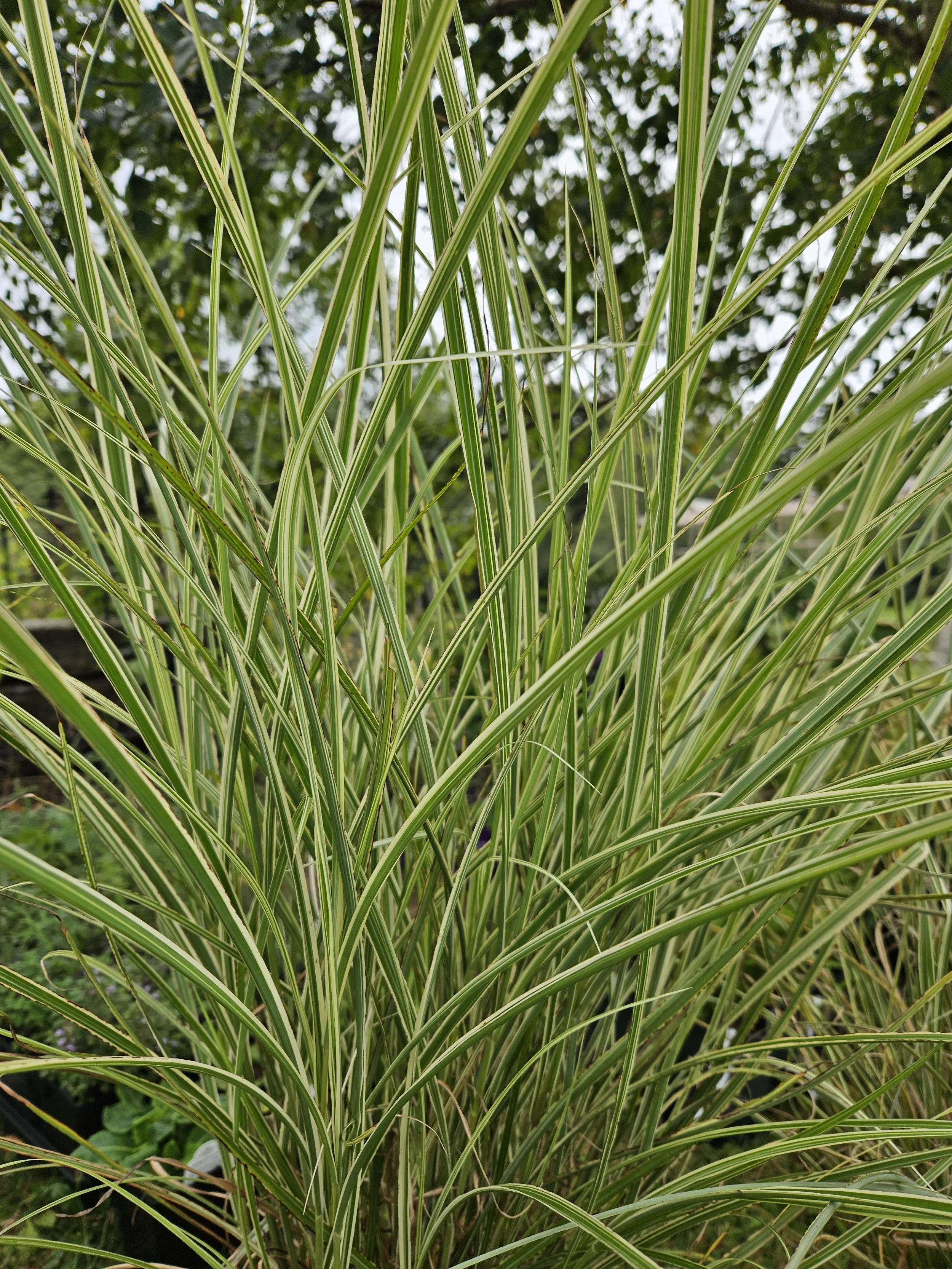
Variegated Japanese Silver Grass (Miscanthus sinensis 'Variegatus')
A Tall, Gracefully Arching Ornamental Grass with Creamy White Variegation and Shimmering Fall Plumes