
Hot Lips Turtlehead (Chelone lyonii 'Hot Lips')
A Moisture-Loving Native Perennial with Deep Pink Snapdragon-Like Flowers for Late-Summer Shade Gardens
Plant Overview
Common Name: Hot Lips Turtlehead
Botanical Name:Chelone lyonii 'Hot Lips'
Plant Type: Herbaceous Perennial
Hardiness Zones: USDA Zones 3–8
Native Heritage: Cultivar of a North American native species
Hot Lips Turtlehead is a vigorous, moisture-loving perennial prized for its deep pink, snapdragon-like flowers that appear from late summer into fall. Blooming at a time when many woodland and shade perennials are beginning to fade, this cultivar brings fresh color to moist borders, rain gardens, stream edges, and other areas with consistently damp soil.
The upright flower stems rise above attractive green foliage, creating a strong vertical accent without overwhelming neighboring plants. Its distinctive blossoms resemble the head of a turtle, which gives the genus its common name.
Growing approximately two feet tall and two feet wide, Hot Lips is especially valuable for shaded or partially shaded gardens where drainage is poor and moisture remains consistent.
Why We Grow It at 19 Birch Lane
At 19 Birch Lane, Hot Lips Turtlehead represents exactly the kind of perennial that makes a botanical garden both beautiful and educational.
It demonstrates that wet or poorly drained areas do not need to be treated as landscape problems. Instead, the right plants can transform those conditions into some of the most ecologically interesting and visually rewarding parts of a garden.
Its late-season pink flowers extend the bloom calendar into fall, while its North American native heritage adds value to woodland, pollinator, and water-oriented collections.
Hot Lips also gives us an opportunity to show visitors how plants can be selected according to natural habitat rather than forcing every garden bed into the same growing conditions.
Quick Facts
Botanical Name:Chelone lyonii 'Hot Lips'
Common Name: Hot Lips Turtlehead
Plant Type: Herbaceous Perennial
USDA Hardiness Zones: 3–8
Height: Approximately 24 inches in bloom
Spread: Approximately 24 inches
Growth Habit: Upright, Slowly Spreading
Growth Rate: Fast
Bloom Time: Late Summer through Fall
Flower Color: Deep Pink
Foliage Color: Green
Sun Exposure: Part Shade to Full Shade
Water Requirements: Moist to Wet
Maintenance: Low to Moderate
Pollinator Friendly: Yes
Cut Flower: Yes
Wet-Soil Tolerant: Excellent
Native Heritage: North American
Growing Conditions
Light Requirements
Hot Lips Turtlehead performs well in:
Partial Shade
Filtered Shade
Woodland Light
Full Shade in warmer conditions
In cooler summer climates, plants may tolerate brighter conditions if the soil remains consistently moist.
For the strongest growth and best flowering, avoid combining deep shade with dry soil.
Soil Requirements
Hot Lips thrives in soil that is:
Moist
Rich in organic matter
Enriched
Consistently damp
Suitable for wet garden conditions
It is especially useful in locations where traditional garden perennials struggle because the soil remains moist for long periods.
Adding compost or leaf mold can help recreate the rich soils associated with woodland edges and wetland habitats.
Water Requirements
Hot Lips Turtlehead is a moisture-loving perennial.
Best Conditions
Consistently moist soil
Wet garden areas
Pond margins
Streamside plantings
Rain gardens
Areas with poor drainage
Unlike drought-tolerant perennials, Turtlehead should not be allowed to dry out repeatedly.
Mulching the soil surface helps conserve moisture during summer.
Flower Characteristics
Hot Lips Turtlehead is prized for its cheerful late-season floral display.
Flower Features
Deep pink flowers
Snapdragon-like form
Turtlehead-shaped blossoms
Upright flower spikes
Showy late-season display
Excellent cut flowers
Attractive to pollinators
The unusual flowers provide both ornamental interest and an excellent conversation point for visitors exploring the gardens.
Foliage Characteristics
The foliage forms an attractive green backdrop beneath the flowers.
Foliage Features
Rich green leaves
Dense growth
Upright stems
Strong summer texture
Excellent background for pink flowers
Slowly expanding clumps
The foliage helps Hot Lips function as a useful middle-of-the-border plant even before flowering begins.
Pollinator & Wildlife Benefits
Hot Lips Turtlehead provides valuable late-season flowers when fewer perennials remain in bloom.
Attracts
Native Pollinators
Bees
Beneficial Insects
Late-summer and fall flowers help extend the availability of floral resources within the garden.
Native Plant Heritage
Chelone lyonii is native to wetland habitats of the southern Appalachian region, including portions of Virginia, North Carolina, and Georgia.
Turtleheads naturally grow in moist environments, helping explain their excellent performance around:
Wetlands
Bog Gardens
Stream Edges
Water Gardens
Moist Woodland Areas
The species name honors early American botanist John Lyon.
The name Chelone comes from a Greek word referring to a turtle, inspired by the distinctive shape of the flower.
Garden Uses
Hot Lips Turtlehead is particularly valuable for moist and shaded landscapes.
Recommended Uses
Woodland Gardens
Shade Gardens
Rain Gardens
Bog Gardens
Pond Edges
Stream Banks
Water Gardens
Native Plant Gardens
Pollinator Gardens
Cottage Gardens
Perennial Borders
Foundation Plantings
Naturalized Gardens
Cut Flower Gardens
Botanical Collections
Its ability to thrive in wet soil makes it an outstanding problem-solving perennial.
Companion Plants
At 19 Birch Lane, Hot Lips Turtlehead can be combined with moisture-loving plants that appreciate similar growing conditions.
Recommended Companion Plants
Bee Balm (Monarda)
Japanese Water Iris (Iris ensata)
Corkscrew Rush (Juncus effusus)
Dappled Willow (Salix integra)
Spiderwort (Tradescantia)
Ligularia
Astilbe
Ferns
Joe Pye Weed
Cardinal Flower
Siberian Iris
Hostas
Japanese Painted Fern
Whenever matching Plant Finder pages are available, these plant names should be internally linked to their individual listings.
Care & Maintenance
Hot Lips Turtlehead is easy to maintain when given consistent moisture.
Planting Tips
Select a moist or naturally damp location.
Enrich the planting area with organic matter.
Avoid dry, sandy sites unless irrigation is available.
Water thoroughly after planting.
Mulch around the root zone to conserve moisture.
Allow sufficient space for the clump to expand gradually.
Pinching for Compact Growth
Stems may be pinched in spring to create:
Shorter plants
Fuller growth
More branching
Denser flower displays
This technique can be especially useful when Hot Lips is planted near the front or middle of a perennial border.
Dividing
Hot Lips spreads slowly through underground rhizomes.
Mature clumps may be divided approximately every:
2–3 years
Dividing can:
Maintain plant vigor
Control spread
Create additional plants
Prevent overcrowding
Ongoing Maintenance
Keep soil consistently moist.
Apply organic mulch annually.
Pinch stems in spring if shorter plants are desired.
Remove spent flower stems if a tidier appearance is preferred.
Divide mature clumps periodically.
Cut dormant stems back after the growing season or in early spring.
Landscape Design Ideas
Hot Lips Turtlehead is an excellent plant for turning wet garden conditions into a design feature.
Use it:
In groups along a shaded pathway
At the middle of a moist perennial border
Around a pond
Beside a stream
In a rain garden
Near downspout drainage areas
In woodland clearings
Among ferns and hostas
In naturalistic wetland plantings
As part of a North American native collection
For greater visual impact, plant Hot Lips in irregular groups rather than isolated single specimens.
Its upright stems create structure while the pink flowers provide a strong color contrast against broad green foliage.
Why Gardeners Love Hot Lips Turtlehead
✔ Deep pink late-season flowers
✔ Thrives in moist and wet soils
✔ Excellent for shade gardens
✔ North American native heritage
✔ Valuable pollinator plant
✔ Fast growing
✔ Strong upright habit
✔ Excellent cut flower
✔ Useful around ponds and streams
✔ Slowly spreads into attractive clumps
✔ Excellent problem solver for poorly drained sites
✔ Extends garden color into fall
Plant Finder Details
Botanical Name:Chelone lyonii 'Hot Lips'
Common Name: Hot Lips Turtlehead
Plant Type: Herbaceous Perennial
Native Heritage: North American
USDA Hardiness Zones: 3–8
Height: Approximately 24 inches
Spread: Approximately 24 inches
Growth Rate: Fast
Growth Habit: Upright, Slowly Spreading
Bloom Time: Late Summer through Fall
Flower Color: Pink
Flower Form: Snapdragon-Like, Turtlehead-Shaped
Foliage Color: Green
Sun Exposure: Part Shade to Full Shade
Water Requirements: Moist to Wet
Soil Requirements: Enriched, Moist Soil
Maintenance: Low to Moderate
Pollinator Friendly: Yes
Wet Soil Tolerance: Excellent
Cut Flower: Yes
Naturalizing: Slowly by Rhizomes
Landscape Uses: Borders, Ground Cover, Rain Gardens, Wet Gardens, Woodland Gardens
📍 Where to Find This Plant at 19 Birch Lane
Hot Lips Turtlehead is ideally suited to the moist and shaded portions of the gardens at 19 Birch Lane.
Potential collection areas include:
Woodland Garden
Rain Garden
Pond Garden
Streamside Plantings
Native Plant Garden
Moist Shade Border
Once its exact permanent garden location is established, this section should be updated with that garden name so visitors can use the Plant Finder as a guide to locate the living specimen.
Connecting individual plant pages to their physical garden locations helps transform the 19 Birch Lane Plant Finder into both an online botanical database and an interactive visitor resource.
🌸 Seasonal Interest Calendar
🌱 Spring
Fresh green shoots emerge and quickly develop into dense upright clumps. Spring is also the ideal time to pinch stems if a shorter, fuller plant is desired.
☀️ Summer
Lush green foliage fills the middle layer of moist perennial borders. Flower buds gradually develop toward the ends of the stems as summer progresses.
🌺 Late Summer
Deep pink turtlehead-shaped flowers begin opening on upright stems, providing fresh color at a point in the season when many shade perennials have finished blooming.
🍂 Fall
Flowering continues into fall, extending the garden's late-season display and providing resources for visiting pollinators.
❄️ Winter
The herbaceous stems die back after freezing temperatures. Dormant crowns remain below ground until growth resumes the following spring.
🎓 Garden Design Tips from 19 Birch Lane
At 19 Birch Lane, we recommend treating Hot Lips Turtlehead as both a flowering perennial and a practical solution for naturally wet areas.
Rather than trying to drain every damp portion of a landscape, identify places where moisture naturally collects and create a planting community around plants that thrive under those conditions.
Hot Lips works beautifully in the middle of a moist border where its upright stems can rise behind lower-growing plants while remaining in front of taller shrubs or large perennials.
For a layered woodland composition, combine its pink flowers with:
Fine-textured ferns
Burgundy Ligularia foliage
Astilbe
Japanese Water Iris
Bee Balm
Dark-leaved shrubs
Planting three, five, or more plants in an irregular grouping can create a more natural and dramatic effect than isolated specimens.
Around ponds and streams, allow the clumps to gradually expand and intermingle with other moisture-loving plants. The result feels less like a traditional flower bed and more like a naturally occurring wetland garden.
🌿 Plants That Grow Well with Hot Lips Turtlehead at 19 Birch Lane
Recommended companions include:
Bee Balm
Japanese Water Iris
Corkscrew Rush
Dappled Willow
Spiderwort
Ligularia
Astilbe
Hostas
Japanese Painted Fern
Joe Pye Weed
Cardinal Flower
Siberian Iris
Other Ferns
Whenever possible, link these companion plants directly to their corresponding 19 Birch Lane Plant Finder listings.
This creates a connected network between plants with similar cultural requirements and allows visitors to move naturally from one plant profile to another.
Frequently Asked Questions
What is Hot Lips Turtlehead?
Hot Lips Turtlehead is a cultivar of Chelone lyonii, a North American native herbaceous perennial known for its distinctive pink flowers and preference for moist soil.
Why is it called Turtlehead?
The unusual flowers resemble a turtle's head, inspiring the common name.
When does Hot Lips Turtlehead bloom?
It flowers from late summer into fall.
How tall does Hot Lips Turtlehead grow?
Plants typically reach approximately two feet tall when flowering and spread to around two feet wide.
Does Turtlehead grow in shade?
Yes. Hot Lips performs well in partial shade and can tolerate full shade, especially in warmer summer climates.
Does it need wet soil?
It prefers consistently moist soil and is an excellent choice for damp or poorly drained sites.
Can it grow near a pond?
Yes. Pond edges, bog gardens, stream margins, and other consistently moist locations are excellent sites.
Does Hot Lips attract pollinators?
Yes. Its late-season flowers attract pollinators and provide floral resources when fewer plants remain in bloom.
Is Hot Lips Turtlehead native?
The cultivar is derived from Chelone lyonii, a North American native species associated with moist habitats.
Does Turtlehead spread?
Yes, but relatively slowly. It expands by underground rhizomes and can gradually form attractive colonies.
Should Turtlehead be divided?
Mature clumps may be divided every two to three years to maintain vigor or control their spread.
Can I keep Hot Lips Turtlehead shorter?
Yes. Pinching stems in spring encourages shorter, fuller, more branched plants.
Is it a good cut flower?
Yes. Its distinctive pink blooms can be used in fresh floral arrangements.
Botanical Garden Notes
Hot Lips Turtlehead demonstrates how native wetland plants can transition successfully into cultivated gardens without losing the characteristics that make them ecologically valuable.
Its natural preference for moist soils makes it particularly useful in garden areas that might otherwise be difficult to plant successfully.
The distinctive turtle-shaped flowers also provide an opportunity to interpret botanical naming for visitors. The genus name Chelone references the flower's resemblance to a turtle, while lyonii honors early American botanist John Lyon.
Within the developing collections at 19 Birch Lane, Hot Lips can help tell the larger story of native wetland ecosystems, plant adaptation, pollinator relationships, and environmentally responsive garden design.
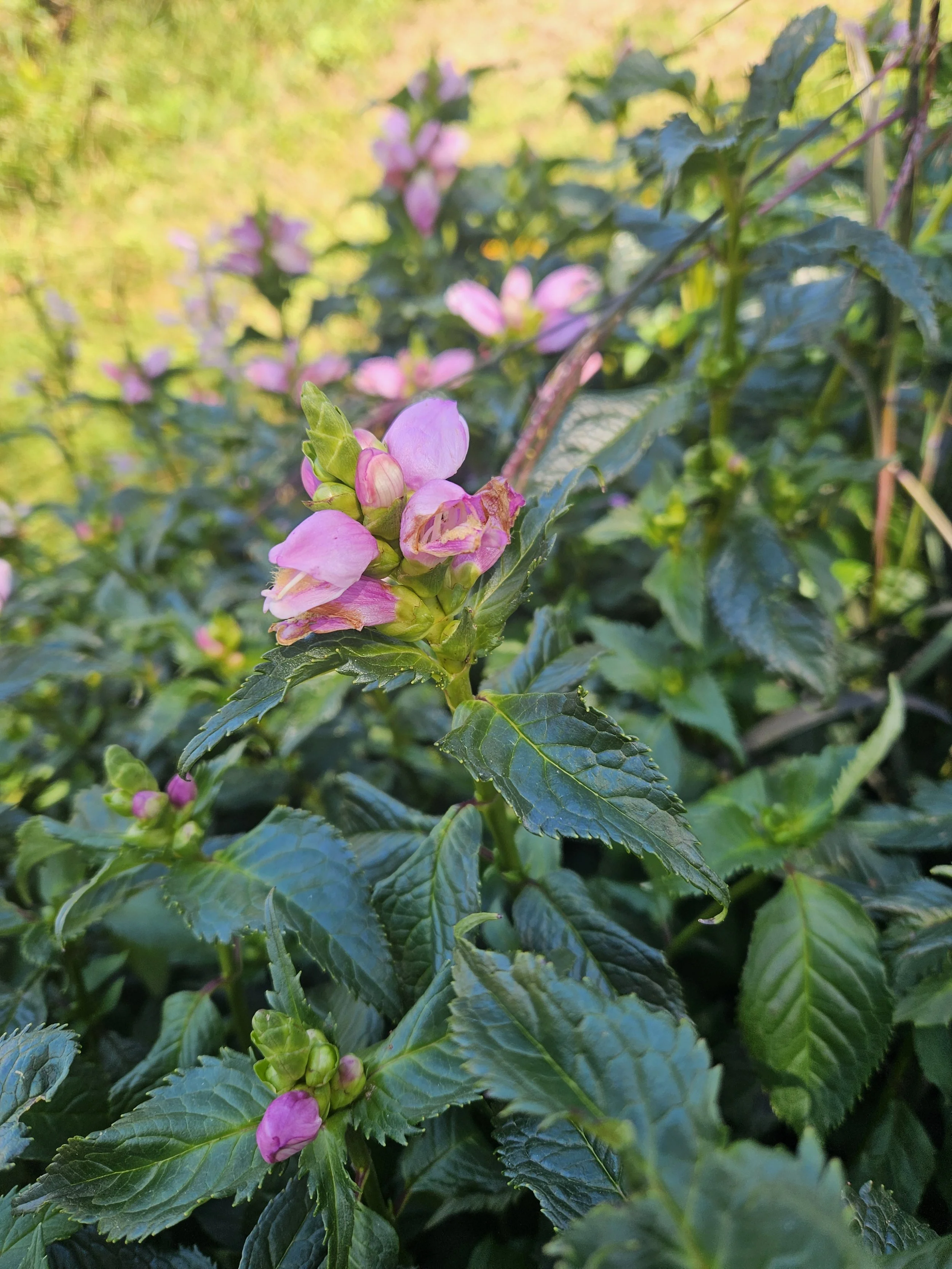
Hot Lips Turtlehead (Chelone lyonii 'Hot Lips')
A Moisture-Loving Native Perennial with Deep Pink Snapdragon-Like Flowers for Late-Summer Shade Gardens