
Willow-Leaved Sunflower (Helianthus salicifolius)
A Tall Native Prairie Perennial with Wispy Willow-Like Foliage, Golden Fall Flowers & Outstanding Wildlife Value
Plant Overview
Common Name: Willow-Leaved Sunflower
Botanical Name: Helianthus salicifolius
Plant Type: Herbaceous Perennial
Family: Asteraceae
Native Environment: Prairie, Savanna, Open Grassland
Native Range: Central North America
Hardiness Zones: Confirm for local conditions before planting
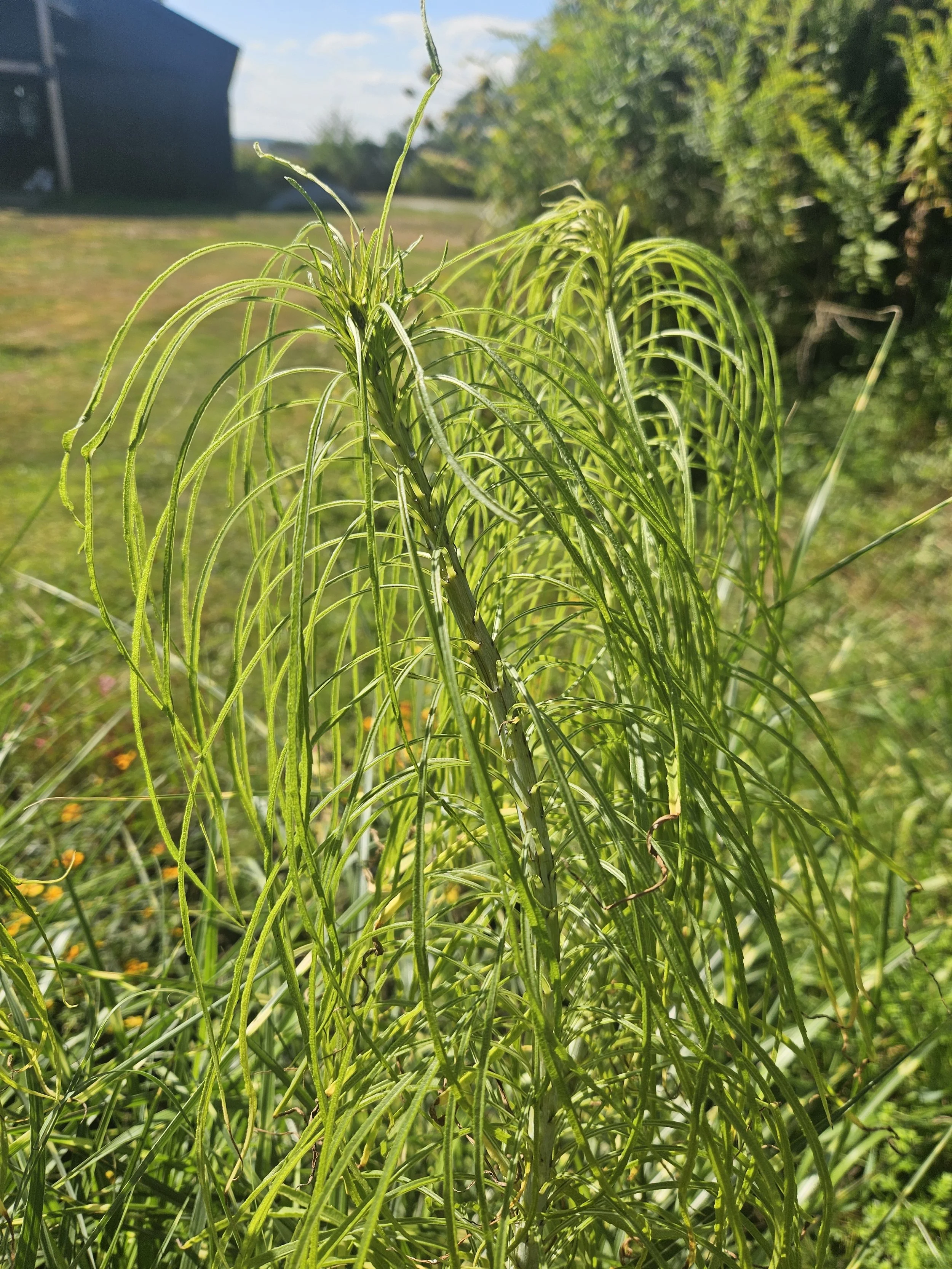
Willow-Leaved Sunflower is a distinctive North American native perennial prized for its exceptionally narrow, willow-like foliage and clusters of golden-yellow flowers that appear late in the growing season.
Unlike many sunflowers that are grown primarily for their flowers, Helianthus salicifolius provides ornamental value long before bloom. Its slender, pale green leaves create a soft, airy texture from spring through summer, giving the plant a graceful movement in the landscape.
By late summer and early fall, clusters of approximately two-inch yellow sunflower-like blooms open above the foliage, each surrounding a dark brown center. The flowers provide valuable late-season color at a time when many other perennials are beginning to decline.
Growing four to six feet tall, Willow-Leaved Sunflower is especially effective in prairie gardens, native plant collections, pollinator gardens, perennial borders, and naturalized landscapes.
Why We Grow It at 19 Birch Lane
At 19 Birch Lane, Willow-Leaved Sunflower represents an important group of plants within our developing botanical collections: North American prairie perennials that provide both strong ornamental value and meaningful ecological benefits.
Its unusually narrow foliage introduces movement and fine texture into sunny plantings, while its late-season golden flowers extend the garden's bloom season well into autumn.
This is also a plant that helps demonstrate an important garden-design principle: flowers do not have to be the only reason to grow a perennial. The graceful foliage provides months of visual interest before the first flower opens.
For visitors interested in native landscapes, pollinator gardening, prairie ecosystems, and wildlife-friendly horticulture, Willow-Leaved Sunflower is an excellent example of how native plants can combine ecological function with sophisticated garden design.
Quick Facts
Botanical Name: Helianthus salicifolius
Common Name: Willow-Leaved Sunflower
Plant Type: Herbaceous Perennial
Family: Asteraceae
Native Environment: Prairie
Height: 48–72 inches
Spread: 24–36 inches
Growth Habit: Upright, Colony Forming
Bloom Time: Late Summer to Early Fall
Flower Color: Medium Golden Yellow
Flower Center: Dark Brown
Flower Size: Approximately 2 inches
Foliage Color: Pale to Medium Green
Foliage Texture: Very Fine, Narrow, Willow-Like
Sun Exposure: Full Sun
Water Requirements: Dry to Moderate
Maintenance: Low to Moderate
Native Plant: Yes
Wildlife Value: Excellent
Bird Value: Seeds Provide Food
Cut Flower: Yes
Growing Conditions
Light Requirements
Willow-Leaved Sunflower performs best in:
Full Sun
Open Prairie Conditions
Sunny Meadow Gardens
Locations Receiving 6+ Hours of Direct Sunlight
Full sun encourages:
Stronger stems
Denser growth
More abundant flowers
Better overall plant form
Plants grown in excessive shade may become tall, loose, and prone to leaning.
Soil Requirements
Willow-Leaved Sunflower is adaptable but performs best in soil that is:
Average in fertility
Well drained
Dry to moderately moist
Loamy
Sandy or gravelly
Not excessively rich
One of the most important cultural recommendations for this species is:
Do not over-fertilize.
Rich soil and excessive nitrogen can cause plants to become overly tall, soft, and gangly.
Lean to moderately fertile soil generally produces stronger stems and a more natural prairie-like habit.
Water Requirements
Once established, Willow-Leaved Sunflower is relatively adaptable to dry conditions.
During Establishment
Water regularly during the first growing season.
Allow roots to develop deeply.
Avoid constantly saturated soil.
Once Established
Average rainfall is often sufficient.
Supplemental water may be useful during prolonged drought.
Avoid excessive irrigation.
Allow soil to dry somewhat between watering.
Its ability to tolerate dry to moderate soil moisture makes it useful in lower-maintenance native and prairie plantings.
Flower Characteristics
Willow-Leaved Sunflower flowers relatively late in the growing season, helping extend color into autumn.
Flower Features
Golden-yellow petals
Dark brown centers
Approximately 2 inches wide
Produced in clusters
Held on pale green to whitish-green stems
Excellent late-season garden color
Useful as fresh cut flowers
Its late flowering period is particularly valuable in pollinator gardens because it provides floral resources when many earlier perennials have finished blooming.
Foliage Characteristics
The foliage is perhaps the most distinctive ornamental feature of the species.
Foliage Features
Extremely narrow leaves
Long, drooping form
Willow-like appearance
Pale green coloration
Fine, wispy texture
Graceful movement in wind
Attractive throughout the growing season
The foliage creates a striking contrast with plants that have large, rounded, or coarse-textured leaves.
Even before flowering, a mature clump can function as a strong textural feature within the garden.
Pollinator & Wildlife Benefits
As a native sunflower, Helianthus salicifolius provides valuable habitat and food resources.
Supports
Native Bees
Bumblebees
Butterflies
Beneficial Insects
Seed-Eating Birds
The flowers provide pollen and nectar late in the growing season, while mature seed heads may provide food for birds.
Leaving some stems and seed heads standing into fall can increase wildlife value.
Bird Value
One of the ecological strengths of native sunflowers is their ability to provide natural seed resources.
When seed heads are allowed to mature, they may provide food for:
Finches
Sparrows
Other Seed-Eating Songbirds
For a more wildlife-friendly garden, consider leaving some seed heads standing rather than removing every spent flower.
Garden Uses
Willow-Leaved Sunflower works especially well in larger sunny landscapes where its height and spreading habit can be appreciated.
Recommended Uses
Native Plant Gardens
Prairie Gardens
Pollinator Gardens
Wildlife Gardens
Meadow Plantings
Perennial Borders
Cottage Gardens
Naturalized Landscapes
Cut Flower Gardens
Stream Banks
Pond Edges
Rain-Friendly Landscapes
Botanical Collections
Mass Plantings
Because plants may spread gradually into colonies, give them adequate room to develop.
Companion Plants
At 19 Birch Lane, Willow-Leaved Sunflower can be paired with other prairie and meadow plants that complement its height, foliage texture, and late bloom season.
Recommended Companion Plants
Coneflower
Black-Eyed Susan
Joe Pye Weed
Bee Balm
Little Bluestem
Switchgrass
Prairie Dropseed
Goldenrod
Asters
Yarrow
Blue Flax
False Sunflower
Russian Sage
Catmint
Sedum 'Autumn Joy'
The golden-yellow flowers work particularly well with:
Blue
Lavender
Purple
Burgundy
Silver
Bronze foliage
Whenever companion Plant Finder listings are available, link each plant directly to its individual 19 Birch Lane page.
Care & Maintenance
Willow-Leaved Sunflower is generally easy to grow when planted in full sun and average soil.
Planting Tips
Choose an open sunny location.
Avoid heavily fertilized soil.
Allow adequate room for mature spread.
Water thoroughly during establishment.
Avoid crowding neighboring plants.
Consider its mature height when placing it within a border.
Controlling Height
Because this species can reach four to six feet tall, plants may be pinched to create shorter, fuller growth.
Recommended Technique
Pinch plants:
Once in late spring
Again in early summer if needed
This encourages:
Additional branching
Fuller plants
More compact growth
Improved resistance to flopping
Do not pinch too late in the season, as this may delay flowering.
Ongoing Maintenance
Avoid heavy fertilizer.
Water during extended drought.
Divide or thin colonies if they spread beyond their intended area.
Remove old stems in late winter or early spring.
Leave some seed heads standing if wildlife value is desired.
Spreading Habit
Willow-Leaved Sunflower can spread over time and form dense colonies.
This can be a major advantage in:
Prairie gardens
Naturalized landscapes
Meadow plantings
Large native gardens
In smaller formal borders, periodic thinning may be required to keep the colony within bounds.
Choose the planting location with its long-term spread in mind.
Landscape Design Ideas
Willow-Leaved Sunflower is particularly valuable for introducing fine texture and movement into larger perennial plantings.
Use it:
Toward the middle or back of a sunny border
In repeated groups within a prairie planting
Beside ornamental grasses
Along pond or stream banks
Behind lower flowering perennials
As part of a late-season pollinator garden
Along meadow pathways
Within a large native plant collection
As an airy backdrop to heavier foliage
Its wispy foliage works beautifully when contrasted against plants with bold leaves or dense flower heads.
For a naturalistic planting, combine it with ornamental grasses and other North American prairie species rather than placing it as an isolated specimen.
Why Gardeners Love Willow-Leaved Sunflower
✔ Native North American perennial
✔ Distinctive willow-like foliage
✔ Excellent prairie garden plant
✔ Late summer and fall flowers
✔ Valuable for pollinators
✔ Provides food for birds
✔ Excellent fresh cut flower
✔ Tolerates dry conditions
✔ Long season of foliage interest
✔ Excellent movement and texture
✔ Naturalizes into colonies
✔ Strong choice for native landscapes
Plant Finder Details
Botanical Name: Helianthus salicifolius
Common Name: Willow-Leaved Sunflower
Plant Type: Herbaceous Perennial
Family: Asteraceae
Native Environment: Prairie
Native Plant: Yes
Height: 48–72 inches
Spread: 24–36 inches
Bloom Time: Late Summer to Early Fall
Flower Color: Medium Yellow
Flower Center: Dark Brown
Flower Size: Approximately 2 inches
Foliage Color: Pale Green
Foliage Texture: Narrow, Willow-Like, Wispy
Growth Habit: Upright, Spreading, Colony Forming
Sun Exposure: Full Sun
Water Requirements: Dry to Moderate
Soil Fertility: Average to Lean
Maintenance: Low to Moderate
Pollinator Friendly: Yes
Wildlife Value: Yes
Bird Food: Yes
Cut Flower: Yes
Naturalizing: Yes
📍 Where to Find This Plant at 19 Birch Lane
Willow-Leaved Sunflower is especially well suited to the sunny, naturalistic portions of the developing gardens at 19 Birch Lane.
Ideal collection areas include:
Native Plant Garden
Prairie Garden
Pollinator Garden
Meadow Garden
Pond or Stream-Side Plantings
Sunny Perennial Border
Once its permanent garden location is established, this section should identify the exact garden where visitors can see the plant growing.
Connecting each online Plant Finder listing to a specific physical location will help transform the Plant Finder into a digital guide to the living collections at 19 Birch Lane.
🌸 Seasonal Interest Calendar
🌱 Spring
Fresh stems emerge from the ground and begin producing distinctive narrow foliage. The graceful leaves quickly create a soft, airy texture within sunny perennial borders.
☀️ Summer
Plants develop into tall, upright clumps with finely textured foliage. Even before flowering, the narrow willow-like leaves provide strong ornamental interest and movement.
🌻 Late Summer
Clusters of golden-yellow sunflower blooms begin opening above the foliage, creating bright seasonal color and attracting native pollinators.
🍂 Fall
Flowering may continue into early fall. Mature seed heads provide food for birds while the dried stems contribute structure within naturalistic plantings.
❄️ Winter
Plants become dormant. Leaving some stems standing through winter can provide wildlife habitat and structural interest. Cut remaining stems to the ground in late winter or early spring before new growth begins.
🎓 Garden Design Tips from 19 Birch Lane
At 19 Birch Lane, we recommend using Willow-Leaved Sunflower primarily for its extraordinary foliage texture and movement rather than treating it simply as another yellow flowering perennial.
Its narrow leaves create a soft visual veil that works exceptionally well behind stronger architectural plants or among ornamental grasses.
Position it toward the middle or back of a large perennial border where its four- to six-foot height can create vertical structure without appearing heavy.
For a natural prairie-inspired composition, combine Willow-Leaved Sunflower with Little Bluestem, Switchgrass, Coneflowers, Asters, Goldenrod, False Sunflower, and Joe Pye Weed.
To keep plants shorter and fuller near pathways or formal borders, pinch the stems in late spring or early summer. In larger meadow settings, allow the plants to grow naturally and spread into informal colonies.
One especially effective design combination is pairing its golden fall flowers with purple asters and bronze ornamental grasses. The contrasting colors and textures create a layered late-season display that feels both natural and intentional.
🌿 Plants That Grow Well with Willow-Leaved Sunflower at 19 Birch Lane
Recommended companions include:
Coneflower
Black-Eyed Susan
Joe Pye Weed
Bee Balm
Little Bluestem
Switchgrass
Prairie Dropseed
Goldenrod
Asters
Yarrow
Sedum 'Autumn Joy'
Russian Sage
Catmint
Whenever possible, these companion plants should link directly to their corresponding 19 Birch Lane Plant Finder pages.
This creates a connected network of related plant information that helps visitors explore the gardens while strengthening SEO, topical authority, and AI-search visibility.
Frequently Asked Questions
Is Willow-Leaved Sunflower native?
Yes. Helianthus salicifolius is a North American native sunflower associated primarily with prairie and open grassland habitats.
How tall does Willow-Leaved Sunflower grow?
Plants typically reach approximately four to six feet tall and two to three feet wide.
When does it bloom?
It generally blooms in late summer into early fall.
Does it need full sun?
Yes. Full sun produces the strongest growth, best form, and most abundant flowering.
Is it drought tolerant?
It tolerates relatively dry conditions once established, although occasional water during prolonged drought can support better growth.
Does it spread?
Yes. It can gradually spread and form dense colonies, making it excellent for naturalized and prairie-style gardens.
Can I keep it shorter?
Yes. Pinching stems once or twice in late spring and early summer can create shorter, fuller plants.
Should Willow-Leaved Sunflower be fertilized?
Generally no. Rich soil and excessive fertilizer can produce tall, weak, gangly plants. Average or relatively lean soil is preferable.
Does it attract pollinators?
Yes. The late-season flowers attract bees, butterflies, and other beneficial insects.
Is it good for birds?
Yes. Mature seeds can provide food for seed-eating birds.
Can it be used as a cut flower?
Yes. The yellow flowers make excellent fresh cut flowers.
Is the foliage ornamental?
Very much so. Its extremely narrow, willow-like leaves provide graceful texture from spring until frost.
Is it suitable for small gardens?
It can be, but its height and colony-forming habit require careful placement. Smaller gardens may require occasional thinning.
Botanical Garden Notes
Willow-Leaved Sunflower demonstrates the extraordinary diversity found within the sunflower genus.
Although its flowers resemble smaller versions of familiar sunflowers, its foliage is dramatically different. The long, narrow leaves create an almost grass-like texture that allows the plant to blend naturally with prairie grasses and meadow vegetation.
Within the developing botanical collections at 19 Birch Lane, Helianthus salicifolius can help interpret the ecology and design value of North American prairie plants.
It also illustrates how native species can contribute multiple layers of garden value: ornamental foliage, late-season flowers, pollinator resources, bird food, cut flowers, and naturalistic landscape structure.
Willow-Leaved Sunflower (Helianthus salicifolius)
A Tall Native Prairie Perennial with Wispy Willow-Like Foliage, Golden Fall Flowers & Outstanding Wildlife Value