
Teller’s Blue Lacecap HydrangeaHydrangea macrophylla ‘Blaumeise’ (Teller Blue)
An elegant bigleaf hydrangea with striking blue lacecap flowers, lush green foliage, and timeless appeal in sheltered Maine gardens.
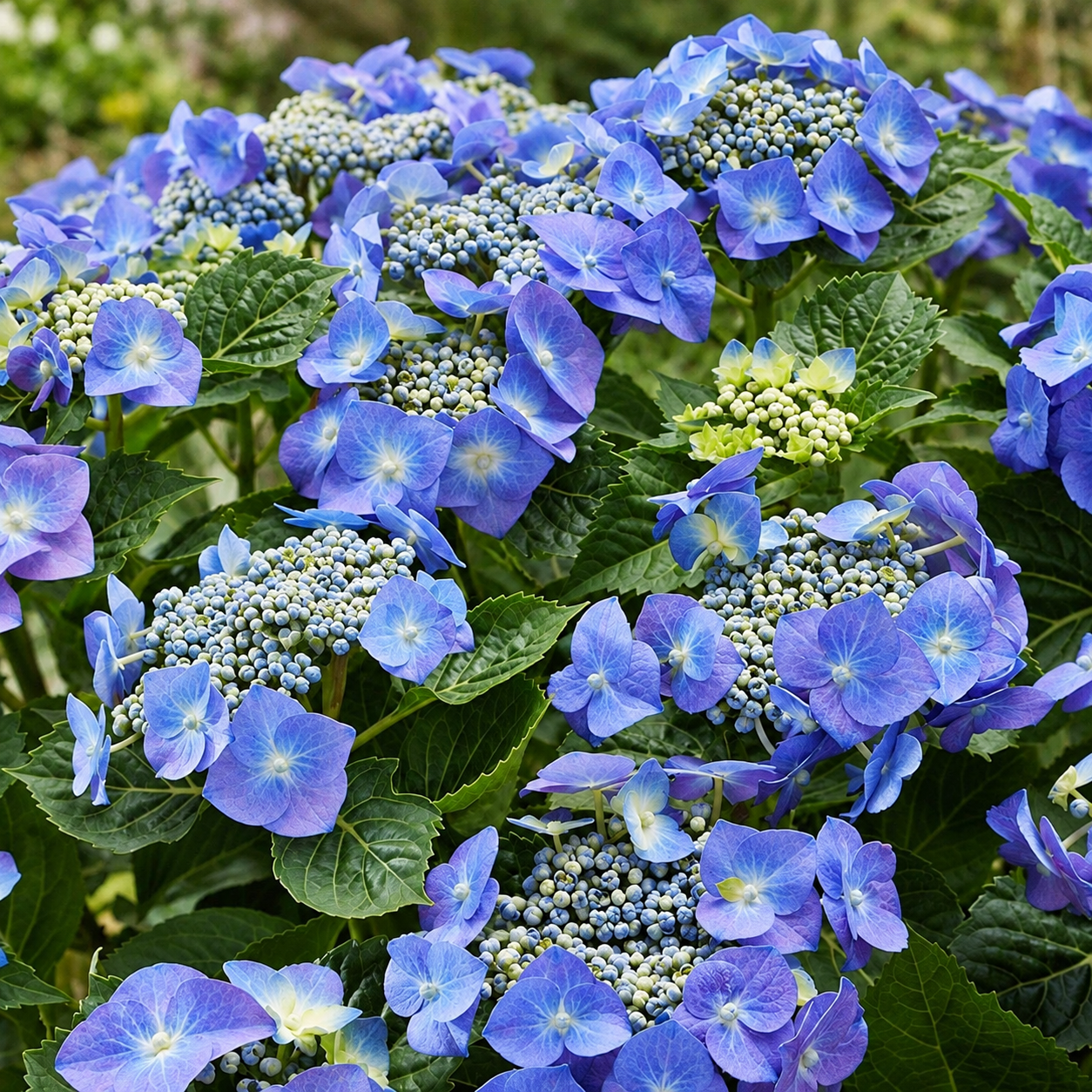
Teller’s Blue Lacecap HydrangeaHydrangea macrophylla ‘Blaumeise’ (Teller Blue)
An elegant bigleaf hydrangea with striking blue lacecap flowers, lush green foliage, and timeless appeal in sheltered Maine gardens.
Plant Overview
Common Name: Teller’s Blue Lacecap Hydrangea
Botanical Name: Hydrangea macrophylla ‘Blaumeise’
Common Trade Names: Teller Blue, Teller’s Blue, Teller Blau, Blue Tit
Family: Hydrangeaceae
Plant Type: Deciduous Flowering Shrub
USDA Hardiness Zones: Generally 6–9
Primary Season of Interest: Summer
Flower Color: Blue in appropriately acidic soil; lavender to pink in less acidic conditions
Teller’s Blue is a beautiful lacecap hydrangea known for its broad, flattened flower heads, rich blue coloration, and handsome green foliage.
Unlike the familiar rounded mophead hydrangeas, Teller’s Blue produces a more delicate flower arrangement. Numerous small fertile flowers form the center of each cluster, surrounded by a ring of larger, showy florets.
The result is a flower that appears almost lace-like, combining intricate detail with the bold color traditionally associated with blue hydrangeas.
Teller’s Blue belongs to the bigleaf hydrangea group, Hydrangea macrophylla, and is closely associated with the cultivar ‘Blaumeise’.
This selection is valued for its vigorous growth, attractive summer flowers, and usefulness in partially shaded landscapes.
In Maine, its success depends on understanding an especially important characteristic: Teller’s Blue develops its flower buds primarily on the previous year's growth.
Protecting those buds through winter is the key to enjoying its summer display.
Why Teller’s Blue Belongs in the 19 Birch Lane Plant Finder
As we continue developing the botanical gardens at 19 Birch Lane, hydrangeas remain an important part of our approach to creating landscapes with strong seasonal interest.
Few shrubs offer the same combination of large flowers, substantial foliage, and summer presence.
Teller’s Blue adds another important dimension to the collection: the lacecap flower form.
While mophead hydrangeas create dense, rounded clusters, lacecap hydrangeas display their smaller fertile flowers more openly.
That difference is valuable both visually and educationally.
Teller’s Blue provides opportunities to explore:
Lacecap versus mophead hydrangeas
How soil chemistry influences flower color
Flowering on old wood versus new wood
Winter protection in northern gardens
Fertile and sterile flower structures
Hydrangea pruning techniques
The importance of garden microclimates
Designing with blue flowers
Creating summer interest in partial shade
One of the lessons we continue learning at 19 Birch Lane is that a plant's performance depends on more than its published hardiness zone.
Sunlight, soil, moisture, winter exposure, and placement within the landscape all contribute to its success.
Teller’s Blue is an excellent example of why understanding a plant's growing requirements is just as important as appreciating its flowers.
Quick Facts
Common Name: Teller’s Blue Lacecap Hydrangea
Botanical Name: Hydrangea macrophylla ‘Blaumeise’
Alternative Names: Teller Blue, Teller Blau, Blue Tit
Family: Hydrangeaceae
Plant Type: Deciduous Flowering Shrub
Species Native Range: Japan
Cultivar Group: Teller Series
USDA Hardiness Zones: Generally 6–9
Mature Height: Approximately 3–5 feet
Mature Spread: Approximately 3–5 feet
Growth Habit: Rounded, Upright, Bushy
Growth Rate: Moderate to Vigorous
Flower Color: Blue, Lavender, or Pink Depending on Soil Chemistry
Flower Type: Lacecap
Bloom Time: Summer
Foliage: Large, Glossy, Dark Green
Sun Exposure: Partial Shade Preferred
Water Requirements: Moderate to High
Soil: Moist, Well-Drained, Organic-Rich
Blue Flower Requirements: Acidic Soil with Available Aluminum
Blooms On: Primarily Old Wood
Maintenance: Moderate
Pollinator Value: Fertile Flowers Can Attract Visiting Insects
Cut Flowers: Yes
Dried Flowers: Yes
Woodland Edge: Excellent in Sheltered Locations
Mixed Shrub Border: Excellent
Winter Bud Protection: Important in Maine
Growing Conditions
Light Requirements
Teller’s Blue performs best in partial shade.
An ideal planting location receives morning sunlight followed by protection from intense afternoon sun.
Suitable conditions include:
Morning Sun
Afternoon Shade
Filtered Sunlight
Bright Partial Shade
Sheltered Woodland Edges
Although Teller’s Blue can tolerate more sunlight when moisture is consistently available, intense afternoon sun can cause wilting and leaf stress.
In Midcoast Maine, a location with approximately three to five hours of morning sunlight and protection from drying afternoon conditions can work well.
Avoid deep shade that significantly reduces flowering.
Soil Requirements
Teller’s Blue prefers:
Moist but Well-Drained Soil
Organic-Rich Loam
Good Soil Structure
Consistent Root-Zone Moisture
Minimal Soil Compaction
Soil chemistry is particularly important when the goal is to produce blue flowers.
Hydrangeas in this group can change flower color depending on the availability of aluminum in the soil, which is strongly influenced by soil pH.
Acidic soil generally makes aluminum more available to the plant.
This supports blue flower coloration.
Less acidic or alkaline soil may produce lavender, purple, or pink flowers.
Water Requirements
Bigleaf hydrangeas prefer consistent moisture.
Their large leaves can lose considerable water during warm weather.
Newly planted shrubs should be watered regularly until established.
During extended dry periods:
Check soil moisture.
Water deeply.
Avoid allowing the root zone to dry completely.
Maintain organic mulch.
Avoid prolonged waterlogging.
Wilting during hot afternoons can occur even when some moisture remains in the soil. Check the root zone before automatically adding more water.
Understanding the Blue Flower Color
One of the most fascinating characteristics of Teller’s Blue is its ability to change flower color.
The blue coloration is associated with aluminum availability within the plant.
Soil pH influences how readily aluminum becomes available.
In Acidic Soil
Flowers are more likely to develop:
Blue
Sky Blue
Rich Blue
Blue-Violet
In Less Acidic or Alkaline Soil
Flowers may develop:
Lavender
Purple
Pink
Pink-Blue Combinations
How to Encourage Blue Flowers
For gardeners hoping to maintain blue flowers:
Test the soil before making amendments.
Evaluate existing soil pH.
Use organic mulch to support healthy soil conditions.
Avoid unnecessary liming.
Correct soil pH only when needed.
Allow time for changes in flower color.
A moderately acidic soil pH around 5.0–5.5 often favors blue coloration when sufficient aluminum is available.
Do not apply aluminum sulfate or other soil amendments without considering soil test results and application guidance.
Excessive amendments can damage roots and create nutrient imbalances.
Flower Characteristics
Teller’s Blue produces large, flattened lacecap flower clusters.
Flower Features
Broad, Flat to Gently Domed Flower Heads
Small Fertile Flowers in the Center
Larger Showy Florets Around the Edges
Blue Color in Suitable Acidic Soil
Lavender or Pink Tones in Other Conditions
Summer Flowering
Attractive for Close-Up Viewing
Suitable for Cut Flower Arrangements
The open flower structure creates a more delicate appearance than the dense mophead form.
This makes Teller’s Blue especially attractive when viewed near garden paths, patios, and seating areas.
Lacecap Versus Mophead Hydrangeas
Hydrangeas are often divided into two familiar ornamental flower forms.
Lacecap Hydrangeas
Lacecaps have flattened flower clusters with numerous small fertile flowers and a surrounding ring of larger showy florets.
Examples include Teller’s Blue.
Mophead Hydrangeas
Mopheads produce rounded flower clusters composed predominantly of large ornamental florets.
Many familiar bigleaf hydrangeas have this form.
Why the Difference Matters
Lacecap hydrangeas often offer more accessible fertile flowers for visiting insects.
They also introduce a different texture into the landscape.
At 19 Birch Lane, comparing these flower forms can help visitors understand how horticultural selections differ within the same plant group.
Foliage Characteristics
Teller’s Blue develops large, glossy, dark green leaves.
The foliage is generally:
Broad
Ovate
Serrated Along the Edges
Rich Green
Substantial in Texture
Deciduous
The leaves create a lush appearance even before the flower buds open.
Their broad shape contrasts particularly well with ferns, ornamental grasses, and finer-textured perennials.
Cold Hardiness in Maine
Teller’s Blue is commonly listed for USDA Zones 6–9.
This places it near the colder end of its recommended range in many Midcoast Maine gardens.
However, winter survival and reliable flowering are not the same thing.
A Teller’s Blue hydrangea may survive winter and produce healthy green foliage without developing many flowers.
The reason is often winter damage to its flower buds.
Because Teller’s Blue flowers primarily on old wood, those buds must survive the winter to produce the following summer's blooms.
Recommended Maine Growing Practices
Plant in a sheltered location.
Avoid exposed winter winds.
Maintain adequate moisture before the ground freezes.
Apply organic mulch over the root zone.
Avoid heavy late-season pruning.
Allow stems and flower buds to remain intact through winter.
Protect vulnerable plants from severe winter exposure where practical.
A Note on Coastal Maine
Coastal conditions can moderate some winter temperature extremes, but strong winds and sudden temperature changes can still damage exposed flower buds.
Placement near a protected woodland edge or sheltered building can improve growing conditions.
For Maine gardeners, protecting Teller’s Blue's flower buds is often more important than protecting the roots alone.
Blooms on Old Wood
Teller’s Blue primarily flowers on stems produced during the previous growing season.
Flower buds generally develop before winter and open the following summer.
This is why pruning requires care.
Cutting the plant back heavily in fall or early spring may remove the flower buds that would otherwise produce summer blooms.
This characteristic distinguishes Teller’s Blue from smooth hydrangeas such as Haas’ Halo, which flower on new growth.
Understanding this difference can prevent one of the most common hydrangea gardening mistakes.
Pollinator & Wildlife Benefits
Teller’s Blue's lacecap flower structure includes small fertile flowers that may attract bees and other visiting insects.
Its pollinator contribution depends on flowering abundance and local insect activity.
Although it is not a native North American shrub, it can provide floral resources within a diverse ornamental garden.
For stronger ecological value, combine it with native flowering perennials and shrubs that bloom at different times.
Garden Uses
Teller’s Blue is especially effective in:
Mixed Shrub Borders
Partially Shaded Gardens
Woodland Edges
Foundation Plantings
Cottage Gardens
Hydrangea Collections
Summer Flower Gardens
Garden Entrances
Patio Borders
Informal Hedges
Botanical Collections
Cutting Gardens
Asian-Inspired Gardens
Blue-Themed Gardens
Its rounded growth habit makes it suitable as a specimen shrub or in repeated groups.
Using Teller’s Blue in a Woodland-Edge Garden
Woodland edges provide an excellent opportunity to combine flowering shrubs with shade-tolerant perennials.
Teller’s Blue can become a summer focal point surrounded by lower-growing foliage plants.
Consider:
Teller’s Blue + Hosta + Ferns + Astilbe
The large hydrangea leaves and blue flowers provide structure, while the hostas and ferns introduce contrasting textures.
Astilbe adds another flower shape and can complement the hydrangea's summer display.
Companion Plants
Recommended companions include:
Astilbe
Hellebores
Brunnera
Heuchera
Japanese Forest Grass
Woodland Phlox
Hydrangeas with Complementary Flower Forms
Shade-Tolerant Ornamental Grasses
Choose companions that appreciate similar soil moisture and light conditions.
Care & Maintenance
Teller’s Blue requires moderate maintenance, primarily because of its moisture needs and sensitivity to winter bud damage.
Important tasks include:
Maintaining Consistent Soil Moisture
Applying Organic Mulch
Protecting Flower Buds
Avoiding Unnecessary Pruning
Monitoring Winter Damage
Removing Dead or Damaged Branches
Maintaining Good Air Circulation
Monitoring for Common Hydrangea Pests and Diseases
Pruning Teller’s Blue Hydrangea
When Should Teller’s Blue Be Pruned?
If pruning is necessary, the preferred time is shortly after flowering.
This allows the plant time to develop new growth and flower buds for the following season.
How to Prune
Remove dead or damaged branches.
Thin overcrowded stems selectively.
Remove weak or poorly positioned growth.
Preserve healthy older stems whenever possible.
Avoid cutting the entire shrub back annually.
Important Maine Pruning Advice
Do not assume that a stem is dead simply because it has not leafed out early in spring.
Bigleaf hydrangeas can be slow to resume growth after cold winters.
Wait until living and dead wood can be distinguished before removing questionable stems.
Mulching
Apply approximately 2–3 inches of organic mulch around the root zone.
Suitable materials include:
Shredded Bark
Composted Leaves
Pine Needles
Fine Wood Mulch
Mulch helps conserve moisture and moderate soil temperatures.
Keep mulch away from direct contact with the stems.
Fertilizing
Teller’s Blue generally benefits more from healthy soil and consistent moisture than from heavy fertilization.
If soil testing indicates a need, apply an appropriate shrub fertilizer according to the label.
Avoid excessive nitrogen, which can encourage foliage growth at the expense of flowering.
Potential Problems
Teller’s Blue may experience:
Winter Flower Bud Damage
Leaf Spot
Powdery Mildew
Botrytis or Bud Blight
Aphids
Occasional Scale Insects
Drought Stress
Leaf Scorch
Root Problems in Waterlogged Soil
Good placement, drainage, moisture management, and air circulation help reduce many of these problems.
Plant Safety
Hydrangeas contain compounds that can be harmful if ingested.
Keep plant material away from children and pets who may eat leaves, flowers, or stems.
Landscape Design Ideas
Blue and White Garden
Teller’s Blue + White Astilbe + Variegated Hosta + Ferns
This creates a cool, calming composition suited to partial shade.
Woodland Garden
Teller’s Blue + Rhododendron + Hellebores + Brunnera
Evergreen shrubs provide structure while the hydrangea contributes summer flowers.
Asian-Inspired Garden
Teller’s Blue + Japanese Maple + Japanese Forest Grass + Ferns
The hydrangea's blue lacecap flowers contrast with the delicate foliage and graceful branching of the surrounding plants.
Hydrangea Collection
Combine Teller’s Blue with different hydrangea species to demonstrate:
Lacecap versus mophead flowers
Old-wood versus new-wood flowering
Different pruning requirements
Changes in flower color
Differences in cold hardiness
Why Gardeners Love Teller’s Blue Hydrangea
✓ Beautiful blue lacecap flowers
✓ Elegant flattened flower clusters
✓ Attractive summer flowering
✓ Lush green foliage
✓ Excellent for partially shaded gardens
✓ Useful in woodland-edge plantings
✓ Suitable for mixed shrub borders
✓ Interesting flower structure
✓ Potential pollinator value
✓ Good cut flower
✓ Beautiful with hostas and ferns
✓ Valuable for hydrangea collections
✓ Educational value for botanical gardens
✓ Suitable for sheltered Zone 6 gardens
Plant Finder Details
Common Name: Teller’s Blue Lacecap Hydrangea
Botanical Name: Hydrangea macrophylla ‘Blaumeise’
Trade Names: Teller Blue, Teller’s Blue, Teller Blau, Blue Tit
Family: Hydrangeaceae
Plant Type: Deciduous Flowering Shrub
Species Native Range: Japan
USDA Hardiness Zones: Generally 6–9
Height: 3–5 Feet
Spread: 3–5 Feet
Growth Habit: Rounded, Bushy
Growth Rate: Moderate to Vigorous
Exposure: Partial Shade
Soil: Moist, Well-Drained, Organic-Rich
Preferred Soil for Blue Flowers: Acidic, with Available Aluminum
Water: Moderate to High
Bloom Season: Summer
Flower Color: Blue, Lavender, or Pink
Flower Form: Lacecap
Foliage: Dark Green
Blooms On: Primarily Old Wood
Pollinator Value: Some Benefit from Fertile Flowers
Cut Flowers: Yes
Dried Flowers: Yes
Winter Interest: Limited
Winter Bud Protection: Important
Woodland Edge: Excellent
Mixed Shrub Border: Excellent
Maintenance: Moderate
📍 Where to Find Teller’s Blue Hydrangea at 19 Birch Lane
Teller’s Blue is particularly well suited to sheltered garden borders, partially shaded areas, and woodland edges where its broad blue lacecap flowers can be appreciated during summer.
Its flowers are especially attractive when viewed at close range, making it a useful choice near garden paths or seating areas.
The teller's blue hydrangea is located is located in our hydrangea garden.
🌸 Seasonal Interest Calendar
🌱 Spring
Large green leaves emerge from overwintered stems.
Inspect for winter damage, but avoid unnecessary early pruning.
🌿 Early Summer
Flower buds develop and begin opening.
💙 Midsummer
Blue lacecap flowers create the primary ornamental display.
🌸 Late Summer
Flowers gradually age, sometimes developing lavender or muted tones.
🍂 Fall
Leaves begin preparing for dormancy.
Flower buds for the following season are already developing on mature stems.
❄️ Winter
The plant is dormant.
Protect overwintering flower buds from severe cold and drying winds.
🎓 Garden Design Tips from 19 Birch Lane
One of the most useful lessons Teller’s Blue can teach is that successful garden design requires understanding both a plant's appearance and its growing habits.
A hydrangea may look beautiful in a nursery container, but its long-term success depends on choosing the right location.
For Teller’s Blue, that means providing:
Partial shade
Consistent moisture
Protection from winter winds
Adequate space
Careful pruning
For a layered woodland-edge composition, consider:
Teller’s Blue + Hosta + Ferns + Brunnera
The hydrangea provides height and summer flowers.
Hostas contribute broad foliage, ferns add texture, and Brunnera brings spring interest.
Another valuable approach is to combine Teller’s Blue with hydrangeas that flower on new wood.
That creates an opportunity to compare different hydrangea species while potentially improving the reliability of summer flowering across the garden.
🌿 Plants That Grow Well with Teller’s Blue at 19 Birch Lane
Recommended companions include:
Astilbe
Hellebores
Brunnera
Heuchera
Japanese Maples
Panicle Hydrangeas
Where corresponding Plant Finder profiles already exist, these names should become contextual internal links.
Frequently Asked Questions
What is Teller’s Blue Hydrangea?
Teller’s Blue is a lacecap bigleaf hydrangea known for flattened clusters of blue flowers and large green leaves.
What is the botanical name of Teller’s Blue?
Teller Blue is commonly associated with Hydrangea macrophylla ‘Blaumeise’.
Is Teller’s Blue a lacecap or mophead hydrangea?
It is a lacecap hydrangea.
How large does Teller’s Blue grow?
It generally grows approximately 3–5 feet tall and wide, depending on climate and growing conditions.
When does Teller’s Blue bloom?
It typically flowers during summer.
Why is my Teller’s Blue Hydrangea pink instead of blue?
Flower color is influenced by soil chemistry, particularly aluminum availability. Acidic soil generally favors blue coloration, while less acidic soil can produce pinker flowers.
How do I make Teller’s Blue flowers blue?
Test the soil and maintain appropriate acidic conditions with available aluminum. Avoid making excessive amendments without soil test guidance.
Does Teller’s Blue bloom on old wood?
Yes. It flowers primarily on growth produced during the previous growing season.
When should Teller’s Blue be pruned?
Prune lightly shortly after flowering if necessary. Avoid heavy fall or spring pruning.
Why is my Teller’s Blue Hydrangea not flowering?
Common causes include winter flower bud damage, improper pruning, excessive shade, or plant stress.
Can Teller’s Blue grow in Maine?
Yes, in sheltered Zone 6 locations. Winter bud damage may reduce flowering during colder years.
Is Teller’s Blue hardy in Zone 6?
It is commonly rated for Zone 6, but flower buds can be damaged by winter temperatures.
Does Teller’s Blue prefer sun or shade?
Partial shade is preferred, especially morning sun with afternoon protection.
Does Teller’s Blue attract pollinators?
Its fertile lacecap flowers can attract visiting insects, including bees.
Can Teller’s Blue grow in containers?
Yes, but container plants require careful moisture management and additional winter protection in cold climates.
Is Teller’s Blue deer resistant?
Hydrangeas are not reliably deer resistant. Young stems and flower buds may be browsed.
What plants grow well with Teller’s Blue?
Hostas, ferns, astilbe, hellebores, Brunnera, rhododendrons, and other moisture-loving plants are useful companions.
Botanical Garden Notes
Teller’s Blue belongs to the Teller Series of bigleaf hydrangeas developed through European horticultural breeding.
The cultivar commonly known as Teller Blue is associated with ‘Blaumeise’, a German name referring to the blue tit, a small European bird.
The Teller Series includes several lacecap hydrangeas named after birds.
The series is especially interesting because of its distinctive flattened flower clusters and strong ornamental qualities.
Teller’s Blue also provides an excellent example of the relationship between plant chemistry and flower coloration.
Unlike many flowering shrubs whose color is largely fixed by genetics, some bigleaf hydrangeas can display dramatically different flower colors depending on soil conditions.
This makes them useful educational plants for discussing:
Soil pH
Aluminum Availability
Plant Pigments
Cultivar Selection
Flower Structure
Old-Wood Flowering
Winter Bud Survival
Garden Microclimates
Hydrangea Pruning
Cold-Climate Gardening
At 19 Birch Lane, Teller’s Blue offers an opportunity to connect ornamental garden design with practical horticultural education.
It demonstrates that the most successful gardens are created not simply by choosing attractive plants, but by understanding the conditions each plant needs to thrive.