
We’re Building a Botanical Garden: What We’ve Learned Transforming Five Acres in Maine
From a rural country property to plant collections, water gardens and a growing botanical destination—lessons from the continuing transformation of 19 Birch Lane.
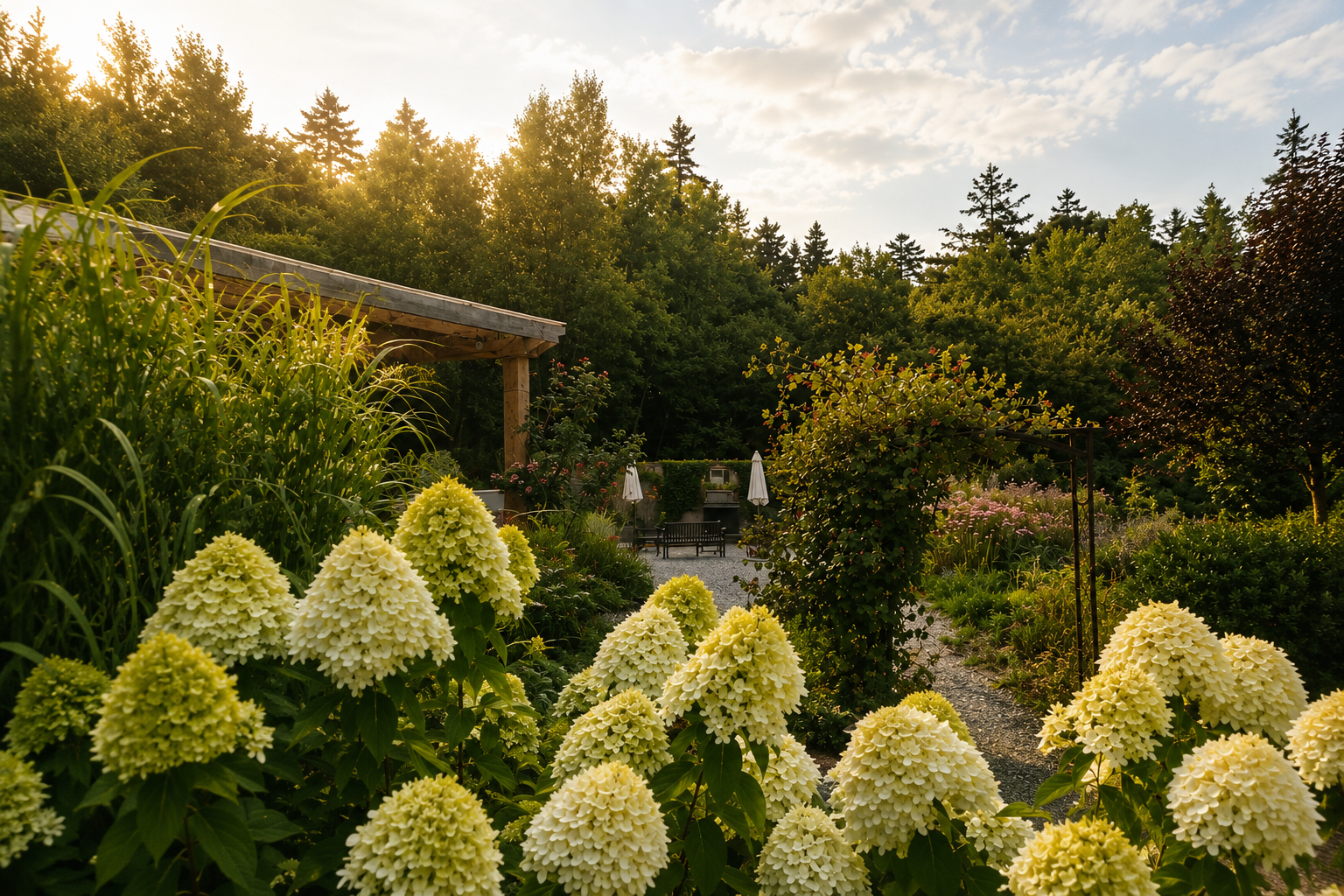
There is a moment in almost every gardener’s life when you look across a piece of land and see something that isn’t there yet.
You see the garden it could become.
At 19 Birch Lane in South Thomaston, Maine, that vision has grown far beyond anything we imagined when the property was purchased in 2008.
Back then, this was a modest private home on approximately five acres, surrounded by woods, a horse barn and areas of overgrown pasture. There was no master plan for a botanical garden. There were no extensive plant collections, formal garden rooms, rose-covered structures or carefully designed water features.
There was simply land—and possibility.
Today, we are in the midst of transforming those five acres into something very different: a collection of gardens that we hope will ultimately become a unique botanical garden destination in Mid Coast Maine.
We aren't finished.
In many ways, we are only beginning.
And that may be one of the most important lessons we've learned: a great garden isn't created all at once. It evolves.
This is the story of what we've learned so far while building 19 Birch Lane.
How Do You Turn Five Acres Into a Botanical Garden?
The short answer is: one garden at a time.
When people see established botanical gardens, it's easy to forget that nearly every mature landscape began with bare soil, small plants and an idea.
Large gardens are built through layers.
Trees establish the canopy.
Shrubs create structure.
Perennials fill the spaces between them.
Paths determine how people experience the landscape.
Water introduces sound and movement.
And time eventually connects everything.
One of the biggest changes in our thinking at 19 Birch Lane has been moving away from simply asking:
“Where can we put another beautiful plant?”
Instead, we increasingly ask:
“What experience are we trying to create here?”
That question has changed the way we garden.
Lesson 1: Start With the Land You Already Have
Before designing a garden, learn the property.
Five acres may sound like an enormous blank canvas, but it is actually a collection of different growing environments.
Some areas receive full sun all day.
Others are shaded by mature trees.
Some remain moist.
Others dry quickly.
Low areas collect cold air.
Open areas experience wind.
And here on the coast of Maine, fog, cool mornings and onshore breezes add another layer to the equation.
Rather than trying to make every part of the property behave the same way, we've learned to design around these differences.
A damp location might become an opportunity for moisture-loving plants.
A sunny open area may become a rose or perennial garden.
Woodland edges create opportunities for hostas, hellebores, ferns and other shade-loving plants.
Good garden design begins by understanding what the land wants to be.
Lesson 2: Build Garden Rooms, Not One Giant Garden
One of the most important principles we've learned while developing 19 Birch Lane is the value of creating individual garden rooms.
Instead of attempting to landscape five acres as one continuous space, we've gradually created destinations within the property.
A visitor shouldn't necessarily see everything from one location.
There should be reasons to continue walking.
A pathway disappears around a hedge.
A statue becomes visible through an opening.
The sound of moving water draws you toward another garden.
A rose-covered structure frames the view ahead.
This sense of discovery makes even a relatively small property feel larger.
It also allows each garden to develop its own identity.
Lesson 3: Structure Comes Before Flowers
Flowers are what initially capture our attention, but structure is what makes a garden feel intentional.
We learned this lesson quickly.
Before choosing every perennial, consider the permanent elements:
Trees
Evergreen shrubs
Hedges
Paths
Arbors and trellises
Stonework
Water
Sculpture
Seating areas
Sightlines
These become the bones of the garden.
At 19 Birch Lane, boxwoods, hydrangeas, ornamental grasses, flowering shrubs and trees help provide structure around the changing perennial displays.
Flowers may bloom for three weeks.
Structure works for twelve months.
Lesson 4: Plant Collections Create Identity
As our gardens developed, our approach to plants began changing.
Instead of buying one of everything that caught our attention, we became increasingly interested in plant collections.
That shift has had an enormous influence on 19 Birch Lane.
Our gardens now include expanding collections of plants such as:
Irises
We have dramatically expanded our iris plantings, including dwarf, standard and reblooming forms in numerous colors.
Different iris groups allow us to extend the season rather than experience one brief display.
Daylilies
Our daylily collection provides tremendous midsummer color while demonstrating just how diverse one familiar perennial can become through breeding and selection.
Roses
Our growing collection of David Austin English Roses brings fragrance, history and old-world character into the landscape.
Dahlias
Dahlias provide another entirely different experience, reaching their peak when many early-season perennials have already finished.
Hydrangeas
Hydrangeas have become increasingly important throughout the property, including larger groupings designed to create dramatic masses of color later in the season.
The lesson has been simple:
One plant is beautiful. A thoughtfully curated collection tells a story.
That distinction is important as we continue developing 19 Birch Lane as a botanical destination.
Lesson 5: Don't Underestimate the Power of Repetition
Gardeners love variety.
We certainly do.
But too much variety can quickly become visual chaos.
One of the most useful design lessons we've learned is to repeat key plants throughout a landscape.
Instead of planting one catmint, plant several.
Instead of scattering individual hydrangeas everywhere, create a grouping.
Repeat the same ornamental grass along a pathway.
Allow a particular perennial to appear again farther into the garden.
Repetition connects separate garden areas and gives the landscape rhythm.
This becomes especially important when designing larger gardens.
Lesson 6: Water Changes Everything
Water has become one of the defining elements of 19 Birch Lane.
Our gardens incorporate ponds, reflection and moving water, including our babbling brook garden.
What we've learned is that water contributes far more than visual beauty.
It adds sound.
It reflects the sky.
It changes light.
It attracts wildlife.
It creates habitat.
And it changes how people move through a landscape.
One of our favorite projects began with a vintage cast-iron water pump we discovered at an antique shop.
That single object eventually inspired an entire water feature.
We created a vintage-style cement trough, stonework and a brook that moves beneath a small bridge, through areas of faster-moving water and eventually into a quieter pond.
Almost immediately, nature responded.
Frogs appeared.
Dragonflies arrived.
Birds visited.
Pollinators gathered around the water.
What began as garden design became habitat.
Lesson 7: Healthy Soil Is More Important Than Expensive Plants
You can purchase the most beautiful plant in the nursery, but if the soil isn't right, it will never reach its potential.
We've spent considerable time improving soil as new gardens are created.
Depending on the location, that can involve:
Removing existing sod
Adding organic matter
Improving drainage
Incorporating compost
Using aged organic amendments
Adding worm castings
Mulching
Suppressing weeds before planting
For some new garden areas, we've also used cardboard as a biodegradable barrier beneath organic material to help suppress existing vegetation as beds become established.
It isn't glamorous work.
But the garden above ground will only ever be as healthy as the soil underneath it.
Lesson 8: Buy Smaller Plants When You Can Afford to Wait
Creating several acres of gardens can become extraordinarily expensive.
One lesson we've learned is that not every plant needs to be purchased at mature size.
There are places where investing in a larger specimen makes sense—particularly important trees or structural shrubs.
But perennials grow.
Shrubs grow.
Grasses grow.
Patience can save an enormous amount of money.
We often think about where immediate impact is important and where we're willing to wait two or three growing seasons.
That balance allows us to continue expanding without sacrificing the long-term vision.
Lesson 9: Learn to Divide Your Own Plants
As a garden matures, it begins producing one of its most valuable resources:
more plants.
Daylilies can be divided.
Irises multiply.
Hostas expand.
Catmint can be propagated.
Many perennials eventually provide divisions for entirely new garden areas.
This changes the economics of creating a large garden.
A single plant purchased today can eventually become five, ten or more plants elsewhere on the property.
It's also one of the reasons we think of a botanical garden as a living investment.
Every year, the landscape becomes capable of helping build the next garden.
Lesson 10: Design for More Than Peak Bloom
This has become increasingly important to us.
A successful garden shouldn't only look beautiful for three weeks in July.
We want 19 Birch Lane to offer something interesting throughout the growing season.
That means thinking in layers.
Early Spring
Hellebores, bulbs, dwarf irises and emerging foliage begin the season.
Late Spring
Irises, peonies, flowering shrubs and early perennials take over.
Early Summer
Roses, catmint, salvia and other perennial borders begin reaching their stride.
Midsummer
Daylilies, hydrangeas, coneflowers and pollinator plants fill the gardens.
Late Summer
Hydrangeas, dahlias, grasses and later-flowering perennials carry the landscape forward.
Fall
Japanese anemones, reblooming plants, ornamental grasses, hydrangeas, seed heads and changing foliage create an entirely different garden.
The goal isn't to have everything blooming simultaneously.
The goal is succession.
Something should always be beginning as something else is finishing.
Lesson 11: Gardens Need Negative Space
When you're passionate about plants, this may be one of the hardest lessons to learn.
Not every square foot needs another flower.
Lawns, pathways, patios, water and open spaces allow planted areas to breathe.
They also give visitors somewhere to stand back and appreciate the garden.
At 19 Birch Lane, our grass and stone pathways have become as important to the design as many of the plants themselves.
They provide contrast.
And perhaps more importantly, they invite exploration.
Lesson 12: Think About How People Will Experience the Garden
Designing a private garden and designing a garden that will eventually welcome visitors are very different challenges.
We're increasingly thinking about:
Where will someone stop?
What will they photograph?
What will they see around the next corner?
Is the pathway wide enough for two people to walk together?
Where is shade available?
Where can someone sit?
What does the garden sound like?
What does it smell like?
What is blooming at eye level?
Where does a path lead?
These questions have fundamentally changed our approach.
We're no longer simply designing gardens to be viewed.
We're designing gardens to be experienced.
Lesson 13: Wildlife Is Part of the Garden
As the number and diversity of plants at 19 Birch Lane have increased, something remarkable has happened.
The wildlife has increased with them.
Bees work the catmint and lavender.
Butterflies move through the perennial gardens.
Dragonflies patrol the ponds.
Frogs have colonized the water features.
Birds find shelter among trees and shrubs.
The property has gradually become a small ecosystem.
That wasn't necessarily the original objective.
But it has become one of the most rewarding outcomes.
The more life we've planted, the more life has arrived.
Lesson 14: Accept That Some Ideas Won't Work
Not every garden we design works perfectly the first time.
Plants get moved.
Some plants disappear.
Others grow much larger than expected.
A pathway may need changing.
A sightline you imagined on paper doesn't quite work in reality.
Sometimes an entire area needs to be reconsidered.
That's gardening.
One of the biggest lessons we've learned is not to become so attached to the original plan that you're unwilling to improve it.
A garden isn't architecture.
It's alive.
And because it's alive, the design needs to evolve with it.
Lesson 15: A Botanical Garden Is Never Finished
Perhaps this is the most important lesson of all.
We used to think about completing gardens.
Now we think about developing them.
There's a significant difference.
A newly planted garden may be finished from a construction standpoint, but its real story has barely begun.
Trees will mature.
Shrubs will expand.
Perennials will move.
Collections will grow.
New cultivars will be discovered.
Some plants will be divided and spread into other gardens.
The landscape will constantly change.
And that's exactly what makes gardening so compelling.
What Does the Future Hold for 19 Birch Lane?
Our vision continues to become larger and clearer.
We want 19 Birch Lane to be more than a beautiful property.
We're working toward creating a botanical destination in Mid Coast Maine where people can experience plants, learn about gardening, explore botanical collections and find ideas they can take back to their own landscapes.
That means continuing to develop new gardens.
Expanding our plant collections.
Creating educational opportunities.
Improving the visitor experience.
And documenting the process along the way.
We don't want to show people only the finished photograph.
We want to show the soil.
The planting.
The mistakes.
The changes.
The first year when everything looks too small.
And the moment, several years later, when suddenly it all comes together.
If You're Building a Garden of Your Own, Start
You don't need five acres.
You don't need hundreds of plants.
And you certainly don't need to know exactly what the finished garden will look like.
Start with one border.
Plant one tree.
Create one pathway.
Build one collection.
Learn what succeeds in your soil and climate.
Then build upon it.
That's essentially what we've done at 19 Birch Lane.
What started as a modest home surrounded by woods and overgrown fields is slowly becoming something we could never have fully imagined in 2008.
And we're still learning.
We're still planting.
We're still changing our minds.
We're still discovering new plants.
And we're still building.
Perhaps that's the real story of 19 Birch Lane.
We're not creating a finished botanical garden.
We're growing one.
Frequently Asked Questions About Building a Botanical Garden
How long does it take to establish a large garden?
A large garden should be viewed as a multi-year project. Structural trees and shrubs may take years to mature, while many perennials can begin creating substantial displays within two or three growing seasons. Developing gardens in phases can make a large project more manageable.
What should you plant first when creating a large garden?
Start with the permanent framework: important trees, shrubs, hedges, pathways and major hardscape elements. Once the structure is established, use perennials, bulbs, annuals and ornamental grasses to create seasonal color and texture.
How do you make a large garden feel cohesive?
Repetition is one of the most effective tools. Repeat important plants, materials, colors and design elements throughout different garden rooms while allowing each area to retain its own identity.
What are some of the best plants for a Zone 6 garden in Maine?
Plant selection depends on soil, sunlight, moisture and exposure, but many cold-hardy perennials and shrubs perform beautifully in Zone 6. At 19 Birch Lane, our gardens include irises, peonies, daylilies, catmint, hellebores, hydrangeas, roses, coneflowers, Japanese anemones and ornamental grasses, among many others.
Can a private property become a botanical garden?
A serious botanical garden involves much more than landscaping. Developing documented plant collections, accurate identification, educational interpretation, visitor infrastructure, thoughtful horticultural practices and a long-term collections strategy can help transform a beautiful garden into a meaningful botanical resource.