
Johanna Azalea (Rhododendron ‘Johanna’)
An Evergreen Red-Flowering Azalea with Brilliant Spring Blooms, Glossy Green Foliage & Rich Burgundy Winter Color
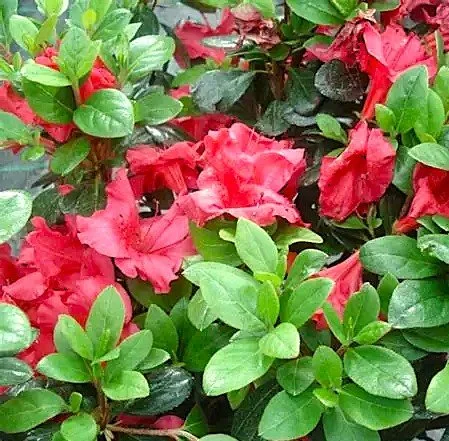
Johanna Azalea (Rhododendron ‘Johanna’)
An Evergreen Red-Flowering Azalea with Brilliant Spring Blooms, Glossy Green Foliage & Rich Burgundy Winter Color
Plant Overview
Common Name: Johanna Azalea
Botanical Name: Rhododendron ‘Johanna’
Plant Type: Broadleaf Evergreen Azalea
Family: Ericaceae
Hybrid Group: Kaempferi-type hybrid
Parentage: ‘Florida’ × seedling
Breeder: Vuyk van Nes, Netherlands
USDA Hardiness: Generally listed around Zones 5–8, with some U.S. growers recommending Zone 6 and warmer
Primary Seasons of Interest: Spring, Fall & Winter
Flower Color: Carmine Red to Deep Scarlet-Red
Johanna Azalea is an outstanding evergreen azalea combining deep red spring flowers with unusually attractive cold-season foliage.
In spring, the compact shrub becomes covered with richly colored, single, ruffled flowers generally described as carmine, scarlet, or deep red. The flowers are approximately 2 inches across and contrast beautifully against glossy dark green foliage.
But Johanna's appeal does not end when flowering finishes.
As temperatures fall, its glossy green foliage develops increasingly rich burgundy to mahogany-red coloration, providing fall and winter interest that distinguishes it from many other evergreen azaleas.
Depending on climate and growing conditions, expect a compact shrub roughly 3–4 feet tall and wide, although older plants in favorable conditions may become larger.
For a Maine garden, Johanna offers an especially appealing combination: brilliant spring flowers followed by foliage that continues contributing to the landscape long after flowering has ended.
Why We Grow Johanna Azalea at 19 Birch Lane
Johanna represents exactly what we want when developing a more diverse azalea collection at 19 Birch Lane: a cultivar that earns its place in the garden during more than one season.
The red spring flowers immediately attract attention, but the foliage is what makes Johanna particularly interesting from a garden-design perspective.
During the growing season, glossy dark green leaves create a handsome background for neighboring plants. As colder weather arrives, those leaves can transition toward deep burgundy and mahogany-red.
That gives us an opportunity to show visitors that evergreen azaleas shouldn't be selected only by flower color.
When comparing cultivars, we can also consider:
Spring flower color
Flower size and form
Bloom timing
Mature size
Growth habit
Foliage texture
Fall foliage color
Winter appearance
Cold hardiness
Landscape use
As the azalea collection at 19 Birch Lane grows, these differences will make the collection much more educational and visually interesting.
Quick Facts
Common Name: Johanna Azalea
Botanical Name: Rhododendron ‘Johanna’
Family: Ericaceae
Plant Type: Evergreen Flowering Shrub
Hybrid Group: Kaempferi-type Azalea
Growth Habit: Compact, Mounding to Upright
Typical Mature Height: Approximately 3–4 feet
Typical Mature Width: Approximately 3–4 feet
Flower Color: Carmine Red / Scarlet-Red / Deep Red
Flower Size: Approximately 2 inches
Flower Form: Single, Ruffled
Bloom Time: Spring to Late Spring
Summer Foliage: Glossy Dark Green
Cold-Season Foliage: Burgundy to Mahogany-Red
Light: Part Sun to Part Shade; filtered light is excellent
Soil: Acidic, humus-rich, moist but well-drained
Water: Moderate; consistent moisture preferred
Growth Rate: Moderate to Slow
Evergreen: Yes
Woodland Garden: Excellent
Foundation Plant: Excellent
Mass Planting: Excellent
Container Use: Possible
Butterfly Interest: Reported by U.S. nursery sources RHS
Growing Conditions
Light Requirements
Johanna Azalea performs well in:
Part sun
Partial shade
Filtered sunlight
Morning sun with afternoon shade
Bright woodland-edge conditions
The RHS recommends a sheltered site in partial shade, while noting that sun can be tolerated where soil remains reliably moist. RHS
For Midcoast Maine, morning sun followed by some afternoon protection would be an excellent starting point.
Soil Requirements
Johanna prefers the classic conditions associated with healthy azaleas:
Acidic soil
Humus-rich soil
Moist soil
Excellent drainage
Plenty of organic matter
The RHS specifically recommends moist but well-drained, leafy, humus-rich acidic soil. A specialist rhododendron nursery recommends approximately pH 4.5–6. RHS
Avoid consistently waterlogged conditions.
Azaleas have relatively shallow root systems, so good soil preparation can make a substantial difference in long-term performance.
Water Requirements
Johanna prefers consistent moisture without constantly saturated soil.
During establishment:
Water deeply during dry periods.
Keep the root zone consistently moist.
Apply organic mulch.
Avoid allowing newly planted shrubs to dry severely.
Avoid locations where water remains standing around the roots.
Once established, continue monitoring during extended periods of summer drought.
Flower Characteristics
Johanna's spring flower display is its most dramatic feature.
Flower Features
Deep scarlet to carmine-red
Approximately 2 inches across
Single
Ruffled
Produced abundantly
Strong contrast against dark foliage
One U.S. nursery describes the flowers as true red, 2-inch, ruffled single blooms, while specialist rhododendron sources describe them as carmine red.
Rather than getting overly specific about whether the color should be called scarlet, carmine, or deep red, I would describe Johanna on the 19 Birch Lane Plant Finder as:
Rich carmine-red to scarlet-red.
That reflects how the cultivar is described across reputable horticultural sources.
Foliage Characteristics
Johanna has attractive glossy green foliage throughout the growing season.
The leaves are:
Small
Neat
Glossy
Dark to Mid-Green
Evergreen
The foliage helps maintain a dense, finished appearance even after flowering.
But Johanna has another feature that makes it particularly valuable.
Exceptional Fall & Winter Foliage
As temperatures fall, Johanna's foliage can develop rich burgundy, dark red, or mahogany tones.
Specialist rhododendron growers consider its autumn foliage one of the cultivar's strongest features.
This makes Johanna particularly valuable for a garden designed around multiple seasons.
Instead of:
Spring flowers → green shrub
Johanna can provide:
Red spring flowers → glossy summer foliage → burgundy fall and winter foliage.
That progression makes the shrub much more useful in a botanical collection.
Cold Hardiness in Maine
Hardiness listings for Johanna vary somewhat among sources.
Historical USDA plant references place Rhododendron ‘Johanna’ around Zones 5–7, while several contemporary U.S. nurseries recommend approximately Zones 6–8. USDA Risk Management Agency
For the Plant Finder, I would therefore avoid presenting Zone 5 performance as guaranteed.
For colder northern gardens:
Select a sheltered location.
Protect from harsh winter winds.
Avoid exposed winter sites.
Mulch the shallow root zone.
Maintain adequate moisture going into winter.
Consider protection from intense winter sun.
For a protected Zone 6 garden in coastal or Midcoast Maine, Johanna is much more comfortably within the range reported by contemporary U.S. growers.
Garden Uses
Johanna works beautifully in:
Azalea Collections
Woodland Gardens
Asian-Inspired Gardens
Foundation Plantings
Mixed Shrub Borders
Shade Gardens
Mass Plantings
Low Flowering Hedges
Specimen Plantings
Containers
Garden Entrances
Pathway Borders
Botanical Collections
Its relatively compact form makes it particularly useful where a large rhododendron would eventually become overwhelming.
Using Johanna in a Woodland Garden
Woodland-edge conditions are particularly well suited to Johanna.
Its bright red flowers become even more dramatic against:
After flowering, the surrounding foliage plants can carry the composition through summer.
Then Johanna becomes prominent again when its leaves develop burgundy tones in colder weather.
Companion Plants
Recommended Companions for 19 Birch Lane
Other Rhododendrons
Japanese Maples
Brunnera
Astilbe
Heuchera
Tiarella
Bleeding Hearts
The two white azaleas we've just added to the Plant Finder are particularly useful companions.
Imagine the spring sequence of:
Delaware Valley White + Johanna + Kathy Ann
The white cultivars create breathing room around Johanna's much stronger red flowers.
Care & Maintenance
Once established in appropriate conditions, Johanna should not require aggressive maintenance.
Focus primarily on:
Acidic soil
Good drainage
Consistent moisture
Organic mulch
Winter protection in exposed northern locations
Minimal pruning
Monitoring for common azalea pests
Pruning Johanna Azalea
If pruning is necessary, the safest approach is to prune shortly after flowering.
Avoid routine heavy shearing.
Instead, selectively remove:
Dead wood
Damaged stems
Crossing branches
Weak growth
Branches disrupting the natural shape
Allowing the plant to maintain its naturally compact, mounding-to-upright habit usually produces a better-looking shrub.
Mulching
Apply approximately 2–3 inches of organic mulch around the root zone.
Mulch can help:
Retain moisture
Moderate soil temperatures
Protect shallow roots
Reduce weed competition
Gradually add organic matter
Keep mulch away from direct contact with the stems.
Potential Problems
Like other evergreen azaleas, Johanna can potentially experience problems with pests such as lace bugs, scale, aphids, whiteflies, vine weevil, and other rhododendron-associated pests. The RHS also notes susceptibility within the group to several rhododendron diseases. RHS
Good cultural conditions remain the first defense.
Pay particular attention to:
Drainage
Soil pH
Water stress
Air circulation
Winter exposure
Why Gardeners Love Johanna Azalea
✓ Brilliant carmine-red spring flowers
✓ Ruffled single blooms
✓ Evergreen foliage
✓ Glossy dark green summer leaves
✓ Burgundy-to-mahogany cold-season foliage
✓ Compact growth habit
✓ Excellent woodland shrub
✓ Works in part shade
✓ Useful foundation plant
✓ Beautiful in mass plantings
✓ Suitable for smaller gardens
✓ Strong multi-season interest
✓ Excellent contrast with white azaleas
✓ Valuable addition to an azalea collection
Plant Finder Details
Common Name: Johanna Azalea
Botanical Name: Rhododendron ‘Johanna’
Family: Ericaceae
Plant Type: Broadleaf Evergreen Flowering Shrub
Hybrid Group: Kaempferi-type
Parentage: ‘Florida’ × seedling
Breeder: Vuyk van Nes
Origin: Netherlands
Typical Hardiness: Approximately USDA Zones 5–8, with protection advisable toward the cold edge
Mature Height: Approximately 3–4 feet under typical landscape conditions
Mature Width: Approximately 3–4 feet
Habit: Compact, Mounding to Upright
Sun: Part Sun to Part Shade
Soil: Acidic, Humus-Rich, Moist and Well-Drained
Preferred pH: Approximately 4.5–6
Bloom: Spring / Late Spring
Flower Color: Carmine-Red to Scarlet-Red
Flower Size: Approximately 2 inches
Flower Form: Single, Ruffled
Summer Foliage: Glossy Green
Fall/Winter Foliage: Burgundy to Mahogany-Red
Evergreen: Yes
Woodland Garden: Excellent
Foundation Planting: Excellent
Mass Planting: Excellent
📍 Where to Find Johanna Azalea at 19 Birch Lane
Johanna is particularly well suited to a woodland-edge planting, azalea collection, Asian-inspired garden, or protected partially shaded location where both its flowers and seasonal foliage changes can be appreciated.
The exact permanent garden location of Johanna Azalea at 19 Birch Lane has not yet been provided for this Plant Finder entry.
Once its location is confirmed, update this section with the exact garden name.
That location information will eventually allow visitors to use the Plant Finder not only before their visit, but while physically exploring the gardens at 19 Birch Lane.
🌸 Seasonal Interest Calendar
🌱 Early Spring
Evergreen foliage provides structure as flower buds begin preparing for the spring display.
❤️ Mid-to-Late Spring
Johanna becomes covered with rich carmine-red to scarlet-red flowers.
This is the shrub's primary flowering season.
🌿 Summer
Glossy dark green foliage becomes the primary feature.
Its compact form provides a strong backdrop for surrounding shade and woodland perennials.
🍂 Fall
As temperatures cool, foliage begins developing deeper burgundy and mahogany tones.
Winter
Cold-season foliage can remain richly colored, giving Johanna considerably more winter presence than many flowering shrubs.
Sheltered placement helps protect evergreen foliage from drying winter conditions.
🎓 Garden Design Tips from 19 Birch Lane
Johanna gives us an excellent opportunity to use contrast rather than simply adding more color.
Because its flowers are intensely red, surrounding Johanna with equally strong colors can reduce the visual impact.
Instead, consider:
Johanna + Delaware Valley White + Kathy Ann
The white flowers visually separate the red and make Johanna appear even richer.
Then introduce foliage beneath the azaleas:
Hostas + Ferns + Hellebores + Brunnera
That gives the planting another layer after the azaleas finish flowering.
For an Asian-inspired composition:
Johanna Azalea + Japanese Maple + Ferns + Hosta + Japanese Forest Grass + natural stone
The red flowers provide the spring event, while foliage, stone and texture carry the composition through the remainder of the season.
The most interesting feature may actually come later in the year when Johanna's burgundy foliage begins relating visually to the fall coloration of Japanese maples.
🌿 Plants That Grow Well with Johanna Azalea at 19 Birch Lane
Recommended companions include:
Delaware Valley White Azalea
Kathy Ann Azalea
Rhododendrons
Japanese Maples
Hostas
Ferns
Hellebores
Brunnera
Astilbe
Heuchera
Tiarella
Bleeding Hearts
Japanese Forest Grass
Hydrangeas
As their individual Plant Finder pages become available, these plant names should become internal links.
Frequently Asked Questions
What is Johanna Azalea?
Johanna is a compact evergreen azalea known for its rich red spring flowers and glossy green foliage that develops burgundy-to-mahogany coloration during colder weather.
What is the botanical name of Johanna Azalea?
The accepted botanical name is Rhododendron ‘Johanna’. RHS
What color is Johanna Azalea?
Its flowers are generally described as carmine red, scarlet red, or deep red.
When does Johanna Azalea bloom?
Johanna generally flowers in spring to late spring, with exact timing depending on climate and seasonal temperatures.
How large does Johanna Azalea grow?
Approximately 3–4 feet tall and wide is a useful landscape expectation, although mature size varies with climate, age, pruning, and growing conditions.
Is Johanna Azalea evergreen?
Yes. It is classified as an evergreen azalea. RHS
Does Johanna Azalea change color in fall?
Yes. Its glossy green foliage can turn burgundy, dark red, or mahogany as temperatures become colder.
Does Johanna Azalea grow in shade?
Yes. Part shade or filtered sunlight is particularly suitable.
Can Johanna Azalea grow in Maine?
Johanna is reported across roughly Zones 5–8 depending on the source. For Maine, protected placement is particularly important near the colder edge of its range.
Is Johanna Azalea suitable for Zone 6?
Yes. Zone 6 falls comfortably within several contemporary U.S. nursery recommendations for Johanna. Stadler Nurseries
What soil does Johanna Azalea need?
It prefers acidic, humus-rich, moist but well-drained soil.
When should Johanna Azalea be pruned?
If pruning is necessary, prune shortly after flowering.
Is Johanna good for woodland gardens?
Yes. Its compact evergreen habit, bright flowers, shade tolerance and seasonal foliage make it an excellent woodland or woodland-edge shrub.
What plants look good with Johanna Azalea?
White azaleas, rhododendrons, hostas, ferns, hellebores, Japanese maples, brunnera, astilbe and Japanese forest grass are excellent companions.
What's the difference between Johanna and Kathy Ann Azalea?
Johanna produces rich red flowers and is particularly notable for burgundy cold-season foliage. Kathy Ann produces large pure white flowers. Pairing the two creates strong spring color contrast while allowing visitors to compare two different evergreen azalea cultivars.
What's the difference between Johanna and Delaware Valley White Azalea?
Both are evergreen azaleas suited to partially shaded gardens, but Johanna produces red flowers and notable burgundy winter foliage, while Delaware Valley White is primarily valued for its white spring flowers.
Botanical Garden Notes
Johanna has an interesting European breeding history.
Specialist rhododendron records identify it as a Kaempferi-type hybrid bred by Vuyk van Nes in the Netherlands, with ‘Florida’ listed as one parent. Rhododendrons
The Royal Horticultural Society currently lists Rhododendron ‘Johanna’ as an accepted cultivar and describes it as a compact evergreen azalea with carmine-red flowers and neat green foliage. RHS
Johanna therefore adds another educational dimension to the 19 Birch Lane azalea collection.
Visitors can compare:
Johanna — European breeding, red flowers, burgundy winter foliage
with cultivars such as:
Kathy Ann — American Girard breeding, white flowers
and
Delaware Valley White — white-flowering evergreen azalea with a different horticultural history.